Is there such a thing as a must-have tool? If you are on any form of social media, advertisers will make you think there are at least a dozen tools that you don’t have that, unless you order in the next 12 hours, you will suffer without for eternity.

Those must-have tools rotate, too. Some time back, the tornado blow gun for your air compressor was the best tool ever. Presently, the chain-driven, tight-spot lateral socket extender is the pathway to mechanical happiness.
To be fair, some of these gadgets are quite handy. I have purchased a few tools from social media ads and found them to be fairly well made and useful. I'm equally sure that application is everything. If you're tough on tools, it is likely some of these purchases failed for you.
So what is the handiest tool for a farmer or rancher to own? A good friend of mine was asked that very question at a career day for the county school system several years ago. His answer was, “A pencil.”
He expounded on his answer by sharing that a pencil was what he used to compare different feed, do the math on how to afford big-ticket purchases and determine which enterprise on the farm was most profitable.
Honestly, I was quite proud of my friend for sharing with our school system’s students and faculty an answer that helps dispel the myth of the “dumb ole farmer.” That said, his answer also made me think that while on the right path, his answer wasn’t totally correct.
A pencil can record misspellings and miscalculations. Just because it worked on paper doesn’t ensure success in reality – and nowhere is this more real than on the farm.
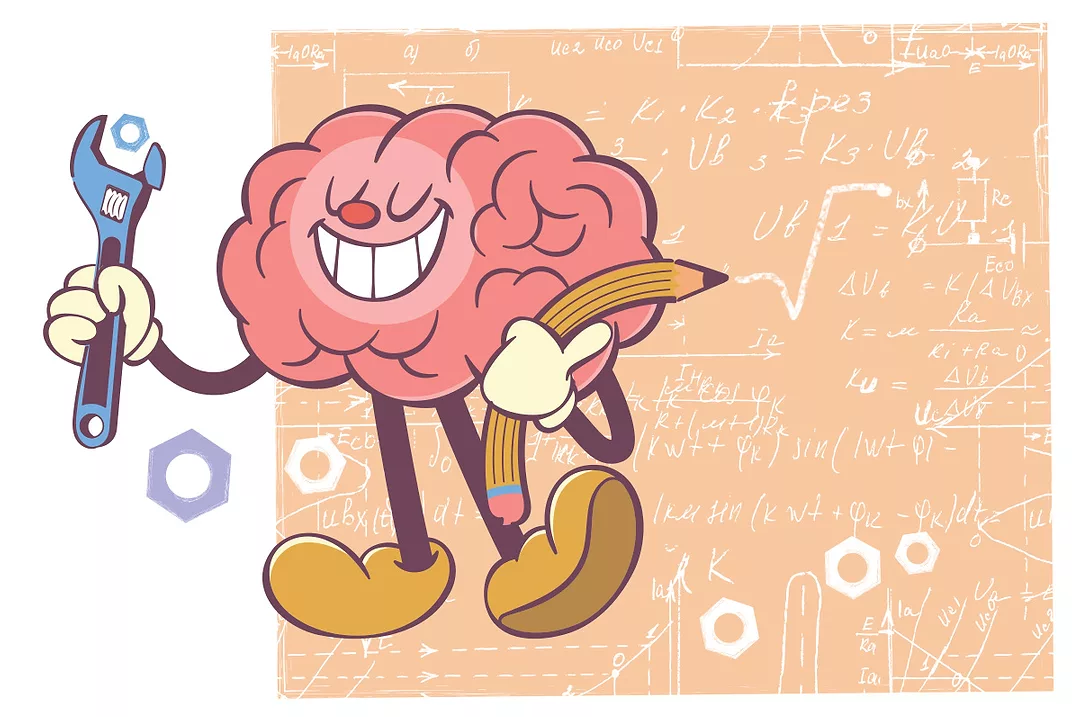
To me, the most important tool on the farm isn’t the pencil but the mind that controls the hand that holds it. The mind that is shaped by wisdom and experience and is aware of the calculated risk involved in the chosen plan of action is most likely to succeed.
So where can we order this highly trained mind? To be honest, you can purchase one, but be careful; hiring someone to do your thinking for you can be expensive. There are many gifted consultants out there who can help guide you to a more successful farming operation. The trouble is, this is the most expensive option of all – for two reasons.
First, if someone really knows their stuff and they have a long list of clients, their time is highly valued and will cost you both their wages and expenses, such as travel. Second, if they don’t know what they are doing, and you have no experience either, you’ll be lucky if you aren’t broke before you discover you hired the wrong consultant.
Another issue with wisdom is finding out that experience isn’t always the best teacher. I had a college professor who was raised in western Tennessee in the heart of water moccasin territory. He was canoeing on a river near his home one day when he encountered a cottonmouth. Without warning, the snake launched itself toward his canoe, barely missing him.
He taught his children to be aware of the capabilities of the snakes, and he shared with my class that if experience was the best teacher, he would have placed his children in danger so they too could see what a venomous snake could do.
Craziness! Experience is an effective teacher only if you survive the experience. Some wisdom is best learned by taking wise advice and avoiding a personal experience.
Wisdom takes time – and it isn’t the same thing as smart or educated – not that those things aren’t related to gaining wisdom. Some of the smartest people I know are those who are wise enough to know what they do not know and mature enough to admit it.
A Kansas farmer I admire very much recognized the value of time, even if that time was spent not working the family farm. He had three children, and he told each of them they were welcome back to the farm as long as they invested time in themselves.
Each child was asked to go away and work for someone else, attend school or learn a trade, and return home only when they could show him that what they had learned could be applied to their farm and that the changes they brought back would yield a return that would more than pay their salary.
He shared this with my 4-H Livestock Club years ago when we visited his farm. He left them with this nugget: “Bring more to the table than your appetite!”
Taking time isn’t always measured in years. A challenge to myself is to take a few moments each day and think about what I had planned and was that plan the most IAE, which stands for intelligent application of effort.
A colleague in extension complained to me once that his farmers would rather hoe thistles than attend a program he had spent many hours planning. It's something I think about when I plan my own meetings. Have I done a good enough job marketing the meeting so producers see the value of attending?
In my colleague's case, whatever his clients were doing, they saw time as being worth more elsewhere, so they chose not to attend.
Every once in a while, we all need to stop and ask ourselves some tough questions. Is what I'm doing the most profitable use of my time? Is what I'm doing advancing the goals my spouse and I have for our family?
And as you ask these questions, be aware that the easiest thing to do is to continue on as you did yesterday. The hard path is to change directions and find a new path forward.
In closing, you are the most important tool on the farm, and your investment in improving the usefulness of that tool will pay off no matter what path you choose.