Cattle producers in many areas of the country face a critical decision when it comes to securing forage for their herds: whether to produce their own hay or to buy hay from external sources. Both approaches have distinct advantages, challenges and economic implications that can significantly impact the profitability and sustainability of a cattle operation. In this article, we’ll explore key differences between producing and buying hay, focusing on economic considerations, operational control, quality and nutritional aspects, and risk management.

Advantages and challenges of producing hay
Producing hay on-farm allows cattle producers to have more direct control over the quality, quantity and timing of their forage supply. This can lead to better hay nutrient profiles for the specific needs of the herd, potentially improving animal performance. Additionally, producing hay can reduce dependency on external markets and price fluctuations.
However, hay production requires significant investment in land, equipment, upkeep/repairs, labor and inputs such as seed, fertilizer, fuel and hay twine or net wrap. The equipment investment alone (tractors, cutters, rakes, balers) can easily exceed $250,000 if purchased new. Currently a new 125- to 150-horsepower tractor can average well over $100,000 depending on age, features, etc. A new round baler averages $65,000. Fortunately, used equipment can be purchased for less, but upkeep is commonly higher.
This is for producers who choose to own the equipment. Many producers will have someone come in and custom bale for them, which avoids that equipment investment. However, they have less control over when the hay can be cut, raked and baled because of the other person’s schedule. Additionally, the cost here can range from $40 to $60 per bale depending on the custom baler. These costs may sound high, but compared to owning and maintaining the equipment, it’s probably not.
In either case, weather variability poses a major risk, as drought, excessive rain or untimely freezes can reduce yields or significantly reduce hay quality. Producers must also manage soil fertility carefully, as hay harvesting removes nutrients from the soil, necessitating ongoing maintenance and renovation costs. Cost of fertilizer and herbicides for weed control can vary significantly from year to year depending on the markets, particularly fertilizer.
Advantages and challenges of buying hay
Buying hay provides flexibility and can free up land for other uses such as grazing or crop production. It eliminates the need for investment in hay-making equipment and reduces labor demands related to harvesting, baling and storage. In many cases, particularly during periods when hay is plentiful, it can be purchased for less than what production costs might be.
On the downside, purchasing hay exposes producers to market price volatility and potential supply shortages, especially during peak demand periods or droughts. Quality can be inconsistent, and producers may have limited control over bale sizes and nutrient content. Transportation and storage costs also add to the total expense.
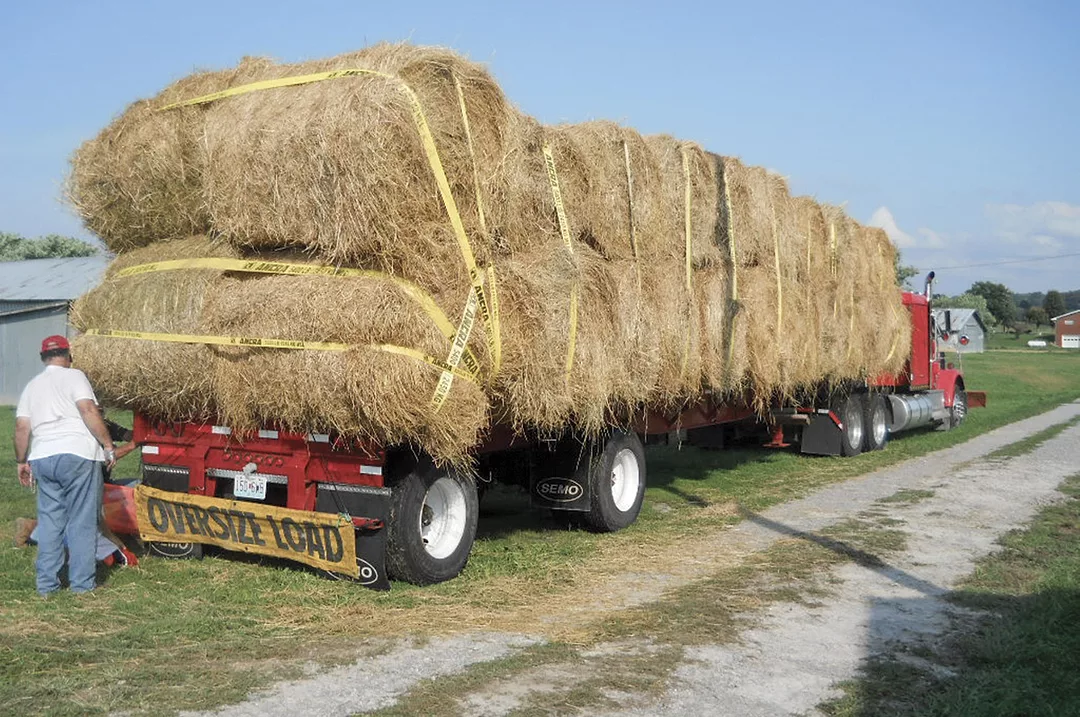
A major problem is that a lot of beef cow hay is bought and sold by the bale, and there is no common, standardized bale size and weight. Hay bales can easily range from 800 to 1,200 pounds. Bale size can also vary a lot. A common size is 4 feet wide by 5 feet in diameter (4X5) bales. These are preferred by truckers since they fit well on a typical flatbed truck. Other sizes can include 5X5, 5X5½, etc. Another variable is bale density, or how dense or tight the baler makes his bales. This can depend on baler type, operator ability, forage type and moisture level.
In the current markets (spring 2026), hay can be purchased from anywhere between $40 to $75 (or more) per roll. Given the variables above, there is no way to predict what the buyer is actually receiving when this system is used. If we attempt to convert this to a weight, a 5X5½ bale might weigh 1,100 pounds and sell for $65 per roll delivered (a fairly standard rate for cow hay in central Texas at the time of this writing). This would convert to $118.18 per ton (($65/1,100) × 2,000 pounds). This same bale might only weigh 900 pounds. If so, its cost per ton would be $144.44. So, quite a bit different.
Buying hay by the ton is much preferred, since the buyer has a much clearer idea of what is being purchased and what is received. Some hay producers will agree to this; some will not, since it is not as common of a practice in the beef cow hay market.
Another potential problem in buying hay is having a clear idea of what the hay is that you are buying. Is it a pure stand of, for example, coastal bermudagrass? Is it mixed with other species? Is it fertilized? Were the weeds controlled? It is very important to find a seller who you can trust and work with and who will sell a consistent, quality product.

The cost of equipment such as tractors and balers (and their attendant upkeep) is among the most important considerations when deciding whether to buy or grow your own feed. Image provided by Stephen B. Blezinger.
Economic considerations: Cost comparisons
Economic factors commonly drive the decision to produce or buy hay. Recent studies and surveys provide insight into typical cost structures for beef cattle producers.
Costs of producing hay
- Land and opportunity cost: Producers must consider the value of land used for hay production versus alternative uses (grazing, producing other crops). Opportunity costs vary widely by region and farm size.
- Input costs: Fertilizer, seed, herbicides, fuel, twine/new wrap and labor are significant expenses. For example, fertilizer and fuel can account for 30% to 40% of total production costs.
- Equipment costs: Investment in mowers, balers, rakes and tractors can be substantial, with ongoing maintenance and depreciation.
- Harvesting and storage: Labor for cutting, raking, baling and storing hay adds to costs. Storage losses due to weather or spoilage can range from 5% to 30%.
Estimates from Tennessee producers in 2024 indicate total production costs for hay can range from $50 to $100 per ton, depending on forage type and management intensity.
Costs of buying hay
- Purchase price: Market prices fluctuate seasonally and regionally. In 2024, hay prices in many U.S. regions ranged from $80 to $150 per ton, with Premium-quality hay commanding higher prices, routinely approaching $200.
- Transportation and handling: Costs vary based on distance and bale size but can add $10 to $30 per ton.
- Storage losses: This is similar to produced hay. Purchased hay can incur losses if not stored properly.
Producers buying hay during peak demand or drought conditions may face prices exceeding $150 per ton, making production more economically attractive if feasible. When purchasing hay, it is always advisable to project needs as far in advance as feasible and buy over a period of time if possible.
Nutritional and quality considerations
Producers who grow their own hay can tailor harvest timing and forage species to optimize nutritional value, which is critical for cattle health and productivity. Buying hay requires careful evaluation of quality through testing and supplier reliability.
Risk management
Producing hay involves weather and agronomic risks but offers more control over supply. Buying hay transfers the production risks to the producer/supplier but introduces market and quality risks.
Conclusion
There is no best approach. The decision to produce or buy hay depends on individual operation goals, resource availability and market conditions. Producers with adequate land, equipment, management and capital capacity may benefit from producing hay to control costs and quality. Others may prefer buying hay to reduce labor and capital investment, accepting market price risks. Still others may prefer to use their land for other purposes such as grazing so they can run more cows. Strategic planning, including storage capacity and quality testing, can help optimize forage supply regardless of the chosen approach.
References omitted but are available upon request by sending an email to the editor.