Many forage producers occasionally or routinely hire someone to handle their harvesting – whether that’s hay, haylage or silage – using a custom operator who specializes in cutting and baling. Some producers choose this route because they don’t want to invest in high‑cost harvesting equipment. These arrangements must be mutually beneficial, with an agreed-upon fee for the harvesting. Custom harvesting is not an easy business, and there are many things involved in making it work.

Custom harvesters usually own their machines, which relieves farmers from having to invest in expensive equipment and maximizes the machinery's use. Custom-harvesting contracts are written agreements in which the contractor performs field operations – such as combining, swathing or baling – on a landowner's property for a set fee per acre, hour, bale or bushel. These contracts define responsibilities, reducing liability and managing risks regarding payment terms, equipment and scheduling.
Rusty Rumley, senior staff attorney at the National Agricultural Law Center, notes that most custom forage harvesters operate locally. That contrasts with custom grain‑combining crews, who often travel across multiple states during the season.
“Custom forage harvesting is often done by neighbors, and there are different ways to structure this,” says Rumley. “I’m a fan of written contracts because many people harvest hay on shares. They cut, rake, bale and haul your hay in exchange for half the hay, or something like that.”
He adds that when you start doing arrangement like this, it doesn’t look like a custom farming agreement; it looks more like a general partnership.
“The problem with general partnerships is that you are personally liable for any actions your business partner takes in furtherance of the business,” says Rumley. “Let’s say you are dealing with your neighbor to do custom haying and splitting the hay crop 50-50, and your neighbor is driving the swather down the road and gets into an accident. You are potentially on the hook if it is decided that you are in a general partnership, even though you never touched the swather.”
In situations like that, it’s good to have a written agreement, to state that this is a custom agreement, lease agreement, etc. and not a general partnership within the laws of whatever state you reside in.
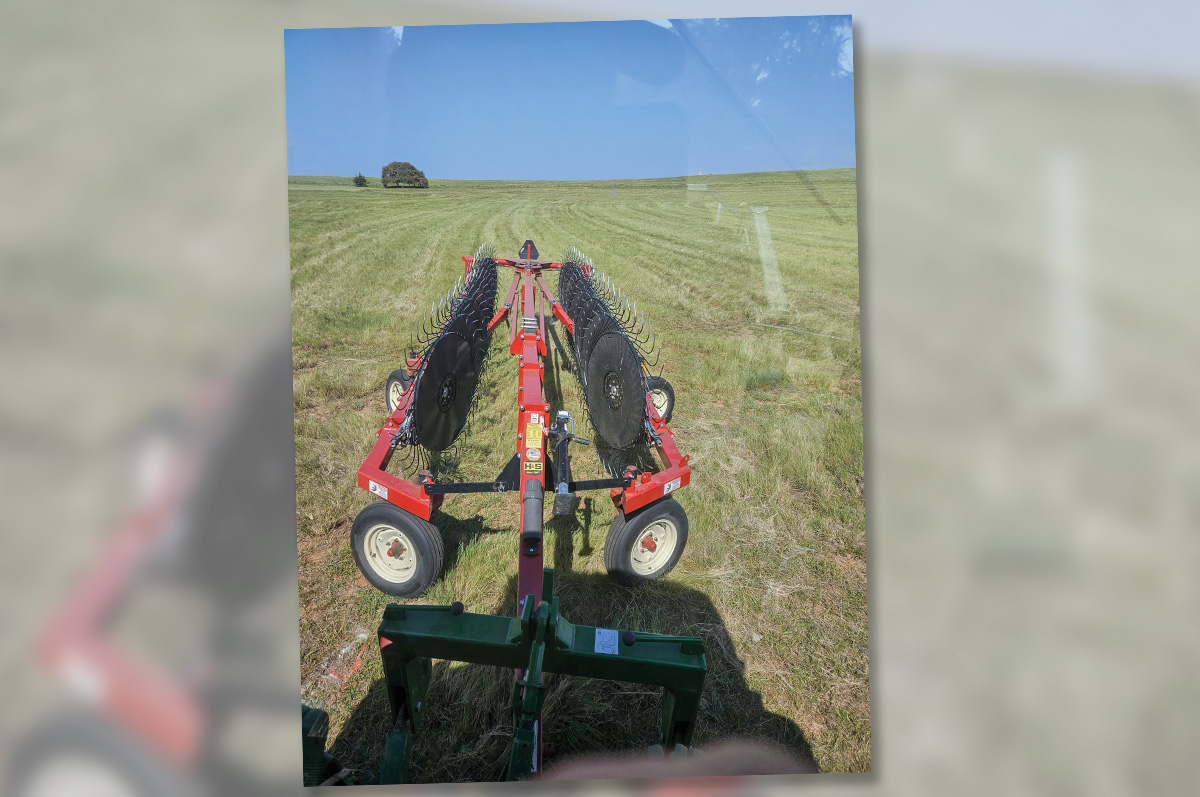
A wheel rake gathers the cured forage into uniform windrows to prepare the field for baling. Image by Rusty Rumley.
Ken Kelley, extension agent for Escambia County with the Alabama Cooperative Extension System and a livestock economist at Auburn University, works closely with producers on budgeting and leads the state’s farm and agribusiness extension team. He says the most important element in any custom-harvesting agreement is communication – especially when it comes to forage work.
“There has to be an understanding between the producer and the custom operator regarding how much to charge,” says Kelley. “Some of our guys bale hay on halves; the producer gets half the crop and the contractor gets half. Others do it on a flat fee, per-bale basis. Some partner on the hay itself and sell it as a partnership. There are many ways to do it, and all of them can work.”
Scheduling challenges are common when a landowner expects hay to be baled at a specific time. Custom harvesters often juggle multiple clients, so timing has to be coordinated across several jobs. A producer may want hay taken off immediately, but the contractor could be working in another field or on the opposite side of the county.
Weather can mess up the scheduling, and in some instances, everyone’s hay might be ready at the same time. This is why there must be some kind of understanding between the parties and some flexibility.
For top quality, some crops like alfalfa must be cut at exactly the right time, in terms of maturity, and baled at proper moisture levels, which may mean baling at night to retain the leaves.
“Most of our producers who hire a contractor are growing something a little less time sensitive, like bermudagrass, bahiagrass and maybe fescue or some winter annuals – something for stock cows,” adds Kelley.
There are sample contracts a person can look at when figuring out a plan for custom harvesting. A website Kelley sends people to for examples of various contracts that a person could tweak to fit their own situation, is Ag Lease 101.
The website includes a university‑based document library maintained by the North Central Farm Management Extension Committee. It provides foundational templates users can adapt to their own needs, including worksheets for pasture leases, beef cow agreements, farm equipment leases and custom haying arrangements.
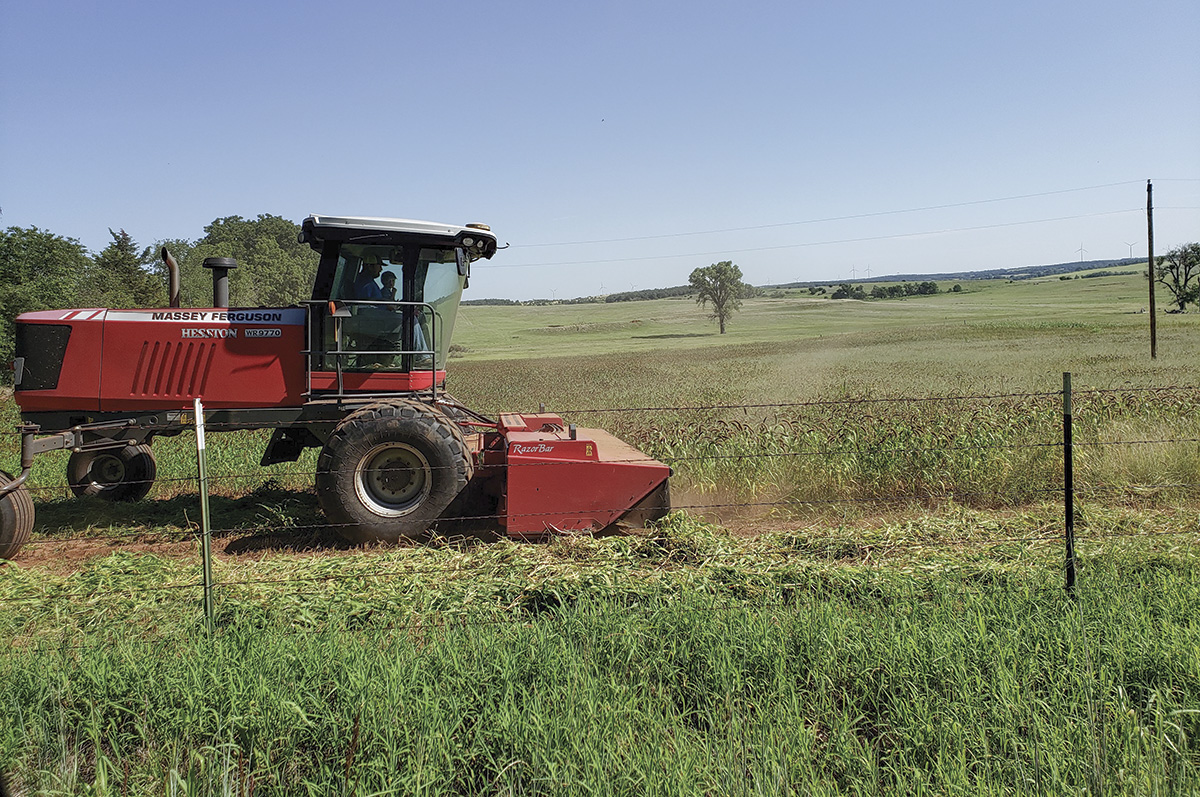
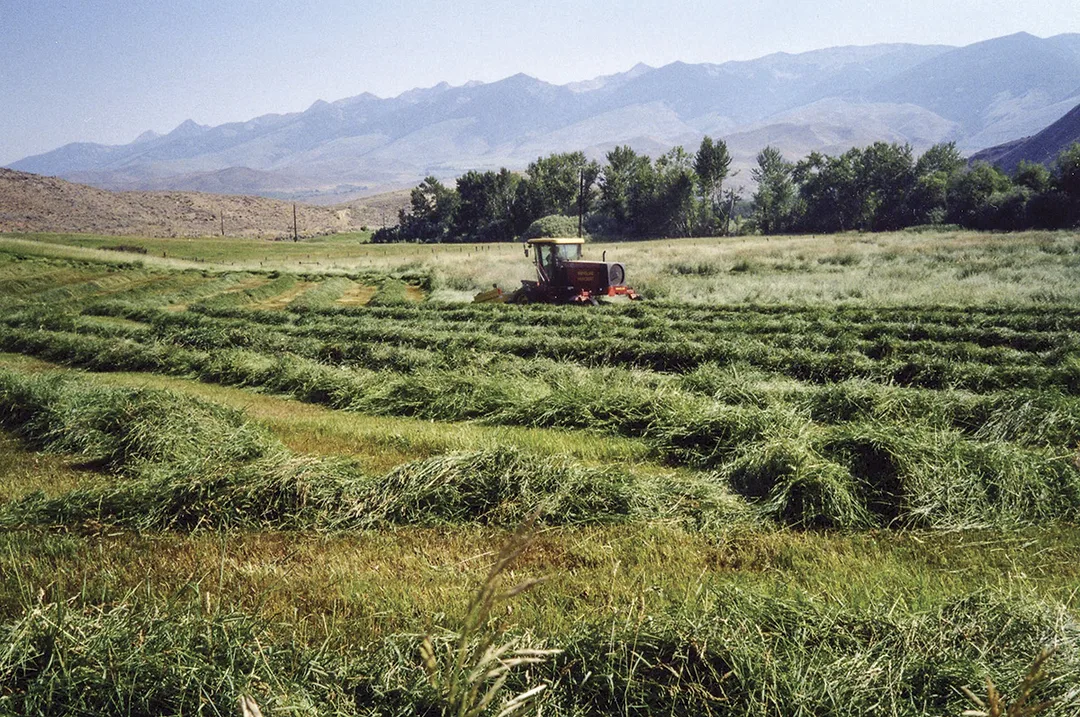
A mower conditioner advances through the field, using its cutterbar and conditioning system to prepare forage for efficient curing in a custom haying pass. Image by Rusty Rumley.
“People considering getting into the custom haying business need to make sure they are covering their fixed costs and depreciation of that equipment,” says Kelley. “If they will be doing it for many people, there will be a lot of wear and tear. A baler will cost 60,000 to 70,000 dollars, and you may wear it out before you’ve made enough money to replace it. You need to put the pencil to it.”
Fuel is another expense, and it can be variable in price.
“We’ve seen this recently with the price increase,” says Kelley. “When diesel goes from 2.50 to 4 dollars a gallon in a short time, it skews your budget and profit.”
Most universities have sample budgets for haying. Kelley encourages producers to start with their own state’s land‑grant university budgets. When those aren’t available, neighboring states often provide comparable numbers. He notes that both he and Mississippi State University economist Josh Maples publish hay budgets, and most states offer similar tools that can serve as a solid starting point.
Budgets, however, are only a guide. Users still need to enter their own costs and assumptions. The templates function much like business plan outlines – useful frameworks that must be customized and adjusted as conditions change.
Year‑to‑year variability also matters. Multiyear droughts can push hay prices higher, while other seasons may see lower returns. In custom haying, quoting a per‑bale price can be risky; if drought cuts yields in half, the operator still covers the same acres with nearly the same expenses but earns far less. Kelley often points to the adage that plans rarely unfold exactly as written, but the planning process remains essential.
Tiffany Dowell Lashmet, extension agricultural law specialist with Texas A&M AgriLife Extension, emphasizes that the first legal priority in any custom‑harvesting arrangement is a written agreement. Agriculture often relies on informal understandings, but a detailed contract helps define the scope of work, payment terms, deadlines and how delays or unexpected issues will be handled.
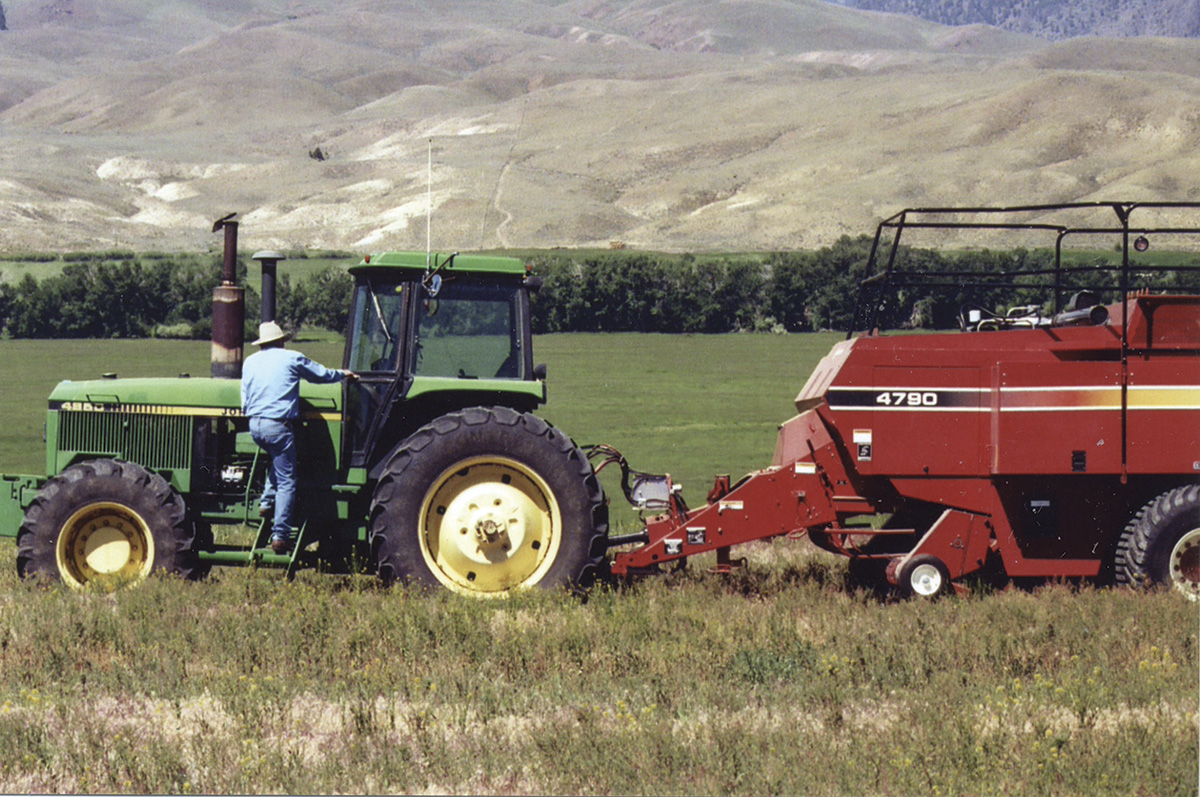
Custom haying equipment is staged for big‑square baling, where uniform flakes and tight density improve handling and feedout. Image by Heather Smith Thomas.
Clear expectations also reduce conflict. When both parties discuss potential problems in advance and agree on how they will be addressed, it prevents misunderstandings during a busy season.
Contract structure can vary, and Lashmet recommends working with an attorney licensed in the state where the work will occur. State‑specific laws or requirements may affect how an agreement should be drafted, and legal review can help ensure nothing important is overlooked.
“Make sure the agreement is as detailed as possible,” says Lashmet. “Spelling out things like payment are important – whether per hour, per acre, a flat fee, per bale or what[ever]. When are payments due? We might set a time frame for when the harvest needs to be done and what do we do if that is not possible?”
Sometimes people find a form contract on the internet, but it might not fit what you are doing. This is why you might need help from a lawyer or consultant or someone who knows about these agreements – not only with regards to harvest practices but also from a liability perspective. Also, make sure you have the right insurance.
“You may want to set up a business operation like an LLC to give you additional liability protection,” adds Lashmet.
These things can often be more complicated than you thought. It may help to talk to people who have been doing custom harvesting, or farmers who have hired custom harvesters; they can provide insight about how things are done in your area. There may be something specific or unique about your region or the crops grown there. This is a good way to make sure you are including all the important details in your agreement – then get it in writing and talk to a lawyer.
This article is provided for informational purposes only. Readers should consult their own professional advisers for specific advice tailored to their needs. Information contained in this article may be subject to change without notice.