White-knuckle time. Sharing the road with John Q. Public who is always running late and is oblivious to anything else on the road. It seems that most areas require an escort for wide and slow equipment moves on public roads. The requirements will vary with the state and county in question. What I see most often is just a pickup leading or following with the four-way flashers on.

There is a maze of what’s required, what’s adequate, what’s enforced and what will stand up in a court of law after an accident. It becomes a matter of managing a risk.
“Would a normal driver realize that there is something traveling on the road that a driver would recognize as a hazard the individual is going to have to slow or stop for?” This is the question I would expect a court of law would ask following an incident.
Then there are the requirements. How does the rule about a suitable escort for slow-moving equipment define suitable? I once witnessed a wide load passing through a state weigh station. In the lead was a pickup with a large “Wide load following” sign and a handful of flashing lights. It was also towing a disc that was 10- or 12-feet wide. The officer was explaining to the driver that the escort vehicle could not also be towing a wide load. They were required to come back later and retrieve the disc.
A fellow I knew said he once pulled from a field onto a road without an escort. He was driving a flotation tire-equipped tricycle that was more than 10 feet wide and met the requirement for an escort. When stopped by the flashing blue lights, he explained to the officer that he was “just changing fields.” The officer told him to be careful and let him go. Twenty miles ahead, he met the same officer, who stopped him again. He said he should have asked him how far he was from the next field. He claimed he was just turning into that field and sweet-talked his way out of a ticket.
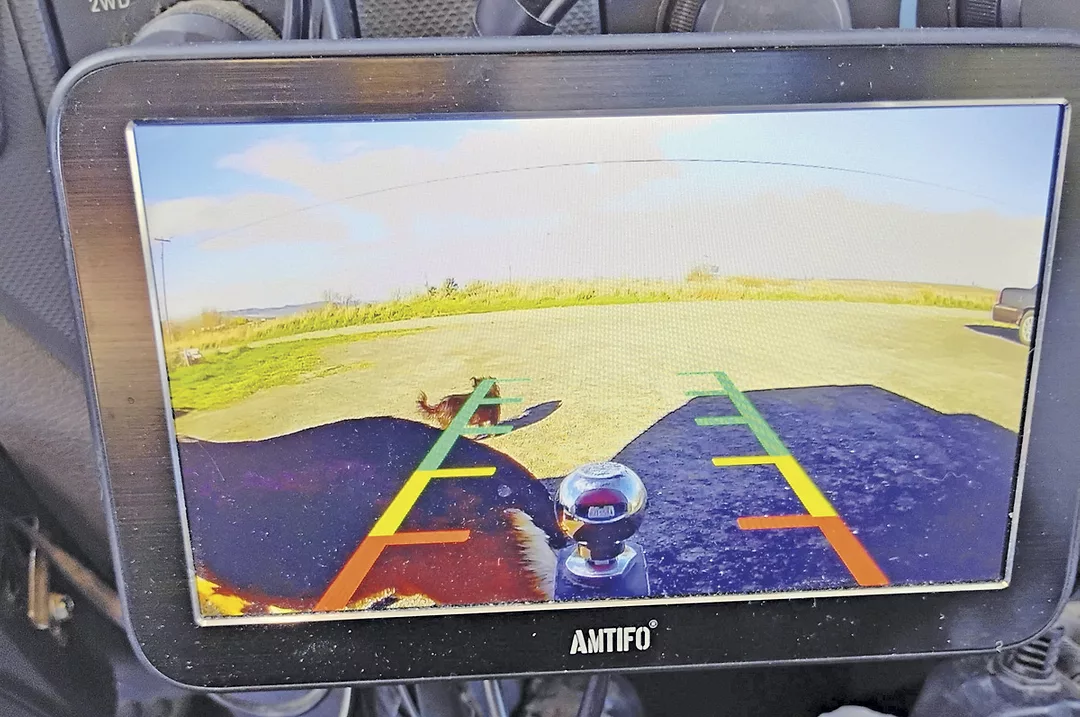
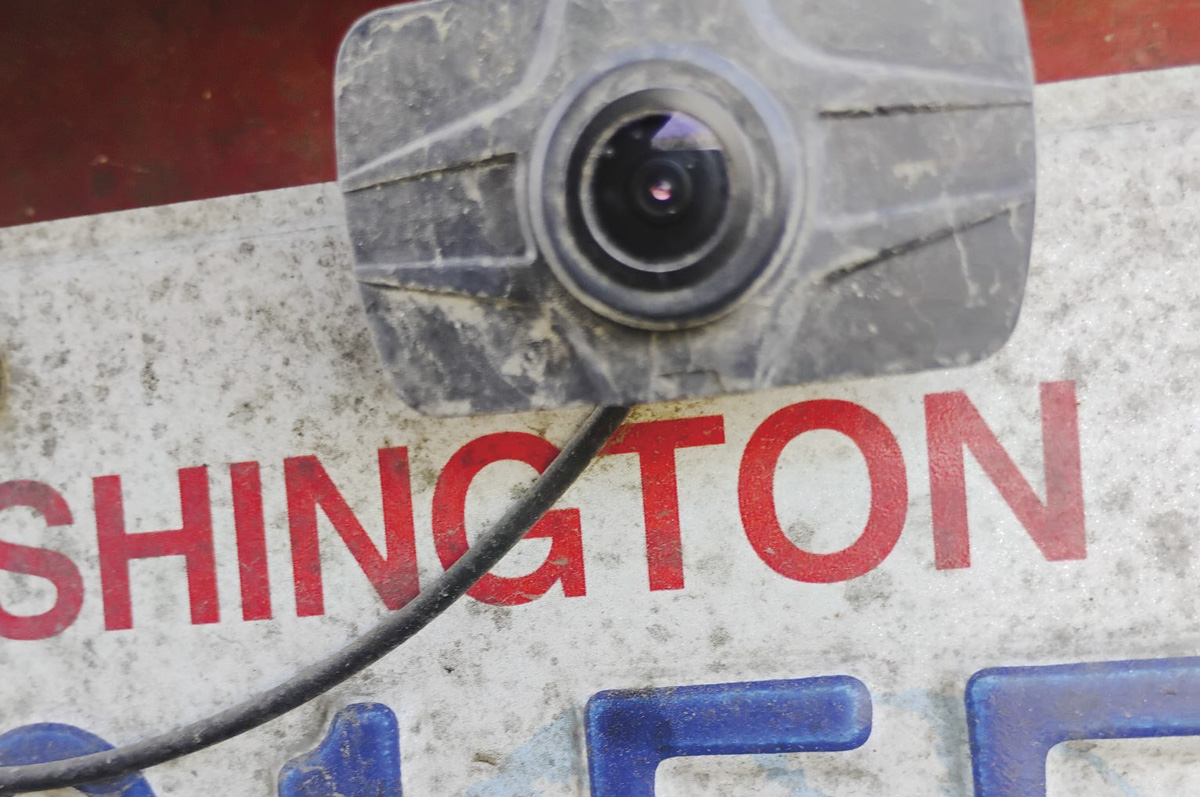
Beyond the legal side of the discussion, there are aids for the operator of the equipment being moved. Rearview mirrors held in place by strong magnets are available. It’s hard to be courteous to other traffic if you can’t see them. For equipment that will still have a blind spot directly behind, both wired and wireless back-up cameras are available starting at less than $100.
Can the operator communicate with the drivers of the escort rigs? When there is a long string of cars behind slow-moving equipment, it’s prudent to use a wide spot and let them pass. It becomes a balancing act to avoid mailboxes and guard rails with the right side of a wide load while allowing oncoming traffic room to get by and following traffic to safely pass.
Courtesy image.
There’s nothing quite like finally getting a clear spot to pass a wide, slow load, and as you pass the operator, see him or her jump – obviously unaware someone had been behind trying to pass.
The other part of farm safety on the road concerns regular-sized vehicles – parts chasers, service trucks or someone bringing lunch or supper to the crews at remote fields.
It’s difficult to have another driver cause you to crash when you set your speed, so you are alone on the road. For whatever reason, traffic seems to prefer traveling in packs. Adjust your speed so you are moving either just slower (1 mile per hour) or just faster than the packs on your road are traveling. This changes when you’re in congested traffic. Then you want to match the speed of other traffic if possible.
On-ramps and off-ramps. Merging traffic does not have the right-of-way. Merging traffic often is not aware of this. Whether you are merging or being merged into, the solution is simple. Pick a pedal. Gas pedal or brake pedal. Remove yourself from being beside another vehicle when a lane of traffic just ahead is ending. Again, it’s difficult for a merging car to hit you if either of you adjusts speed so you are the only vehicle in that area.
You will need to pass a slower vehicle occasionally. While you are passing a truck, you are about 3 feet from something that weighs 60,000 to 129,000 pounds and is moving plus or minus 88 feet a second (at 60 miles per hour). When you decide to pass a truck or another vehicle, pass them.
If you are using cruise control and come up behind a vehicle going just a bit slower than you are, and you decide to pass, increase your speed so you are only beside the vehicle you are passing for five or six seconds. Maintain that speed until you are far enough ahead of that vehicle to safely pull back in the other lane.
The other danger of passing on a freeway is when you are approaching a vehicle going just slower than you are while other vehicles are approaching behind you, traveling just a little faster than you are. They may pass you before you need to change lanes to pass the slower vehicle. They may be beside you when you need to change lanes to pass, or to slow down until they complete passing you. To avoid this, you need to have been alert and attentive to all traffic, including that which is behind you.
Now, to be both a safe and a courteous driver, you have two choices. Either slow and let the faster traffic pass you and the slow vehicle ahead of you – or – realize there is going to be a jam-up and, before the approaching vehicles get so close that you’re cutting them off, pass the slower vehicle but increase your speed so you are not slowing the cars that will then pass you.
This leaves you both avoiding being in the middle of a congested spot and avoiding the ire of other drivers. Kind of a lead, follow or get out of the way scene.