
High prices cure high prices. Low prices cure low prices.

This adage has never been truer than in today’s volatile commodity markets. Cattle prices are at historic highs, while many row‑crop margins are deeply negative. Add geopolitical upheavals that continue to disrupt global trade flows, and it’s increasingly clear that volatility isn’t a short‑term phase – it’s a defining feature of modern agriculture.
In an environment like this, disciplined financial management and a trusted relationship with your lender are more important than ever.
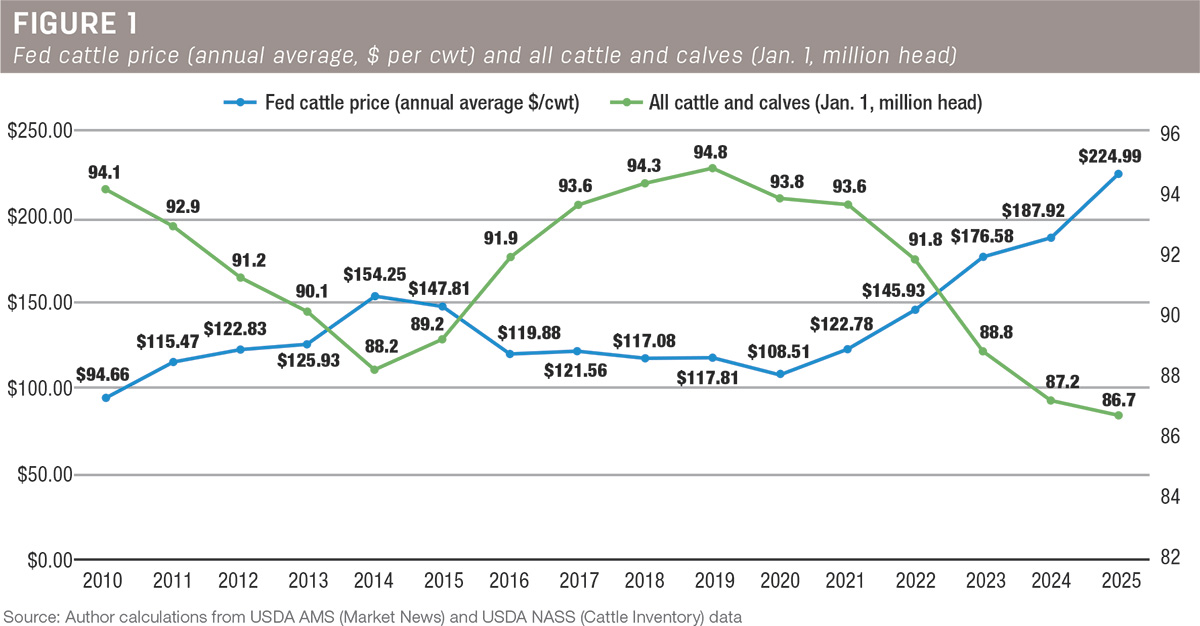
Cattle markets provide a clear example. Prices have enjoyed a historic run over the past few years, supported by tight supply and strong protein demand. That strength may persist in the near term, but history suggests it will eventually correct. Figure 1, comparing U.S. cattle inventory and fed cattle prices since 2010, highlights the inverse relationship between herd size and price and shows that extremes on either end of the cycle don’t last forever.
This cycle feels reminiscent of 2014-15 (though profitability today is stronger). As a relationship manager working with cattle producers during that period, I recall many conversations centered on expansion, capital purchases and tax strategy. Looking back, the operations that made disciplined, forward‑looking decisions during those profitable years were best positioned to weather the downturn that followed – and to capitalize on opportunities when the cycle turned again.
One lesson stands out: Poor decisions are often easier to make when profitability is high. When margins tighten, belt‑tightening follows naturally. But when profits are strong, it becomes harder to distinguish between investments that truly strengthen the operation and decisions that simply feel justified by cash flow.
I grew up on a potato farm, and I remember my dad often saying, “No one ever went broke paying taxes.” As a kid, I didn’t fully appreciate what he meant. After 15 years with AgWest Farm Credit, I do. Paying taxes can be painful in the moment, but retaining earnings, maintaining liquidity and preserving financial flexibility can position an operation to withstand future downturns or act on unexpected opportunities. That doesn’t mean tax planning should be ignored – only that it should be pursued thoughtfully, not pushed to extremes year after year.
That same principle applies more broadly than taxes alone. High‑margin years are the right time for operations to step back and assess their overall financial and strategic positioning. Do they truly understand their cost of production? Have they stress‑tested margins at lower price levels? Are they locking in profitable income where it makes sense? Have they honestly assessed their strengths, weaknesses, opportunities and threats – and adjusted decision making accordingly?
These questions have been top of mind as our team and our customer‑owners navigate the recent potato market collapse. The 2022 and 2023 seasons brought unprecedented prices. In my role as vice president of credit reviewing loan actions, some liquidity and profitability metrics required double‑ and triple‑checking – they hardly seemed real. Those were exceptional years to be in the open potato market.
But high prices cure high prices. Today, the potato industry is experiencing losses nearly as extreme as the prior highs. Many operations are making difficult adjustments to manage through the downturn. Once again, the businesses faring best are those that made disciplined financial and relationship decisions when profitability peaked. Choices that once seemed conservative – passing on overpriced land, prioritizing long‑term buyer relationships over squeezing out the last dollar or focusing on balance sheet strength – are proving their value. Those operations preserved resilience, liquidity and optionality, even amid a historic market correction.
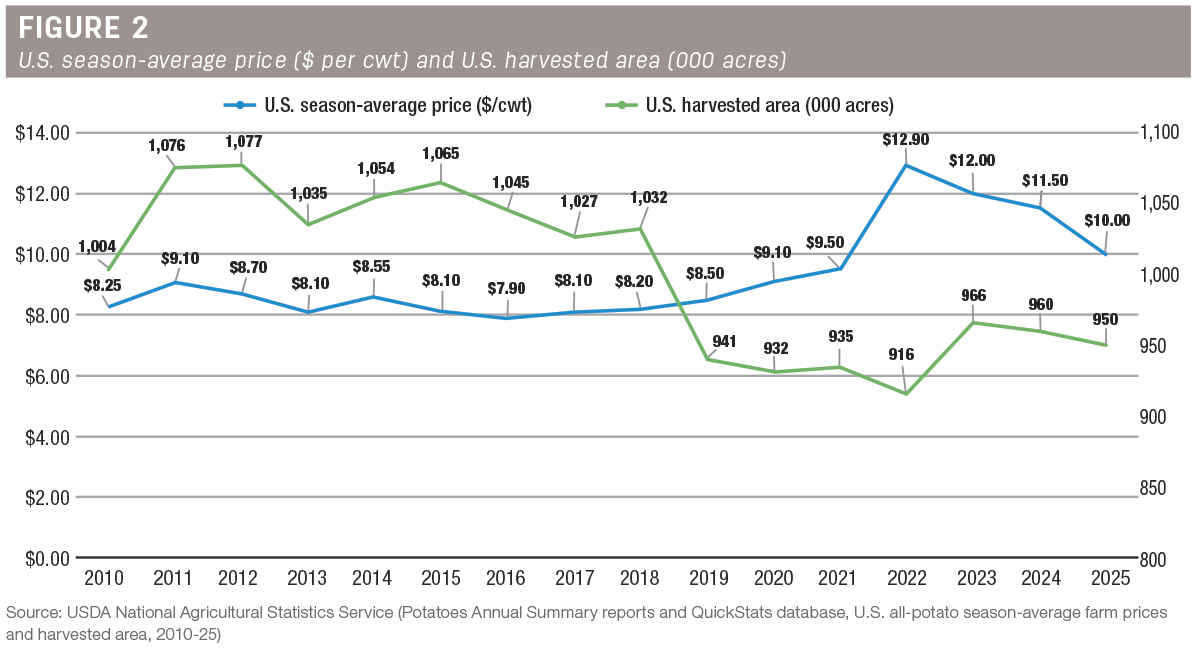
Figure 2 shows U.S. potato prices alongside harvested acreage over the same period as the cattle data above. Figure 2 shows that harvested acreage declined while prices continued to fall from 2023 through 2025. Unlike cattle, potato prices appear less directly correlated to supply alone, with imports, exports and demand dynamics playing a larger role – a topic worth exploring in a future article.
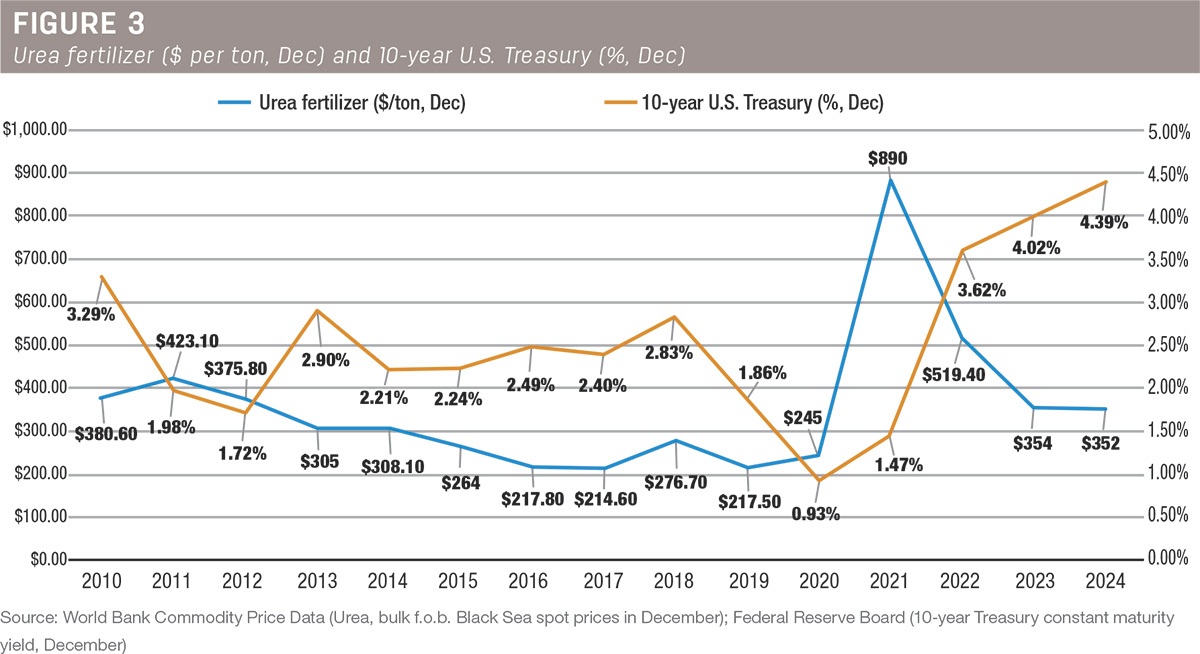
So far, the focus has been on revenue cycles. But input costs and interest rates matter just as much. Figure 3 compares a key input cost – urea fertilizer – with borrowing costs represented by the 10‑year Treasury yield. Both are major line items on farm and ranch income statements. While volatility has always existed, the magnitude of swings since 2018 has been striking. Global disruptions from the COVID-19 pandemic to trade disputes and armed conflicts have pushed volatility well beyond historical norms.
Volatility in agriculture isn’t new, but its frequency, speed and interconnectedness are meaningfully different today. Changing consumer preferences, geopolitical realignments and unexpected global shocks are no longer rare events – they are ongoing factors producers must plan for and manage. This doesn’t mean instability is the new “normal,” but it does mean producers must plan with greater flexibility and discipline than in past cycles.
Managing volatility the way it’s always been managed is no longer enough. Today’s environment rewards operations that understand their numbers, actively manage risk and maintain strong advisory relationships. A trusted lender, accountant and other advisers can help ensure that short‑term decisions align with long‑term objectives – especially when conditions are changing quickly.
Our team remains fully committed to agriculture and to our customer‑owners through every phase of the cycle. We believe in working alongside producers to build resilient operations that can withstand volatility and capitalize on opportunity. If you’d like to discuss how your operation is positioned for the next phase of this cycle, we welcome the conversation.



.webp?height=auto&t=1783636475&width=285 "63802-Thomas-GPS-equipment--Automated-Magnum-Tractor--Matt-Skinner-photo(1).jpg")
