With increasing pressure on water availability and rising production costs, many Idaho producers are looking for ways to get more out of every inch of water they apply this irrigation season. While new irrigation technologies can be valuable tools, improving irrigation efficiency does not always require a major investment. In many cases, small management changes can have a significant impact on water use, crop performance and overall profitability.

Here are five practical ways to improve irrigation efficiency without breaking the bank.
1. Know what is happening below ground
One of the biggest challenges in irrigation management is understanding what is happening in the root zone. Many irrigation decisions are still based on calendar schedules, crop appearance or simply habit. Unfortunately, crops often show signs of water stress only after yield potential has already been affected.
Whether using soil moisture sensors, a shovel or a soil probe, regularly checking soil moisture conditions can help determine when irrigation is actually needed and whether water is reaching the desired rooting depth. Monitoring soil moisture can also help identify overirrigation, which often results in water losses below the root zone.
The goal is simple: Apply water when the crop needs it and avoid applying more than the soil can hold.
2. Don't wait until the crop looks stressed
Many crops can experience yield loss before visible symptoms of drought stress appear. Waiting until leaves roll, wilt or show discoloring often means the crop has already experienced some degree of stress.
Using weather data, evapotranspiration information and soil moisture observations can help producers stay ahead of crop water demand. Irrigation scheduling based on crop water use allows producers to make proactive decisions rather than reacting to stress after it occurs.
3. Check your system uniformity
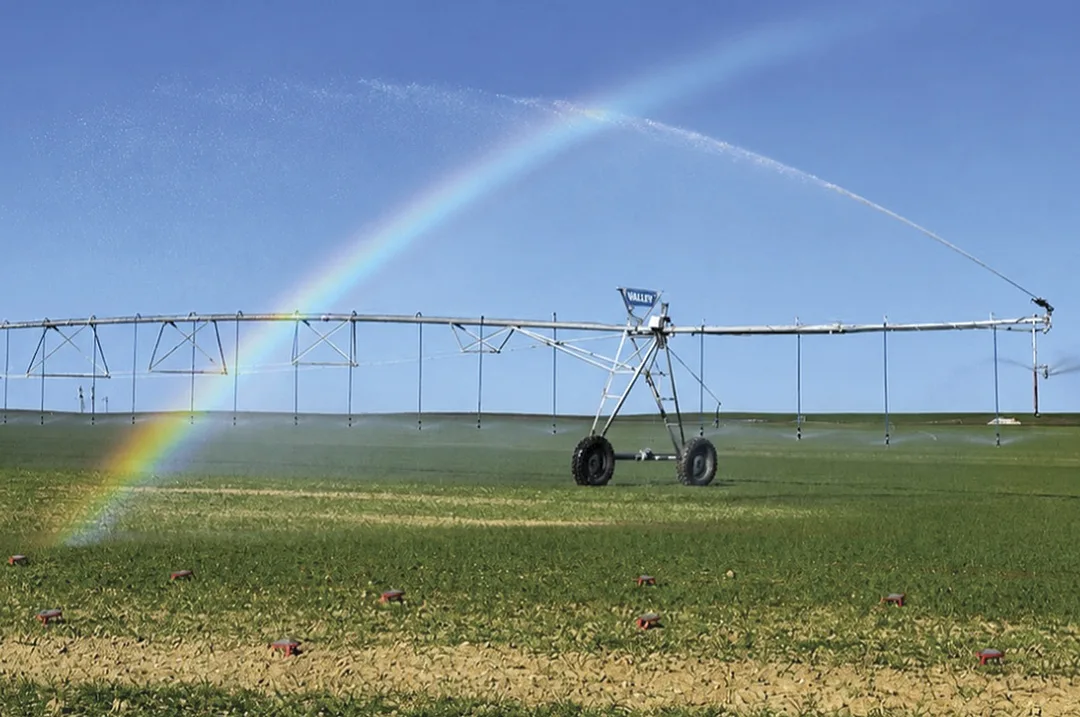
Even the best irrigation schedule will struggle to produce good results if water is not being applied uniformly across the field.
Over time, sprinkler nozzles wear, pressure regulators fail, leaks develop, and pivots fall out of alignment. These issues often go unnoticed because the system continues to operate, but they can create large differences in water application across the field.
At least once each season, take time to inspect nozzles, flush your lines, check pressures, look for leaks and evaluate overall system performance. Small maintenance issues can lead to large differences in crop growth and water use.
4. Pay attention to irrigation timing
Not all irrigation events have the same value. Water applied during critical growth stages often has a greater impact on yield than water applied during less sensitive periods. Crop water needs will also vary throughout the season, often increasing during reproductive growth stages.
For many crops, reproductive growth stages are particularly sensitive to water stress. Understanding when those critical periods occur can help you prioritize irrigation when water supplies become limited.
In years when water allocations are reduced or pumping costs increase, strategic irrigation timing may provide greater returns than simply trying to maintain the same irrigation schedule throughout the season.
5. Measure success using water productivity
When evaluating irrigation management, it is easy to focus solely on yield. However, another useful metric is water-use efficiency, or the amount of crop produced per unit of water applied.
Improving water-use efficiency is not necessarily about using the least amount of water possible. Instead, it is about maximizing the value of every inch of water applied.
Tracking irrigation amounts, yields and water-use efficiency over time can help identify management practices that consistently deliver the best return on water resources.
Small changes add up
Improving irrigation efficiency does not always require new technology or major capital investments. Often, the greatest gains come from better management, regular monitoring and paying attention to the details.
As water availability continues to be a major concern across Idaho and the western U.S., growers who focus on irrigation management fundamentals will be better positioned to maintain productivity, conserve water and improve profitability.
The good news is that many of these improvements can begin today using the tools and equipment already available on your farm! If you have questions about how to improve the water-use efficiency on your farm, please reach out to me.

.webp?t=1687979285&width=640)



.webp?height=auto&t=1783636475&width=285 "63802-Thomas-GPS-equipment--Automated-Magnum-Tractor--Matt-Skinner-photo(1).jpg")