What do you think of first when you hear the word stress? Maybe it’s working too many hours or missing your kid’s basketball game because your milker called out sick. Maybe it’s something more intense like a family member being in the hospital while still juggling the responsibility of everyday life.

Regardless, it’s safe to say we are familiar with the fact that stress exists on a spectrum of severity, and that the negative impacts of that stress vary depending on what the stressor is, how long it lasts and how many other stressors you experience at the same time.
If cows could talk, they would explain that they experience stress on a similar spectrum, though their stressors may look a little different than ours. Regardless of the source, the result is that stressed cows don’t produce as much as they could, and this impacts both the well-being of the cow and the profitability of your operation.
The obvious stressors everyone recognizes
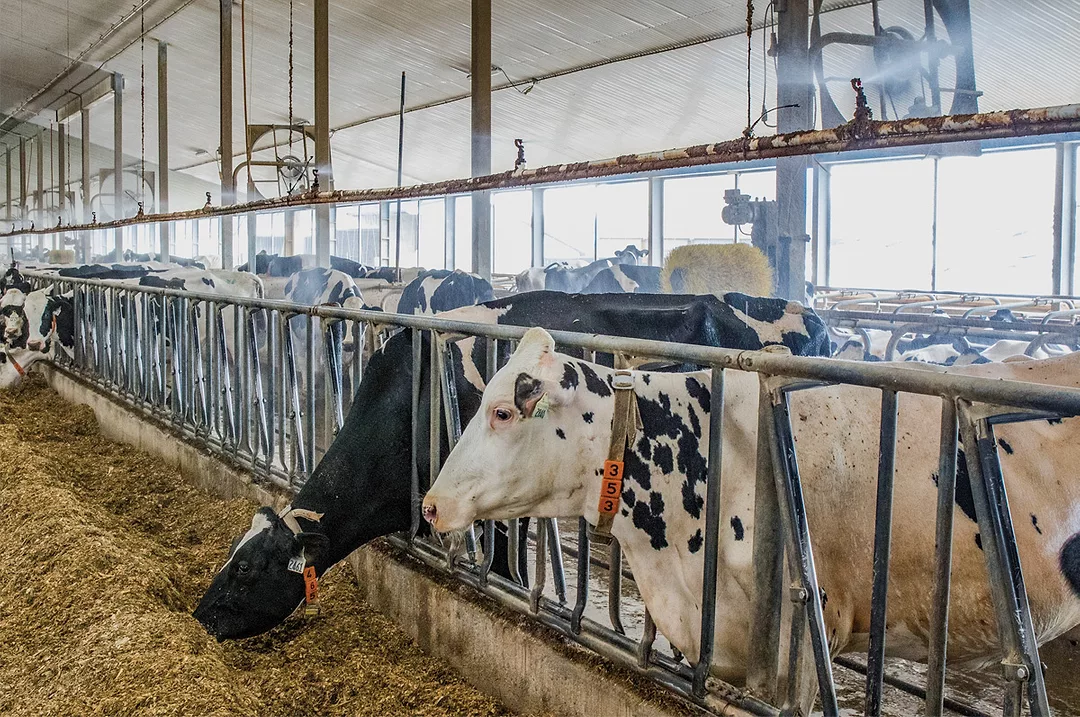
We have done a great job as an industry identifying some of the more obvious stressors cows experience and implementing management practices to mitigate them. For example, installing fans and sprinklers in high-priority areas, maintaining access to clean water and strategically managing the nutrition program can pay dividends in reducing the negative impacts of summer heat stress on production. Other obvious stressors include overcrowding and bunk space limitations, poor stall comfort and lying time, lameness/hoof health issues and over-handling.
Generally, we have guidelines to help us address these stressors, such as avoiding overcrowding in the transition pens, having high standards for bedding quality and quantity, pushing up feed frequently and setting up appropriate hoof-trimming schedules. These management practices are to address the stressors we can see. However, recent research from multiple labs suggests some of the most expensive stressors cows experience are the ones we don’t see.
The hidden stressors that quietly drain production
In the last decade, a growing body of research suggests that even the stressors we can’t see may be impacting your farm’s bottom line in bigger ways than initially thought. There are many sources of hidden stress on a farm. A more obvious example would be the transition period, as calving itself is stressful and the immune response associated with giving birth and placenta expulsion can be considered a strain on the cow’s normal physiological system. In addition, cows undergo multiple pen moves and diet changes in a short time. As such, everyone recognizes this time as representing the animal’s highest risk period for leaving the herd.
Other examples which may be less obvious include subclinical rumen and hindgut acidosis or environmental pathogen pressure. Inconsistent feeding times, sorting or slug feeding behavior, or ration imbalances can ultimately result in lost production due to the negative impacts of acidosis on gut health. Further, environmental pathogen pressure associated with dirty waterers, poor ventilation, manure/dirt contamination in feed or soiled bedding can result in the cow’s immune system becoming activated, which ultimately compromises production and profitability.
Perhaps the most hidden stress of all would include psychological stress or social stress that cows experience in a wide variety of different circumstances. This may include pen moves requiring the animal to re-establish social hierarchies, first-lactation cows entering pens with older cows, inconsistent milking or feeding times, slippery floors (unsure footing), poorly-lit rooms, rough cow handling or inconsistent feed or water access, among many others. In fact, it’s likely that psychological stress is one of many factors driving reduced productivity when cows are faced with any one of the obvious stressors mentioned earlier, and this all has to do with the impact of stress on the cow’s brain, gut and immune system.
How stress turns into lost milk and lost money
Interestingly, psychological stress can quickly turn the immune system on because of the impact of stress on gut health and barrier integrity. Like skin, the gut epithelium acts as a barrier between the animal and the outside world. Everything inside the gut is technically still outside of the body until it passes through the gut lining and into the bloodstream.
Like a brick wall, the cells (bricks) which make up the gut epithelium (wall) are adhered to each other via proteins called tight junction proteins (mortar). This assembly creates an effective barrier that protects the animal from bacteria, toxins or other non-desirable molecules within the gastrointestinal tract. Research shows stress (even psychological stress) can weaken those tight junction proteins. When that happens, bacteria and their toxins can pass into the bloodstream, a phenomenon otherwise known as leaky gut. Upon passage, the immune system immediately recognizes the bacteria/toxins and responds by turning on to remove the foreign invading molecules.
In the context of survival, it is very important that immune cells can turn on in the face of a foreign molecule entering the bloodstream. However, when it comes to making milk and keeping animals profitable, it is important to manage the cow’s environment so that the immune system is turned on as little as possible. This is because similar to an army going to war, an activated immune system requires a tremendous amount of resources – in this case, glucose and amino acids – to function. In other words, the energy and protein that would have otherwise gone toward milk production are instead being diverted toward the immune system to keep the animal alive.
Studies out of Iowa State University show that the energetic consequences of a severely activated immune system can be upwards of about 1,000 grams of glucose per day, which is the energetic equivalent of about 65 to 70 pounds of milk. Like stress, immune activation exists on a spectrum of severity. So when it comes to finding the next 2 to 5 pounds of milk, identifying less severe sources of cow stress on the farm is a logical place to start.
From stress to success: What winning herds do differently
It’s not always possible to eliminate stress entirely, but there are many practical management strategies to mitigate it. To start, having detailed and accurate records of cow and calf health, animal movement and logs of changes to management or nutrition programs empowers your business to make informed decisions and measure responses to adjustments in your operation.
Many practical tools have been discussed (like heat abatement, optimized nutrition programs, minimizing pen moves, reducing environmental pathogen load, etc.). Ultimately, the most profitable herds focus on what’s best for the cow in all facets of their business. They track and watch data closely and focus on creating a consistent, clean and comfortable environment for the cow which introduces the least amount of stress to their day-to-day lives. Small changes made to reduce stress for the cow lead to healthier animals, better peak milk, improved feed efficiency and a more profitable operation. Healthy cows make profitable dairies, and low-stress systems create both.