We use cookies to provide you with a better experience. By continuing to browse the site you are agreeing to our use of cookies in accordance with our Cookie Policy.
  • Sign In
  • Create Account
  • Sign Out
  • My Account
subscribe / renew
  • Topics
    • All recent articles
    • Forage Analysis
      • Testing Forages
    • Forage Equipment
      • Baling Equipment
      • Forage Technology
      • Groundwork Equipment
      • Silage Equipment
      • Storage Equipment
    • Forage Harvest
      • Harvest Considerations
      • Harvest Issues
    • Forage Marketing
      • Pricing Forages
      • Selling Forages
    • Forage Planting
      • Crop Rotation
      • Seeds
    • Forage Production
      • Common Issues
      • Growing Issues
      • Irrigation
      • Pests & Weeds
      • Plant Health
      • Soil Health
      • Soil Sampling
      • Weather
    • Forage Selection
      • Alternative Forages
      • Commodity Crops
      • Ensiled Forages
      • Grasses & Legumes
      • Hay
      • Small Grains
    • Forage Storage
      • Baling
      • Ensiling
      • Transportation
      • Wrapping
    • Forage Business Management
    • Forage Farm Features
  • News
    • Forage Industry Issues
  • Blogs
    • From the Editor
    • Guest Blogs
    • Irons in the Fire
    • Outside Eden
    • Tales of a Hay Hauler
  • Buyers Guide
  • Current Issue
  • Past Issues
  • Advertise
  • Ask AgProud

Progressive Dairy

Progressive Dairy Canada

PD Canada en Francais

Progressive Cattle

Progressive Cattle Canada

Progressive Forage

Agproud Idaho

Home

Home » Topics » Progressive Forage » Forage Selection

Forage Selection
Forage Selection RSS Feed RSS

60554-wyffels-cow-calf-getty.jpg

Managing beef cattle to get the best use of fall/winter forage

Low-quality forages can be a limiting factor in keeping cows in proper condition for calving, lactation and rebreeding, but there are tools available to maintain reproductive health and efficiency.
November 12, 2024
Sam Wyffels

Nutritional management plays a central role in promoting the health, productivity and reproductive success of beef cattle.


Read More

‘Moo juice’ helps fuel California dairy’s success

October 28, 2024
Emily Meccage

As a researcher, I spend all day, every day working alongside people in the forage industry to develop solutions for farmers to overcome the countless challenges facing their operations.


Read More
60345-schwab-1.jpg

Benefits of integrating crops and livestock

How can livestock production utilize crop acres? Many producers are finding that cattle, cash crop and cover crop enterprises enhance one another and improve the land long-term.
October 16, 2024
Denise Schwab

Livestock enterprises can use crop acres seeded to cover crops and crop residue to stretch the grazing season and save on feed costs. Crop operations benefit from the nutrient value added through livestock manure and to help with pest management.


Read More
60454-miller-crystalball.jpg

Alfalfa variety development: What can we expect in the future?

Alfalfa breeding has advanced to enhance disease resistance, adaptability to extreme conditions and profitability through genetic improvements, alternative uses like grazing and exploring new revenue streams such as carbon sequestration.
October 14, 2024
Donald Miller

The good news is that despite the downsizing of proprietary and public alfalfa breeding programs, there is still a lot of genetic improvements being made. This is in part due to the technical advances in plant breeding.


Read More
60306-lane-cow-eating-alfalfa-getty.jpg

All those tiny bubbles: A look at bloat in livestock

Legume bloat in livestock occurs when fermentation gases form stable foam in the rumen, preventing gas release. This buildup causes rumen expansion, respiratory distress and can lead to death.
September 17, 2024
Woody Lane

 
Everyone knows a livestock producer who’s lost animals to bloat. Because of the risk, some folks flatly refuse to graze their stock on dense stands of clover or alfalfa. Others kind of shrug, saying they’ve rarely lost animals and don’t worry about it much. So … what gives?


Read More
60143-miller-2.jpg

Alfalfa genetics and management techniques that extend stand life

The longevity and profitability of an alfalfa field depend on maintaining a stand density above six plants per square foot, influenced by genetics, initial density and management practices that minimize plant stress.
August 13, 2024
Donald Miller

When a producer plants an alfalfa field, there is an expectation that the field will remain productive for several years. Alfalfa is a perennial crop but there is a limit to its longevity, since all alfalfa fields naturally thin over time.


Read More
60161-fonnesbeck-pasture.jpg

Mixing grasses and legumes to create more productive pastures

The increased fixed nitrogen, greater herbage mass, improved CP content, better digestibility and greater ability to meet nutritional needs make adding these versatile forages to your existing pasture grass an option worth considering.
August 9, 2024
Sawyer Fonnesbeck

Those in the cattle industry have come to understand the term “hybrid vigor” and how it benefits the health, growth and stamina of our livestock. Many of the same things can be said for our pastures.


Read More
60150-meccage-mow.jpg

The advantages of alfalfa: The queen of forages and her court

Alfalfa's “queen's court” of benefits extends far and wide, offering exceptional nutritional profiles, soil enrichment, economic advantages and environmental sustainability.
August 7, 2024
Emily Meccage

Alfalfa, often crowned the “queen of forages,” has long reigned supreme in the world of agriculture, commanding respect and admiration from hay producers and dairy farmers alike.


Read More
59889-sedivec-1.jpg

Winter cereals for early spring grazing in an integrated livestock cropping system

Winter cereals provide excellent forage for livestock, either for grazing or to be hayed for roughage. They provide green, active growing plants during the fall and early winter periods, and extend the growing season of living plant roots in the soil.
July 9, 2024
Miranda Meehan and Kevin Sedivec

Winter cereals provide green, actively growing plants during the fall and early winter periods and are the first to green up in the spring.


Read More
59848-undersander-alfalfa-grass-mixture.jpg

Using alfalfa-grass mixtures

June 19, 2024
Dan Undersander

There are several benefits to seeding alfalfa-grass mixtures rather than pure alfalfa stands, starting with biodiversity.


Read More
Previous 1 2 3 4 5 6 7 8 9 10 11 Next
  • Progressive Forage
  • Porosity: The true measure of silage density

    June 11, 2026
  • 63553-thomas-teff-seed-head.jpg

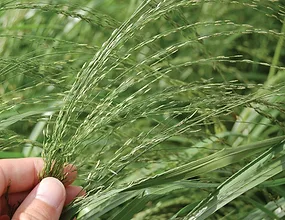
    Teff grass: Where it fits and where it doesn’t

    June 8, 2026
    • June 1, 2026 Progressive Forage digital magazine

      June 1, 2026

FREE NEWSLETTERS

Award-winning coverage of in-depth news and analysis to make your business more profitable.

SIGNUP TODAY
Advertisement
THE GUIDE

How do I get my company listed in your Buyers Guide? 
Submit a request to be listed for FREE in the Buyers Guide here. 

Why can I only see so many articles before I have to register for the site?
Find out why here.

How do I submit an idea for an article? 
Click here.

  • INDUSTRY NEWS
  • Forage Industry News

    Rock River Laboratory introduces family of brands

    May 15, 2026
  • Forage Industry News

    Breeding the future of alfalfa: Driving innovation amid industry consolidation

    November 28, 2025
  • Forage Industry News

    Producer-led Watershed Program causes ripple effect

    October 9, 2025
Advertisement

I'm looking for ________

Find the right products and services for your farm, ranch or operation.

CHECK OUT OUR BUYERS GUIDE
Advertisement
  • FEATURED PODCASTS
  • [Podcast] Being proactive about mental health with Jason Medows

    Progressive Forage
    Progressive Cattle
PERSONALIZED CONTENT
Create an account and see website content tailored to your operation.  It only takes a few seconds!
SEE RECOMMENDATIONS NOW!
Copyright © 2026 Progressive Publishing

MORE INFORMATION
  • About Us
  • Terms & Conditions
  • Privacy Policy
  • FAQs
  • Advertise
  • Shop
  • Stats Posters

OUR MAGAZINES
  • Progressive Dairy
    • Facebook
    • Twitter
    • Linkedin
  • Progressive Dairy — Canada
    • Facebook
    • Twitter
    • Linkedin
  • Progressive Dairy — en français
    • Facebook
  • Progressive Cattle
    • Facebook
    • Twitter
    • Linkedin
  • Progressive Cattle — Canada
    • Facebook
    • Linkedin
  • Progressive Forage
    • Facebook
    • Twitter
  • AgProud — Idaho
    • Facebook
    • Linkedin

CONTACT INFORMATION

Progressive Publishing
238 West Nez Perce (physical)
PO Box 585 (mailing)
Jerome, ID 83338


info@progressivepublish.com
(800) 320-1424
(208) 324-7513 (Main)
(208) 324-1133 (Fax)