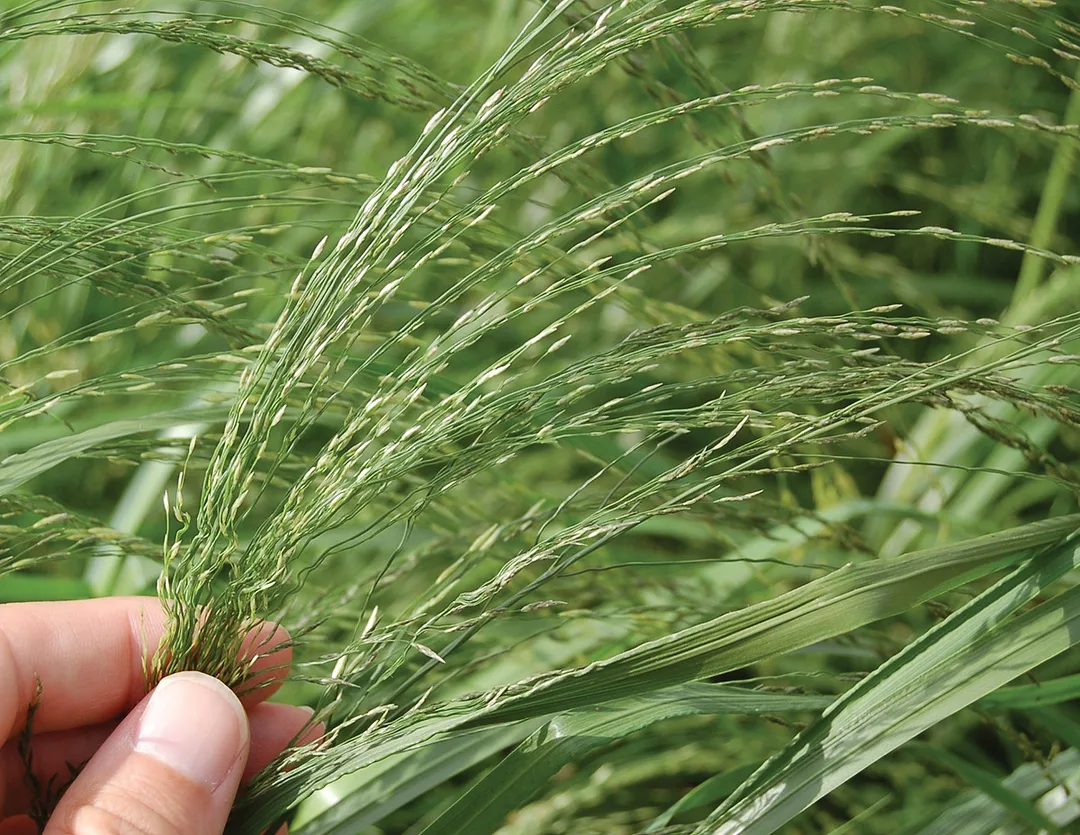
Teff is an annual lovegrass native to Ethiopia. It was one of the earliest cultivated plants for human consumption, with edible seeds, possibly as long ago as 4000 B.C.

This unique grass is not as well known in the U.S. as other forage grasses, mainly because its distribution around the world was initially as a grain. Only in recent years has it been grown as forage. Plant breeders in the last 20 years have released varieties for forage production as a high-yielding and high-quality forage grass.
Matt Yost, extension specialist at Utah State University, has evaluated teff performance in Utah, focusing on its water‑use efficiency and adaptability under arid‑region irrigation constraints.
“Currently, we are doing more trials, particularly interested in its reduced water use compared to other forages," says Yost. "Here in the arid West, farmers are always looking for alternatives that can be more efficient with water."
Teff should be planted late – typically in June in Utah – because it is not frost-tolerant. Planting later also gives farmers time to assess the season’s water outlook and determine whether they have enough irrigation to support other crops. In some cases, a spring cover crop can be harvested first, allowing producers to follow with teff, which establishes and grows rapidly in warm conditions.
“We can get two cuttings of teff in most places in Utah, depending on how quick it was planted and how much water is available – and how long it takes for the first cutting,” he adds.
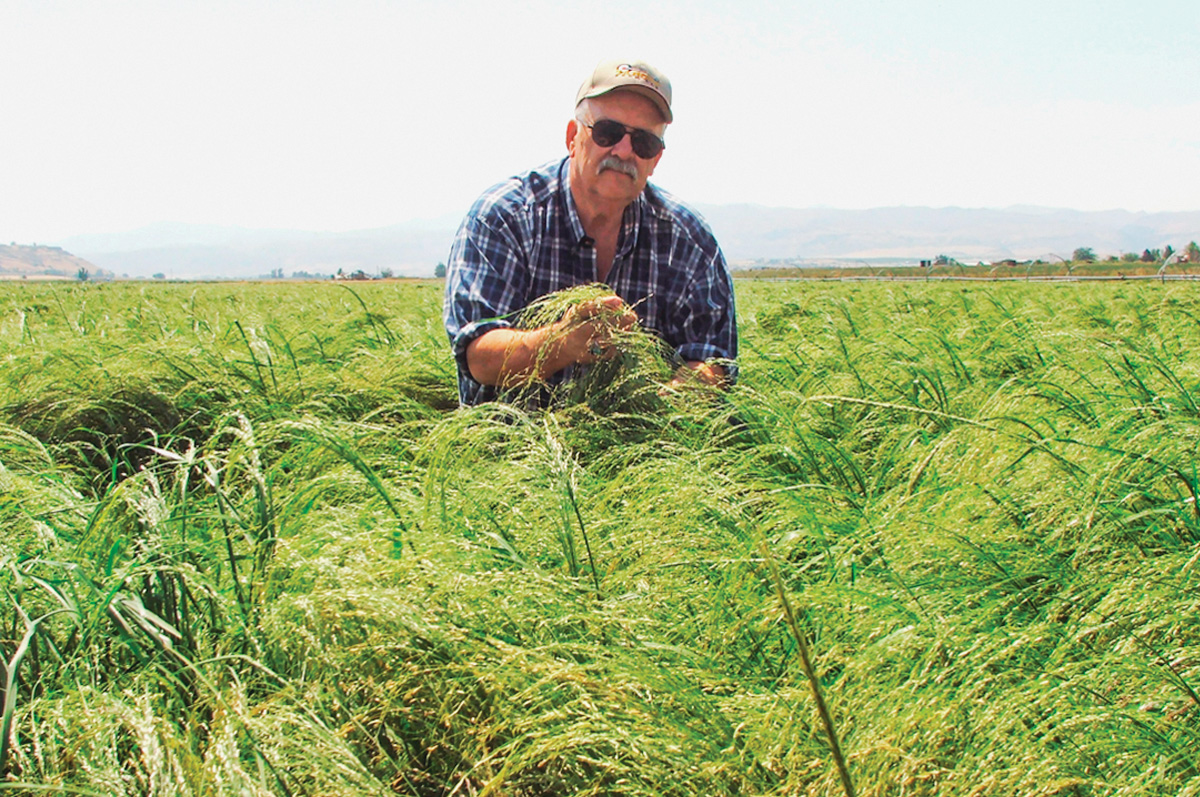
Don Miller examines a mature stand of teff grass in an irrigated trial field, evaluating seedhead development and forage density under warm‑season conditions. Image provided by Don Miller.
Teff can fill a useful niche when producers need an easy‑to‑manage warm‑season grass. Research comparing its water requirements with alfalfa, small‑grain forages, sorghum‑sudangrass and, more recently, hybrid forage rye, shows that teff performs well under water stress. Across irrigation trials, it has proven surprisingly productive with relatively small amounts of water.
Donald Miller was one of the first private breeders to become interested in teff and has been working with it since 2005.
Miller started his career working with alfalfa breeders in New Mexico, where he completed his master’s and Ph.D. programs. In 1984, he moved to Idaho to lead an alfalfa breeding program and research facility in Nampa, while also overseeing a second facility in California. He later transitioned into a national product development role within a major alfalfa organization, serving in that position until 2022.
A large grass‑seed firm subsequently brought him on to expand their alfalfa offerings and explore opportunities with teff. As part of that work, he focused on identifying a warm‑season crop that could fit well into rotation when growers transition out of alfalfa for a season.
“I’d heard about teff and contacted the USDA Plant Introduction Center that has germplasms from around the world," says Miller. "They had about 500 lines of teff and sent samples. We planted all of those here in Nampa to test them." Eventually he selected some that looked good for forage production.
Early on, there were no established management guides for teff as a forage crop. To build that foundation, Miller distributed seed to extension personnel across the country and gathered feedback from the farmers who planted it, documenting what worked and what didn’t. That collective input became the basis for the first management guide, which has since been refined through multiple updates and is now in its third edition.
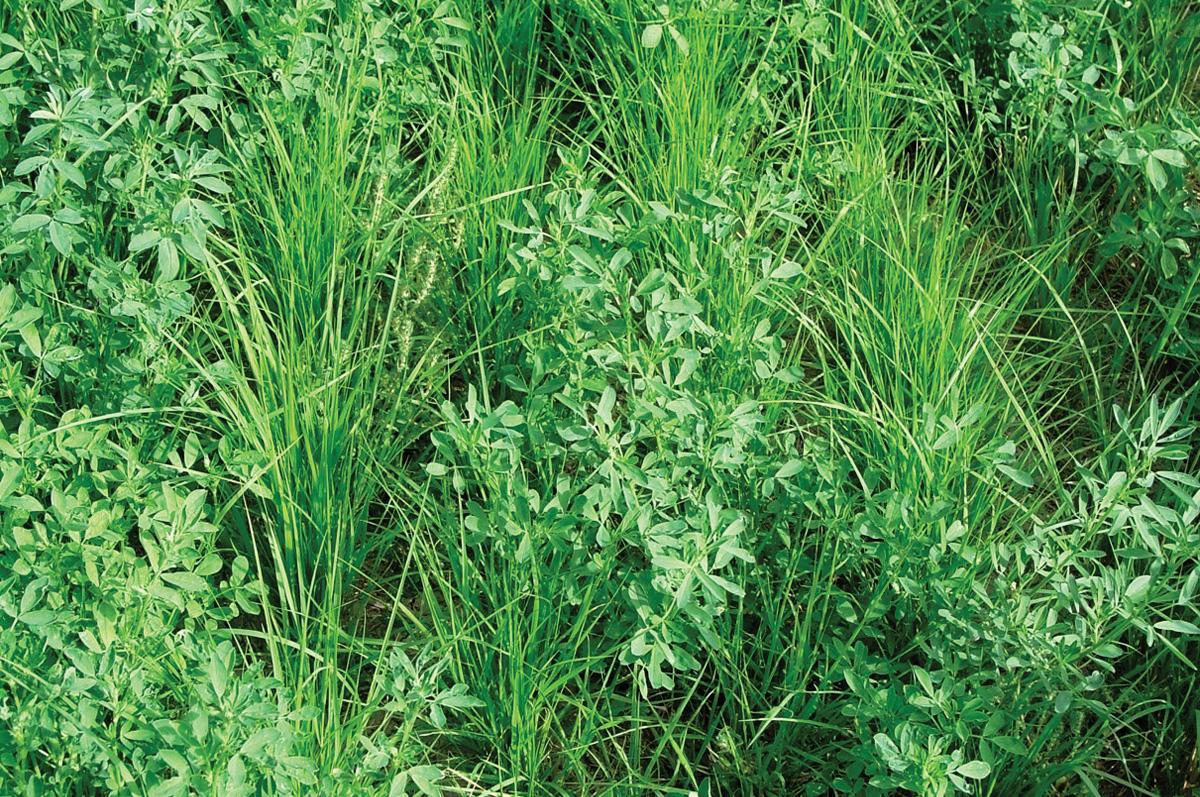
Teff seedlings interseeded into a thin alfalfa stand establish between existing crowns, providing rapid ground cover and supplemental forage growth during warm‑season conditions. Image provided by Don Miller.
Horse people loved the new forage. Any horses that were a little overweight did well on it because it tends to be lower in sugar than most grasses.
“We were following the horse market for a while and then started looking into whether it would be a benefit for other livestock,” he says.
Miller also worked directly with dairies using teff hay and found they were consistently pleased with its palatability. One operation in the Southwest even brought him in to provide on‑farm guidance after their nutritionist expressed interest in adding teff to the ration. Growers in the Midwest were also producing teff, and one supplier included a few bales in a shipment to a major equine facility. The feedback that followed made it clear the horses favored it, prompting requests for more of the grass hay.
Teff seed is extremely small – about 1.3 million seeds per pound compared to roughly 250,000 in alfalfa – which makes handling and planting a challenge. Early seed lots were even fine enough to slip through bag seams.
“We added a coating to give it more bulk and put color in the coating to make it easier to see in the field, to check the depth of planting,” Miller says. "The coating improves visibility and flow, but it also shortens shelf life; once coated, seed generally cannot be stored for more than a year because the wetting process reduces longevity."
As Miller visited farms around the country, he often heard that teff hadn’t emerged well. But when he walked the fields, the pattern was clear: In the planter tire tracks – where the soil had been slightly firmer – the stands were excellent. The experience reinforced how critical firm seed‑to‑soil contact is for such a tiny seed. Teff can also be successfully broadcast if the field is rolled afterward to ensure that same light compaction. You can plant it with a grain drill if you just drop the seed on top of the ground and then roll it. A Brillion planter works best.
Miller’s field work reinforced how sensitive teff is to seedbed firmness and planting depth.
“We found that when teff is planted in a firm seedbed and not too deep, it will germinate quickly. If you wrap teff seed in a wet paper towel, it will sprout within 24 hours,” he says. Trials across multiple regions also showed the crop to be broadly adaptable – performing well in both wet and dry environments – and relatively drought-tolerant despite its shallow root system.
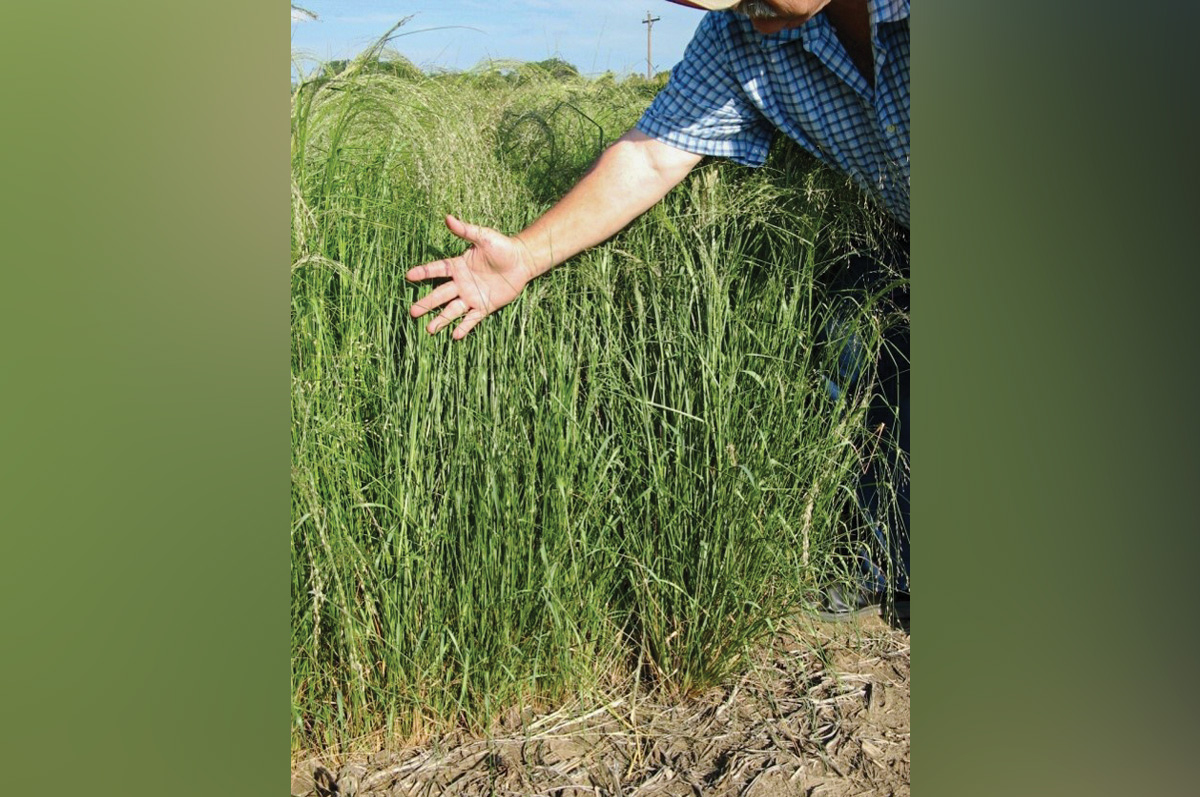
A teff stand reaches harvest maturity, with uniform height and dense tillering indicating optimal growth conditions and readiness for cutting in warm‑season forage production. Image provided by Don Miller.
Trials in southern Texas showed teff staying green when other crops began to fade, underscoring how quickly it responds when moisture and temperature align. In Wisconsin, some plantings were ready to cut just 45 days after seeding, and subsequent cuttings could be taken about every 30 days as long as stubble height was maintained. Leaving roughly 4 inches is essential because the plant’s energy reserves are concentrated in the lower stems.
Cutting management strongly influences regrowth. If harvest is delayed and the crop begins forming seedheads, second‑cut yield and quality drop sharply as the plant shifts its reserves into seed production. Most establishment problems traced back to planting too early – before soils reached about 65°F – cutting too short, waiting too long to harvest or applying excessive nitrogen (N). When teff follows a legume, the first cutting often requires little to no additional N.
Teff can test in the upper‑teen range for crude protein (CP), and its palatability is consistently strong compared to many other warm‑season grasses. Demand initially came from the horse market, but sheep, beef cattle and dairy herds have all performed well on it. Teff has also proven useful as an emergency forage: if an alfalfa stand suffers significant winterkill, producers can take the first, thinner cutting for hay and then interseed teff to capture a second – and sometimes third – cutting as an alfalfa-teff mix. The crop establishes quickly, making it a reliable option when forage production is needed in a hurry.
Teff is a C4 species, well-suited to hot, dry climates and can generally be grown anywhere producers already grow corn or sorghum. Although its shallow root system limits how aggressively it can be grazed early on, some operations have used it for pasture. Trials in the Southeast showed it staying green when other forages declined. The crop typically performs best when harvested for hay first and then allowed to regrow for grazing, by which point the root system is developed enough to support light to moderate pasture use.
Dan Putnam, extension forage agronomist at the University of California – Davis, notes that teff seed is so small that thousands can rest in the palm of a hand, making uniform distribution a challenge. He emphasizes that growers need to dilute the seed with a carrier – such as cornmeal or non‑viable alfalfa seed – to improve flow, prevent bridging in planters and achieve more even placement across the field.
“The seeding rate is low; you can probably just use 5 to 10 pounds of seed per acre," says Putnam. "Air seeders followed by rollers have been used. It does well in summer conditions, unlike many of the cool-season grasses that quit growing in late summer.”
As a forage, there are many potential customers, including people with sheep or goats.
Putnam adds that as a grain crop, teff produces relatively modest yields compared to other cereals, and the market for the grain itself remains highly specialized. Demand is concentrated in communities that traditionally use teff flour, with the strongest markets located in areas such as Washington, D.C., the Bay Area and parts of Southern California.