Since stepping away from our national magazine Progressive Cattle and into the role of editor for this publication last year, I’ve been figuratively drinking from a fire hose – or in our world, more like straight from an end gun.

I’ve always understood that water is vital to the arid West and to our state in particular, but I’ll embarrassingly admit I had no idea just how complex the issue really is.
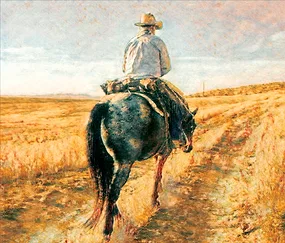
You don’t have to drive too far in southern Idaho to see what the landscape looked like before early settlers transformed the sagebrush desert into a patchwork of green. Using water as the paint, these settlers brought economic prosperity through canals and dams along the Snake River, creating opportunity only true visionaries could see.
Adding to the region’s magic is the Eastern Snake Plain Aquifer (ESPA), the largest aquifer in Idaho, spanning nearly 11,000 square miles. But what truly makes Idaho’s water system unique is the mountains and the snowpack that melts and flows into our reservoirs, providing critical storage for the growing season ahead. Yet many of these essential storage systems are aging, with some approaching or exceeding 100 years old.
In some ways, we are not so different from the settlers of yesterday. While attending the Idaho Water Users Association summer meeting in June, I heard an interesting comparison between a broken-down wagon and developing a mitigation plan, but this could really be applied to any water work done in the state.
It was described that when a pioneer family’s wagon broke down – damaged a wheel or something to that effect – they probably had to find someone who knew how to fix it. (Remember, they were pioneers coming from a variety of occupations and backgrounds to settle the West and might not have had the skills.) Major preparations were also required to start the journey, and they needed a team – a team of horses, oxen or mules and a team of people. And it’s likely in a wagon train that they had a guide and a goal of how many miles to travel per day to reach their destination.
Whether it’s a developing a mitigation plan, modernizing water infrastructure, understanding how a changing climate impacts water resources or getting involved in making sure legislators know just how important this resource is, they are all pioneering efforts for tomorrow. Like the family with the broken wagon, we may not know the path forward, and we have to ask for help. There will be preparations – sometimes extensive – the challenge of figuring out how to finance it, and lastly, it will require a team and a goal.
Earlier this year, HB445 was passed to fund $30 million in water projects, but it didn’t come without opposition. This is a reminder that there is still important work to do to protect this vital resource. Water projects are lengthy, and they come with a hefty price tag. It often takes years before those efforts are realized, but like the early settlers, it's all part of a long-term vision.
You can read about some of the latest projects underway or completed here and here.