
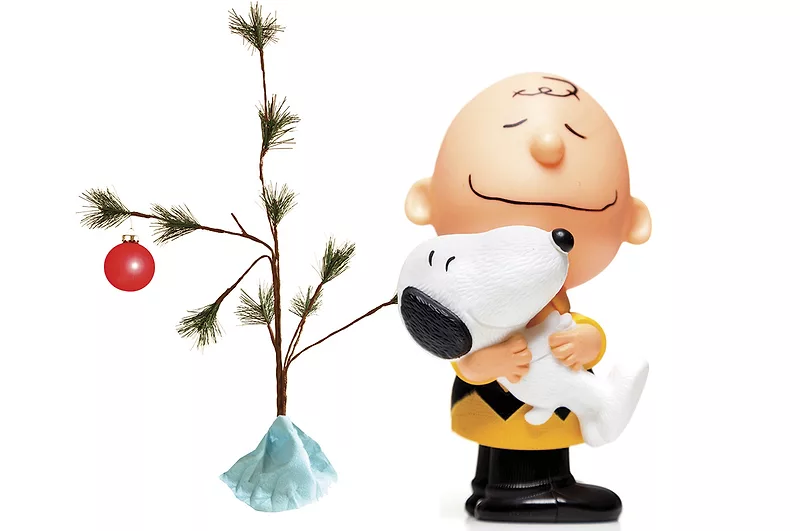
Charlie Brown and I are kindred spirits. Our similarities are uncanny. We both have round faces, we’re both snappy dressers, and we both have a single, squiggly hair in the middle of our bald heads. Yes, Charlie Brown and I share many similarities.
Except our views on Christmas. Charlie Brown famously complained about the overcommercialization of Christmas. Granted, it was because of his negligence in choosing a crappy tree in the 1965 special, A Charlie Brown Christmas. I, on the other hand, relish the commercialization of Christmas.
Some aspects of Christmas are overdone. Can we agree that Santa Claus is a tradition we should move past? I haven’t always been jaded; I was a big fan of Jolly Old St. Nick. When I was a young boy, I was consistently on the “nice list,” and a genteel elderly Scandinavian man left me gifts and treats on Christmas Eve.
That changed when I was 9 years old. We have a community Christmas party at Three Creek with an appearance of Santa Claus as the final act. In 1984, our community chose a local ranch hand as a fill in for the real Santa. He performed for the low price of two bottles of Boones Farm Wine. Learn from our mistake: Pay your Santa Claus after their performance, not before. That drunken, belligerent ranch hand/part-time Santa Claus illuminated the true identity of Santa. A big beer belly, rosacea-flushed cheeks and a constant, inexplicable laugh … Ho, ho, ho! Since 1984, Santa Claus has been a drunkard in my mind.
I was told the magic of Santa Claus is more poignant when your kids are young. What I discovered was a late night, more money than a young family should spend and a Herculean effort of theater and cookie crumbles. And Christmas morning, a fat man breaks into my house, stealing nothing but the credit for my hard work.
“But Daddy, if you don’t believe in Santa Claus, he’ll lose his Christmas magic,” my kids would sing-song their admonishment to me. “Bah, humbug!” I reflexively reply. Maybe we have watched too many Christmas movies.
The commercialization of Christmas should be embraced. Between Thanksgiving and Christmas is a time of unbridled consumer spending. Thousands of our neighbors will be hired to staff the busy retail time and thousands of small businesses turn a profit for the first time this year. How is this anything other than Christmas magic?
We in agriculture benefit from the profligacy of commercialism. Entire sectors of agriculture are tied directly to Christmas. Christmas tree farmers are an obvious example, but you could include growers of mistletoe, holly and poinsettias. Many people think of pumpkins for Halloween, but a separate variety of pumpkins are canned, and 80% of those canned sales occur around the holidays. I love cranberries, but me and millions of people only eat them during the holidays. Nearly 30% of annual turkey sales occur from Thanksgiving to Christmas. Are you still a Christmas commercialization skeptic?
Most other foods see an increase around the holidays. Sales of roasting meats rise, so add pork and beef to your list. Sales of potatoes increase by two to three times before Thanksgiving and Christmas. Sweet potatoes and green beans see an increase during the holidays.
The products used in cooking and baking increase in sales. Flour, eggs and dairy products spike going into the holidays. With candies and other sweets, sugar sales increase by about 50%. Christmas spices like cinnamon, ginger, nutmeg and mint all see a seasonal peak around the holidays. Even citrus and pears see a rise for Christmas gifts. Everyone in agriculture is seemingly affected by the commercialization of Christmas.
To me, the more commercialization around Christmas, the merrier. To Charlie Brown’s defense, if commercialization is the gluttonous purchase of foreign-made trinkets from multinational corporations, then I agree that commercialization is bad. But the commercialization of buying thoughtful gifts from local businesses and preparing a meal to gather with family, is that commercialization we can get behind?
And don’t forget how the Charlie Brown episode ends. “For unto you is born this day in the city of David a Savior, which is Christ the Lord” (Luke 2:11 KJV). Christmas is a great time to celebrate the birth of Christ. But we really should celebrate the birth, life, death and resurrection of Jesus Christ every day … not just on Dec. 25.
This Christmas, I really feel like celebrating. Let’s celebrate Santa Claus (drunken or otherwise). Let’s put up wilted trees and obvious mistletoe. Let’s exchange gifts and gather at a Christmas table for a holiday meal made from local agricultural products. And let’s celebrate the birth of Christ. This Christmas, why don’t we celebrate to the extreme. And enjoy an overcommercialized Idaho Christmas.






.webp?height=auto&t=1783636475&width=285 "63802-Thomas-GPS-equipment--Automated-Magnum-Tractor--Matt-Skinner-photo(1).jpg")
