May Day was fast approaching. As I stepped out into the dull light of the dawn that late April day, I was greeted with a hint of a sun ray shooting up over the mountains to the east and the gentle slap of temperatures flirting with, but not quite reaching, the frost. I could hear the soothing steadiness of the waters of Mill Creek as they made their way down to the irrigation ponds and ditches of the lower elevations. There was little chaos in the creek, as one might sometimes expect this time of year.

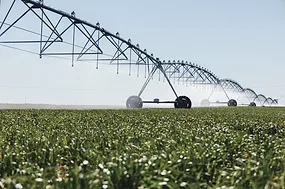
I glanced up at the familiar peaks and ridgelines of my home. There still remained respectable amounts of snow above the timberline and among the conifers in the wind-blown draws. The days hadn’t yet warmed up enough to encourage the white crystals to transform into a liquid state and speed down the mountains to refresh the valley below. And, although the green of the fields grew brighter by the day, it wouldn’t be long before the plants would be begging for the life-giving water.
One of my daily rituals is to complain about the weather, regardless of the flavor Mother Nature may choose to serve up on any given day – but not on this day. On this day, I was perfectly happy with what the heavens were proposing – not too cold, not too hot. It was a Goldilocks-perfect kind of a day for the season.
I wanted the warm-up to summer to take its sweet time. For those of us in the high desert and mountain country of the West, spring runoff is one of the most feared, revered and anticipated events of every year. A rush to several consecutive 75-degree days would send the snow off the mountain in a torrent, in which case, much of the precious water would speed downstream where those of us who pray for it every day would receive none of its benefit. The slower ascent of the snow line and subsequent descent of the water, the better it is for those of us below. Water makes it all work.
My home place is east of, and about 600 feet higher in elevation than, the town of Oakley, Idaho. The winter of 1983-84 is perhaps the most famous of all the seasons in Oakley’s recorded history. The snow began piling up in the mountains to the south of Oakley early that winter, and the storms never slowed down until late March. Not even the old timers could recall such a winter. Well before the advent of spring, the folks of the town were water watching.
Oakley lies at the foot of the mountains of Nevada and Utah to the south. The lay of the land is such that the streams and creeks of the mountains flow into the sprawling Oakley Valley and naturally proceed downstream to the mighty Snake River, some 25 miles to the north. In the early 1900s, the Oakley Dam was built to capture the water of Goose Creek and Trapper Creek to form Lower Goose Creek Reservoir for the purpose of irrigating the potentially fertile farm ground of the valley downstream.
Despite early and optimistic projections of the original engineers and builders of the dam, the reservoir never came close to filling. Nevertheless, the dam mostly fulfilled its purpose, allowing the desert to blossom into an amazing agricultural region. The natural channel of Goose Creek eventually disappeared as the brush was cleared, replaced by productive farmland. Nobody really gave it a second thought … until the winter and spring of ’84.
The details and storylines are many, but the gist of it all is that a flood was imminent. It was obvious to everyone that there would be much more water coming out of the mountains than the dam could hold. It was coming at a rate much faster than it could be released. Locals and experts from the state and federal levels and the U.S. Army Corps of Engineers pondered and worried and figured and feverishly worked to find a solution. If one wasn’t found, the tiny town of Oakley – and the much larger county seat of Burley, 20 miles to the north on the banks of the Snake – would be devastated. The decision was all but final that the only thing that could be done would be to allow nature to run its course. A flood was going to happen.
I came to this country in 1995. One of the first things I learned of was the ’84 flood. My mother gave me a book on the subject titled, A Flood Cannot Happen Here. I never quite made time to read it and naturally assumed the title referred to the sentiment of any rational person that the terrain and weather patterns of the area would not likely allow for a flood of any significance. It wasn’t until recently that I discovered the power behind the title of the relatively nondescript book.
At nearly the last moment, when hope was hanging by a weak and fraying thread, community members, along with civic and church leaders from various congregations, gathered to plan for the worst. One particular church leader stood at the front of the crowd. Looking into the troubled eyes of his friends and neighbors, he boldly declared, “A flood cannot happen here.”
He wasn’t making a brash, arrogantly naive statement, like something uttered as the Titanic rammed into the iceberg. He wasn’t mocking Noah as the first drops of rain fluttered down. He was leading his people into battle, as it were. A flood would not happen here because, through faith and grit and action nonpareil, those people would not allow a flood to happen.
In a miracle that was mostly unnoticed by the world, the community of farmers and ranchers and schoolteachers and shopkeepers banded together and in the space of a few days built a giant 25-mile-long canal from the Oakley Reservoir to the Snake River. It didn’t matter whose land or farm the canal crossed or ripped up or divided; there was nary a complaint, only steadfast commitment and sweat and love. Every soul, regardless of social status, religion, gender or race, contributed with shovels and excavators and tractors and backhoes and time and effort. Ultimately, the water started flowing from the dam as the last mile of the canal was being dug.
It was news, but not nearly the news it would have been had a devastating flood occurred. That’s how it often goes, I think. The real good news is not news at all. To me, the lesson of the nonflood of ’84 is that we truly can make great things happen or prevent devastating tragedies from taking place. Great things begin with the small and simple. But the small, simple, unpublished, unnoticed thoughts and ideas and actions may be the grandest of all.