-
Flushing the system
- If you have water quality issues or if your well is pumping some sand
- Clean out the sand trap
- Drain water from all pipe above ground
-
Panel boxes
- Check for loose or damaged connections
- Seal up openings to avoid rodent damage
-
Structure
- Check sprinkler chart for proper sprinkler placement
- Check for worn or broken components, sprinklers and regulators
- Replace every 7,000 to 10,000 hours
- Check boots, gaskets and mid-drains for leaks
-
Drive train
- Drain water from gearboxes and top off with the proper lubricant
- Check knuckles for wear, and make sure shields are in place
- Check tire pressure
-
Pivot tracks
- Fill tracks in the fall so they can firm up over the winter
- Fill tracks in the fall so they can firm up over the winter
-
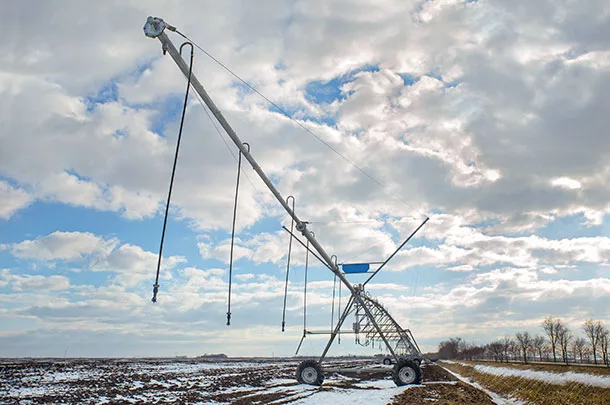
Park pivot
- Position system parallel to prevailing winds
- Park on a level surface, not in an old track, so the system can expand and contract with the freezing temperatures
-
Lock out and secure system
- We don’t want the system to be turned on during the off-season without the grower’s knowledge. Ice buildup could take the system down.
- We don’t want the system to be turned on during the off-season without the grower’s knowledge. Ice buildup could take the system down.
-
Clean up vegetation
- Around pivot point and well
- Make the space less inviting to rodents
-
Chemigation pumps
- Drain and clean pump and hoses
- Drain and clean pump and hoses
-
Protect from cattle
- If grazing cattle on stalks, protect the system and pumping plant from cattle
It is a good idea to make notes of problems that you encountered during the growing season while they are fresh in your mind! 
Troy Ingram is an extension educator with the University of Nebraska – Lincoln.
—From University of Nebraska – Lincoln
PHOTO: Photo courtesy of Getty Images.