Producers face an increasingly complex forage landscape. Between cool‑season perennials, warm‑season natives, short‑term annuals and diverse cover crop mixes, the number of available choices has expanded dramatically. Yet the core challenge remains unchanged: selecting species and management strategies that align with the producer’s goals, timelines and field conditions.

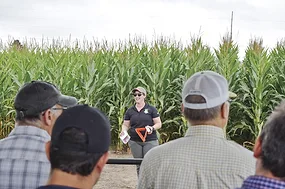
As Laura Lant Haney emphasized during her Illinois Forage Institute session, the most important step in choosing among them is deceptively simple: Start with your goals and work backward.
“Any time I meet with producers, one of the first questions that comes up is what the producer’s goal is,” said Lant Haney. “Whether the operation is grazing‑focused, hay‑focused or balancing both, those goals shape every recommendation that follows.”
Seed suppliers can only match species to needs when they understand harvest timing, quality expectations, field history and long‑term rotation plans.
Start with the goals
Producers often ask for grass or a pasture mix, but Lant Haney urged them to be more specific.
“Tell us a little bit more about what you’re wanting – think long term, not just what you need now,” she added. “Knowing whether a field will remain in forage for three to five years – or transition to another crop – costly mistakes such as planting species that complicate future rotations or fail to meet quality expectations.”
Sharing details about harvest method, equipment limitations or grazing pressure helps seed suppliers avoid recommending species that won’t dry down for hay or that may cause spoilage.
Lant Haney also encouraged producers to consider the narrow planting windows that have become more common in recent years. Weather extremes often force late decisions, and she noted that a May 15 alfalfa seeding may have an 80% chance of success in a moist forecast – but only 30% if conditions are dry. In those cases, short‑term annuals may be the better fit.
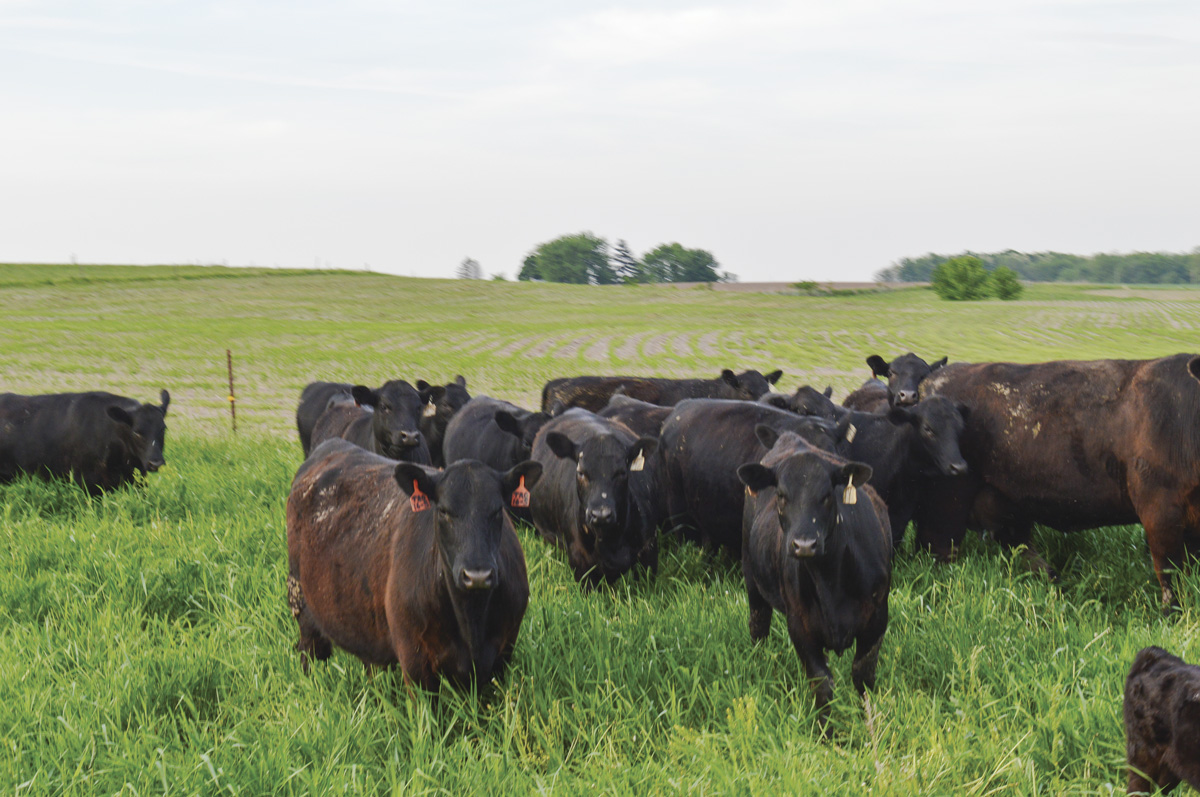
Angus cattle graze a grass pasture. Image by Laura Lant Haney.
Perennial forages
Perennial systems require patience and precision. Some species take months to produce a harvest; others may require years to reach full productivity. Because establishment windows are narrow, producers must weigh soil conditions, moisture forecasts and risk tolerance before planting.
Alfalfa
Alfalfa remains a cornerstone forage across the Midwest. Its drought tolerance, feed quality and multiyear productivity make it a valuable investment. But autotoxicity limits renovation options.
“Existing alfalfa plants will not allow new alfalfa plants to establish,” said Lant Haney. “Producers typically rotate alfalfa through a sequence of termination, fall grain, summer annual and reseeding to avoid stand failure.”
Variety selection also matters – leafhopper resistance, branch‑root types, fall dormancy ratings and winter survival scores – all influence longevity and performance.
Lant Haney also cautions against heavy nurse‑crop competition.
“These new varieties do not like that much competition,” added Lant Haney. “I strongly encourage most producers to keep oats under two bushel per acre.”
Cool‑season perennial grasses
These species form the mainstay of many Midwest forage systems:
- Tall fescue (novel endophyte) – retains persistence benefits without toxicosis risk
- Smooth brome – high tonnage, sod‑forming, but challenging to seed
- Orchardgrass – excellent alfalfa companion, visible even at low rates
- Timothy – prized in horse hay markets, low tonnage but high palatability
Bluegrass and perennial ryegrass can be used sparingly in hay mixes but excel in pasture systems where sod formation and traffic tolerance are priorities.
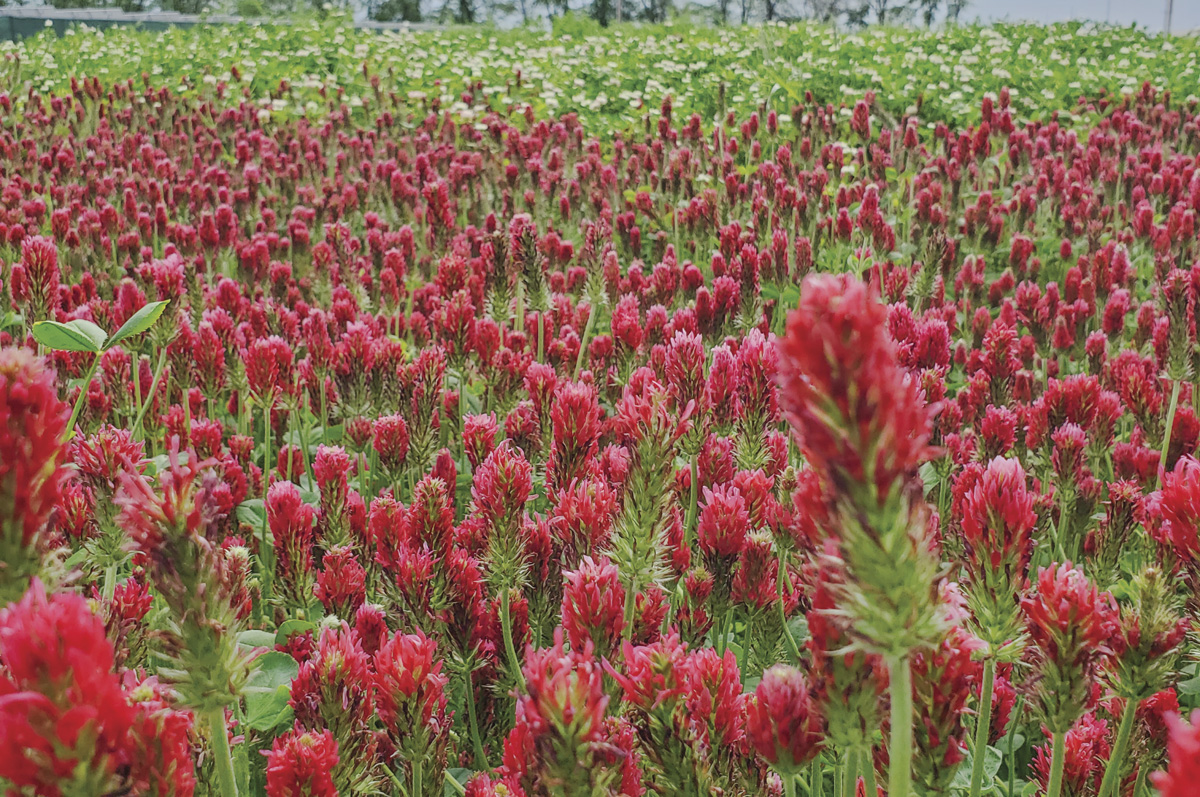
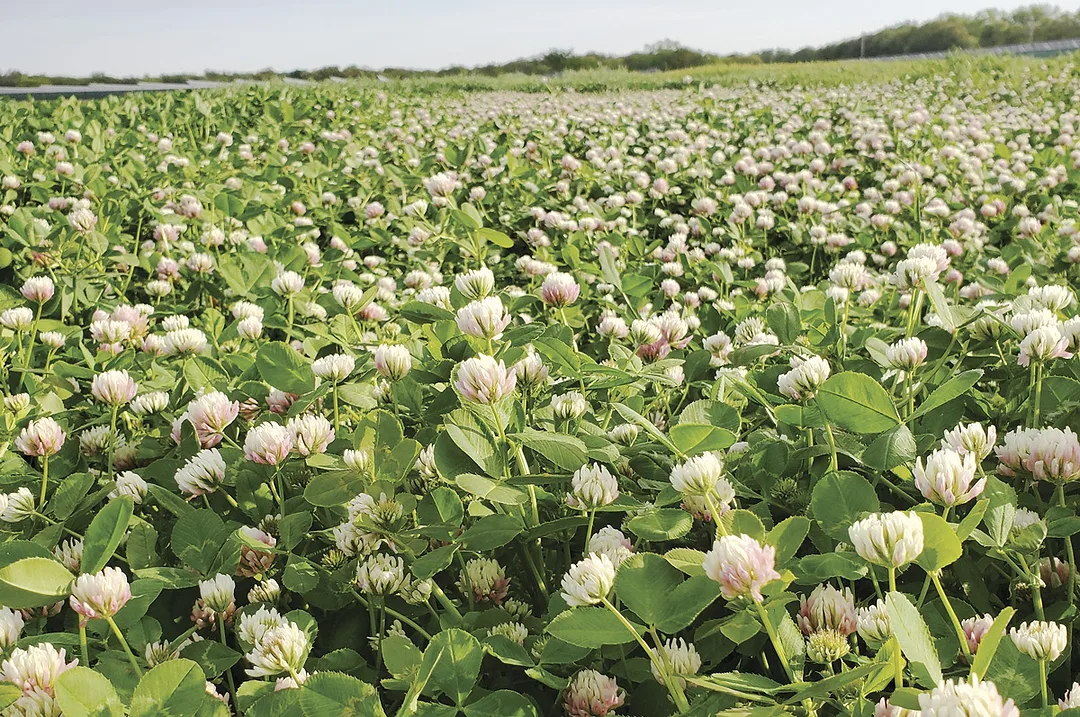
Crimson clover blooms across a field, adding color and nitrogen to the soil. Image by Laura Lant Haney.
Pasture forbs
Chicory and plantain add protein and palatability but do not dry down well, making them pasture‑only additions.
Warm‑season perennials
Interest in eastern gamagrass, big bluestem and switchgrass continues to grow. These species offer deep roots, drought resilience and long‑term persistence – ideal for marginal acres.
But establishment is difficult.
“The warm-season perennials can be tricky to get established – it’s better to start with just a couple acres,” added Lant Haney.
The biggest mistake? Overseeding. Warm‑season natives must be planted thin; too many pure live seeds per acre can be disastrous.
Lant Haney also noted rising interest in adding native forbs and flowers for pollinator habitat, but cautioned producers to introduce them slowly due to potential livestock toxicity.
Annual forages
Annuals provide rapid forage production and can fill gaps when perennial establishment windows close.
Sorghum family
- Forage sorghum – tall, thick, ideal for silage
- Sorghum-sudan – flexible for single or multiple cuttings, can be wet‑baled
- Sudangrass – best option for dry hay
All carry prussic acid risk, but new prussic acid‑free sorghum-sudan varieties are emerging and gaining popularity.
Lant Haney noted how quickly producers embraced the trait: “I still run out every year – producers appreciate these products but appreciate not having to have that level of management.”
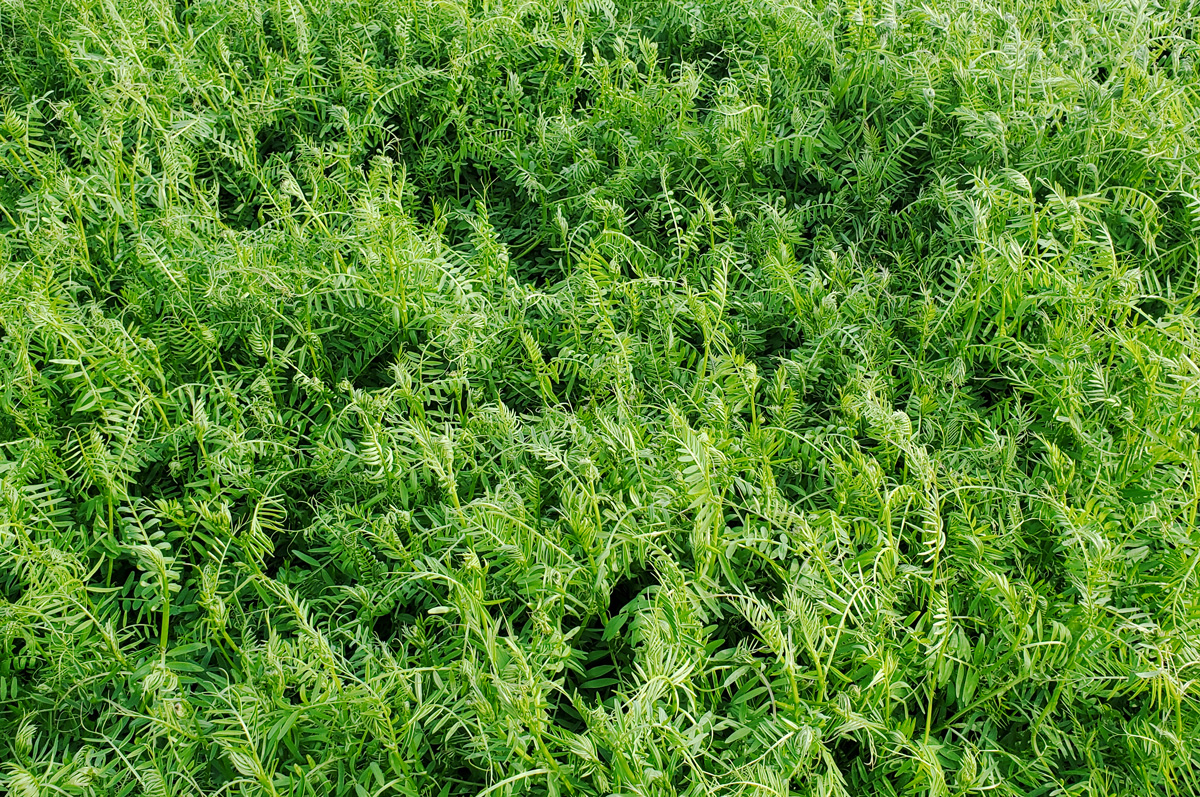
Hairy vetch grows thick in early May, showing vigorous regrowth from the previous fall’s seeding. Image by Laura Lant Haney.
Millets
Pearl millet is a standout for grazing systems, especially for young livestock.
“The millet family is not going to have any prussic acid – you could turn them out at any time,” said Lant Haney.
Japanese millet is used less frequently but remains a valuable emergency forage option.
Teff grass
Teff offers exceptional hay quality but requires a firm seedbed and precise planting depth. It is best suited for experienced managers.
Cool‑season annuals and cover crops
Cereal rye, triticale, wheat, barley, peas, clovers, vetch, radish and turnips all play roles in fall or spring forage systems. Key considerations include herbicide carryover, grazing restrictions, species compatibility, drydown characteristics and overwintering behavior.
Mixing species can add value, but must be done intentionally. For example, rye and barley should not be mixed due to height differences at maturity.
Management practices that drive success
Across all forage systems, three management practices consistently determine outcomes:
- Soil testing every three to five years
- Weekly scouting
- Clean, tested seed
Lant Haney emphasized the importance of seed quality:
“The worst thing we can do is cheap out today and create a problem for tomorrow,” says Lant Haney as she reminded producers that animals do not fertilize evenly. “Animals don’t fertilize the whole field – they have certain spots that they prefer.”
Maximizing forage production is not about finding a single best species. It is about aligning species selection with operational goals, field conditions and management capacity. Producers who plan ahead, ask detailed questions and remain open to small‑scale trials of new species will continue to build resilient, productive forage systems capable of meeting the demands of modern livestock production.