Alfalfa is king when it comes to forages and for good reason. There are very few plants that can be cut as often, yield as much or provide as much protein as alfalfa. But alfalfa has its downsides too, and one of the biggest caveats is its own autotoxicity.

Understanding alfalfa autotoxicity
The old adage is, “You can’t grow alfalfa after alfalfa.” Why is that? Mature alfalfa plants produce chemical compounds that stop the germination of new alfalfa seedlings and inhibit any new alfalfa plants from thriving. These autotoxins accumulate in the soil and can persist for months to years, making it difficult to thicken up existing stands with new alfalfa.
The duration and severity of autotoxicity depend on soil type, climate and moisture conditions. In well-drained, sandy soils, toxins may not persist for very long, but in heavy clay or compacted soils, they can linger longer. One to two years should pass after terminating an alfalfa stand before reseeding in the same field to avoid autotoxicity issues. This presents a challenge for growers looking to extend the life of their alfalfa stands without a full replanting cycle.
Alternative options to thicken an established alfalfa stand
If you are considering thickening up an old stand, your options are limited. You need to pick a species that can keep up with alfalfa’s ability to be cut and regrow quickly. Grass is often the most common option used, but it is frequently considered a compromise between quality and yield. Common choices include orchardgrass, meadow brome and fescue, which provide consistent yields. However, grasses tend to be lower in protein and dilute the overall protein content of the hay.
Grass hay producers also must manage to avoid additional issues such as nitrate toxicity and endophytes in their fescues. Most producers would agree that the benefits of having grass in a thin stand of alfalfa far outweigh the cons, which is why this is the most common practice for thickening up alfalfa. There is a strong market for alfalfa-grass mixed hay, and if producers can find the right buyers, they can be profitable with that.
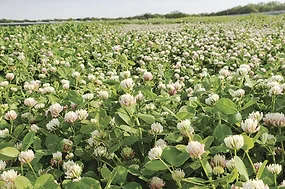
Other legumes, such as red clover or white clover, are sometimes considered for interseeding into alfalfa. Red clover establishes relatively easily but has a shorter lifespan and lower yield potential than alfalfa. White clover does not seem to have the same palatability as alfalfa does for cattle and horses. Many other legumes are slow to establish and do not work well in a high-production forage system. This is where sainfoin emerges as a promising alternative. It is in the “Goldilocks zone” where yield and quality are similar enough to alfalfa to make it feel like a new field.
Sainfoin as an alternative to alfalfa
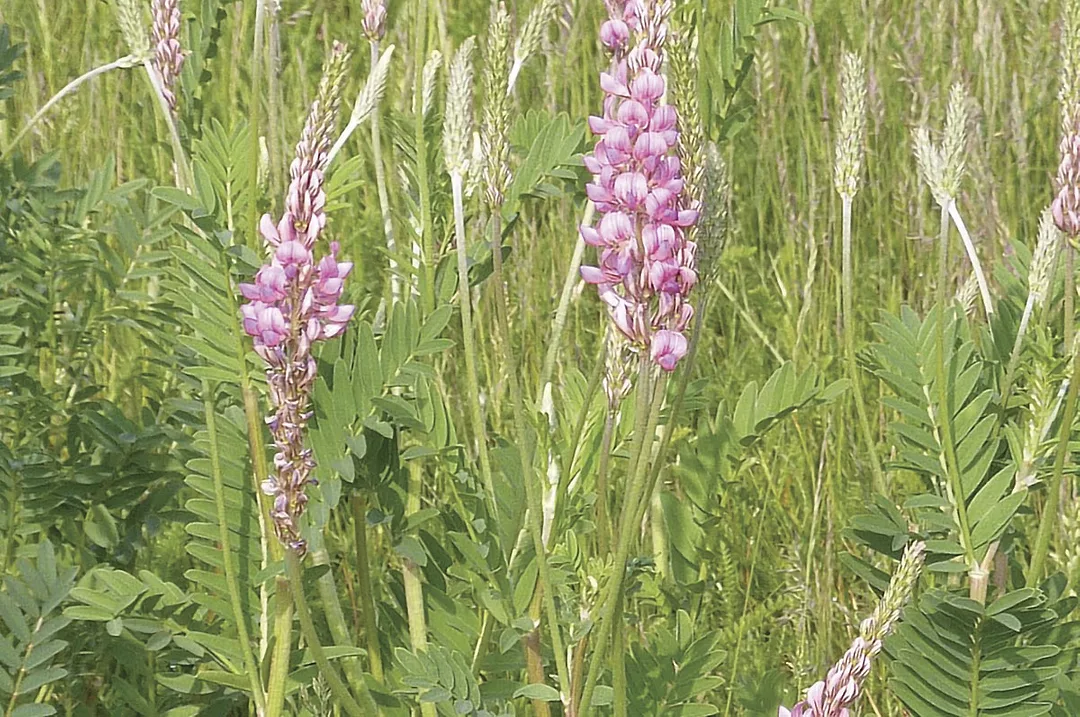
Sainfoin is a nonbloating legume traditionally used in pastures and rangelands to incorporate diversity and offset nitrogen inputs. When comparing sainfoin to alfalfa, alfalfa wins almost every time. However, sainfoin is not far behind under the right conditions. Both are highly palatable, and both form a symbiotic relationship with rhizobia to fix atmospheric nitrogen. Sainfoin has a unique advantage in its ability to be interseeded into existing alfalfa stands without being affected by autotoxicity.
Sainfoin (Onobrychis viciifolia Scop.) has a long and rich history as a forage crop. Originating in regions of Central Asia and Eastern Europe, it has been cultivated for centuries, particularly in countries such as France, Turkey and Russia, where it has been valued for its adaptability to poor soils and dry climates. The name “sainfoin” is derived from the French words meaning “healthy hay,” reflecting its historical reputation as a nutritious and palatable feed.
In the 18th and 19th centuries, sainfoin was widely grown across Europe and introduced to North America by early settlers. However, its popularity declined in favor of alfalfa due to the latter’s superior yield and more widespread adaptation. In recent years, renewed interest in sustainable agriculture and reduced input costs has led to a resurgence of sainfoin, particularly in regions where its drought tolerance and nonbloating characteristics offer advantages over traditional forages.
Research into improved sainfoin varieties continues, with modern breeding programs focusing on enhancing its persistence, disease resistance and compatibility with mixed forage systems. Newer sainfoin cultivars have demonstrated better regrowth potential, making them more competitive in high-production hayfields.
Under proper irrigation, sainfoin has been shown to yield 70% to 90% of what alfalfa can produce in a season. Sainfoin can achieve dry matter yields of 4 to 6 tons per acre in optimal conditions. While alfalfa typically boasts crude protein levels of 18% to 22%, sainfoin is close behind, ranging from 18% to 20%, with total digestible nutrients (TDN) values comparable to midbloom alfalfa. One major benefit of sainfoin is its high tannin content, which prevents bloat in livestock while also improving protein utilization.
This makes it especially appealing to producers who graze their hayfields or feed fresh-cut forage. The biggest advantage sainfoin has in this scenario is that it is the closest thing to alfalfa when alfalfa isn’t an option to plant.
For producers interested in interseeding sainfoin into an existing alfalfa stand, proper establishment is crucial. Sainfoin seed must be inoculated with a rhizobia strain specific to its species, as it does not form associations with the same rhizobia used by alfalfa. Seeding rates typically range from 20 to 30 pounds per acre when drilled. Broadcast seeding is an option, but it may prove difficult in an established field. Good seed-to-soil contact is required, and harrowing an established alfalfa field may cause damage to the crowns of alfalfa.
Sainfoin prefers well-drained soils and does not tolerate waterlogging, so proper field selection is important. When mixed into alfalfa, sainfoin will mature slightly earlier, which may require adjustments to harvest timing to balance yield and forage quality.
Sainfoin thrives in semiarid regions with well-drained soils, making it a strong candidate for Western hay producers looking for alternatives to pure alfalfa stands. It performs particularly well in areas with cold winters, as it has better winter hardiness than many alfalfa varieties. Additionally, sainfoin is well-suited to calcareous and high-pH soils where alfalfa growth might be limited. While it does not tolerate excessive moisture, it has moderate drought resistance, making it a viable option for regions where water availability is inconsistent.
One challenge producers may face when incorporating sainfoin into their hay production is educating buyers on its value. Many hay buyers are accustomed to purchasing pure alfalfa and may be hesitant to invest in a forage mix they are unfamiliar with. Buyers might be wary of sainfoin due to its lesser-known reputation, assuming it offers lower nutritional value or reduced performance compared to alfalfa. However, once buyers become educated on sainfoin’s advantages – such as its high protein content, excellent digestibility and nonbloating properties – they often recognize its benefits.
Providing forage analysis reports, conducting feeding trials and offering side-by-side comparisons with alfalfa can help demonstrate sainfoin’s value. While it may take time and effort to familiarize the market with this alternative legume, informed buyers will appreciate its unique attributes and potential benefits for their livestock.
Sainfoin presents a compelling alternative for forage producers seeking to thicken old alfalfa stands or diversify their forage systems. While it does come with its own set of challenges, its ability to thrive in autotoxic alfalfa fields, along with its nonbloating and nitrogen-fixing characteristics, makes it a valuable addition to hay systems. By understanding both its advantages and limitations, producers can make informed decisions on integrating sainfoin into their forage management strategies.