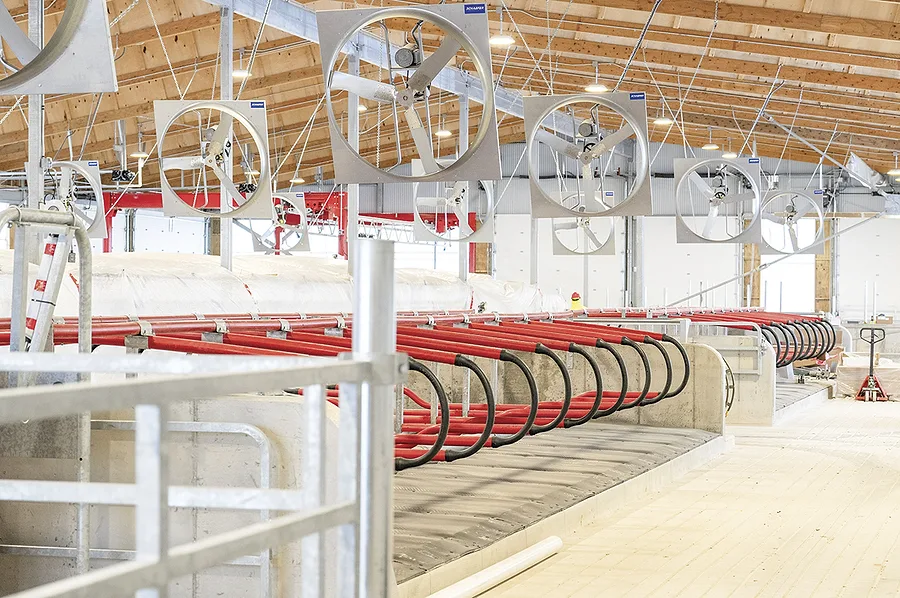
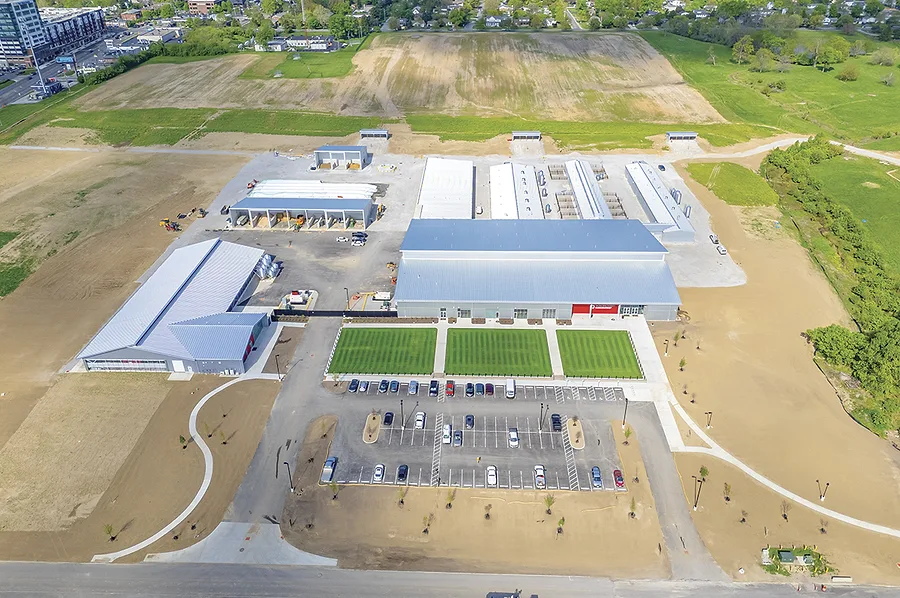
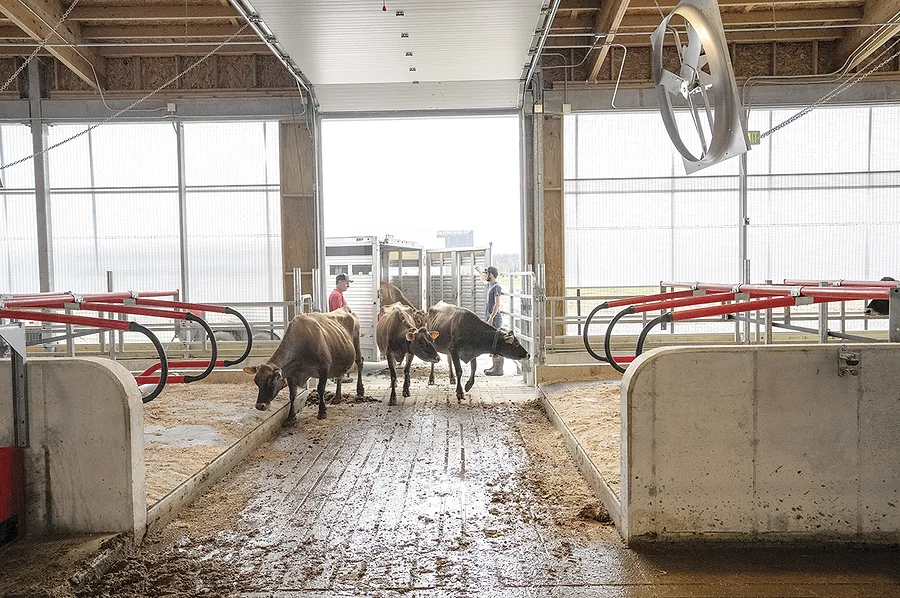
Cattle moved into new facilities at Michigan State University (MSU) and Ohio State University (OSU) this past year, and construction continues at the University of Idaho (U of I) and Washington State University (WSU). Kansas State University is currently in the fundraising and planning stages of their project.

Kansas State University
After several years of slow progress, plans for new dairy facilities at Kansas State University are gaining momentum.
On April 16, the Department of Administration’s Office of Facilities and Property Management published a request in the Kansas Register for architectural services to design the new facility. After reviewing applications that were due on May 1, the selection committee selected five firms to interview on June 26.
“We anticipate that the design process will continue during the summer and fall,” says Micheal Brouk, professor and dairy extension specialist at Kansas State University. “We have a deadline with the legislature of February 1, 2027, to report on the plans and how this will be phased over three years.”
Fundraising plans are still being developed. To date, the Kansas Dairy Commission has pledged $500,000, and the Livestock and Meat Industry Council has pledged an additional $250,000 toward the project.
“Fundraising is currently being discussed, and I anticipate that we will have additional information on the process for fundraising in the next couple of months,” Brouk says.
Michigan State University
Cattle moved into the new barn at the MSU Dairy Cattle Teaching and Research Center in East Lansing, Michigan, shortly before students arrived back on campus last summer, and dairy faculty hit the ground running to make the most of it.
Among the goals for expanding the herd and building new facilities were to increase research and teaching capacities, provide more hands-on learning opportunities to students and offer tours. Beginning in late August 2025, there were both animal science and veterinary medicine courses meeting at the dairy on a weekly basis.
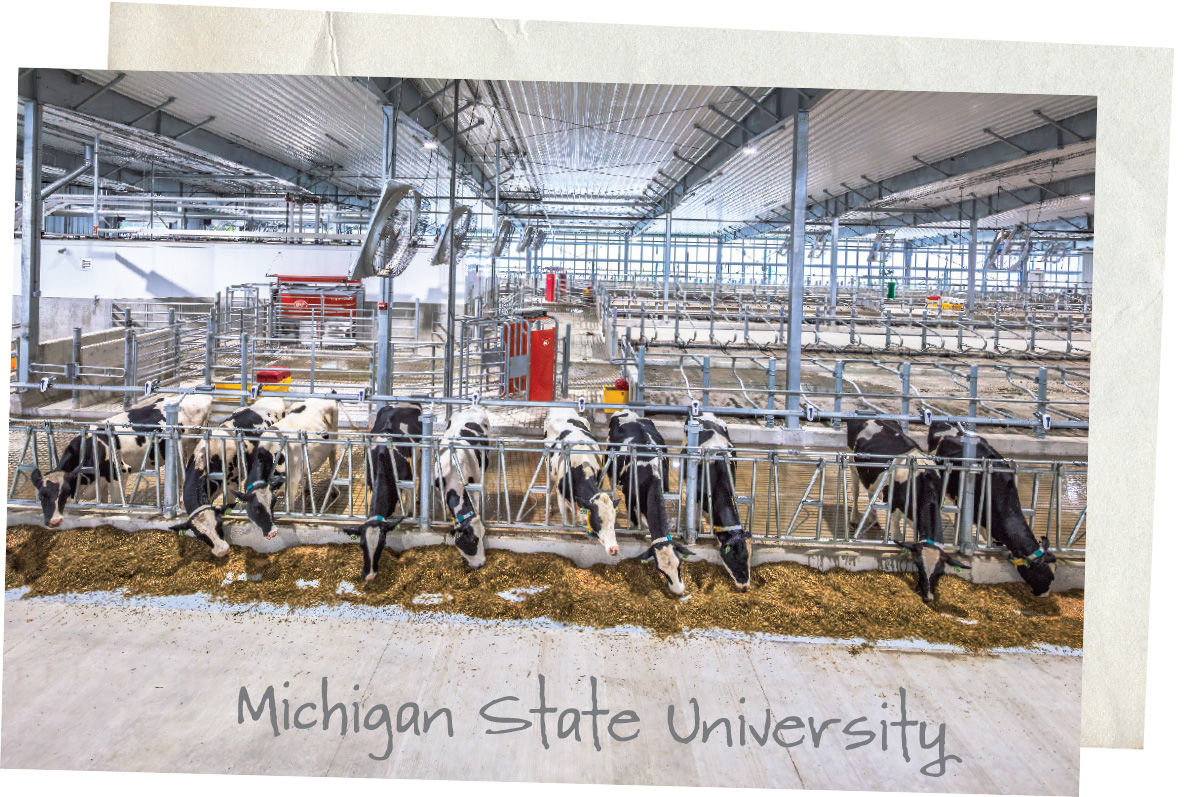
Courtesy image.
“During the 2025-2026 school year, 11 different courses used the facility at least once, and half of those courses met at the dairy all semester,” says Barry Bradford, the Clinton E. Meadows Chair in dairy management at MSU.
In addition to classes, roughly 40 students have been working at the dairy since August 2025, providing many of them with their first experience with dairy cattle.
The first controlled research at the new facility began in January 2026 and has since ramped up quickly. Here is an overview of some faculty research projects.
- Pedro Trindade is conducting a research study to investigate long-term impacts on pain, health and production in heifer calves following disbudding.
- Bradford is assessing whether a polyphenol extract from cherry pits can help cows recover from endotoxin-induced mastitis.
- Zheng Zhou’s latest research project is evaluating whether celery byproducts can reduce methane emissions and improve feed efficiency in mid-lactation dairy cows, in collaboration with Mike VandeHaar.
- Richard Pursley is coordinating a study on embryo transfers.
- Bradford and Vandehaar are investigating whether Rumensin and Bovaer, two feed additives that decrease methane emissions, have any interactions when fed in combination.
- Adam Lock’s ongoing research centers on fatty acid digestion and metabolism, with an emphasis on how diet influences rumen function, nutrient partitioning and milkfat synthesis.
- Pamela Ruegg is evaluating the impact of treatment with meloxicam on bacteria in cows that received SpectramastDC, a common antibiotic used on dairy farms.
While plans for a visitor center are still in progress, more than 75 tours have been given to 2,000-plus visitors since cows moved into the new facilities, ranging from dairy producers to government officials to food and technology business leaders. Additionally, at least 500 4-H and FFA members visited over the past nine months for tours and educational opportunities, and more than 30 extension and industry meetings have been held on-site.
“The educational material for the visitor center is going through the final design stages now with the goal to have that finalized by the end of the summer,” Bradford says. “Monthly public open houses are being held this summer, and we hope to begin routine K-12 class visits in the fall.”
At capacity, the dairy herd will expand from the previous herd size of 220 up to 550. Nearly all the barns housing cattle are new aside from one freestall barn used for dry cows. The new tunnel-ventilated barn has capacity for 680 cows in different configurations.
“The cows and people are settling in now,” Bradford says. “We are back to the level of fat and protein production we had before the move and hope we will keep climbing from here.”
Bradford emphasizes that this is the Michigan dairy community’s facility and that it’s here to solve problems through applicable research, get the next generation excited about dairy careers and to provide a place to gather and learn. The MSU dairy team is also interested in additional partnership opportunities to continue to move the industry forward.
A ribbon cutting is planned for fall semester 2026.
Ohio State University
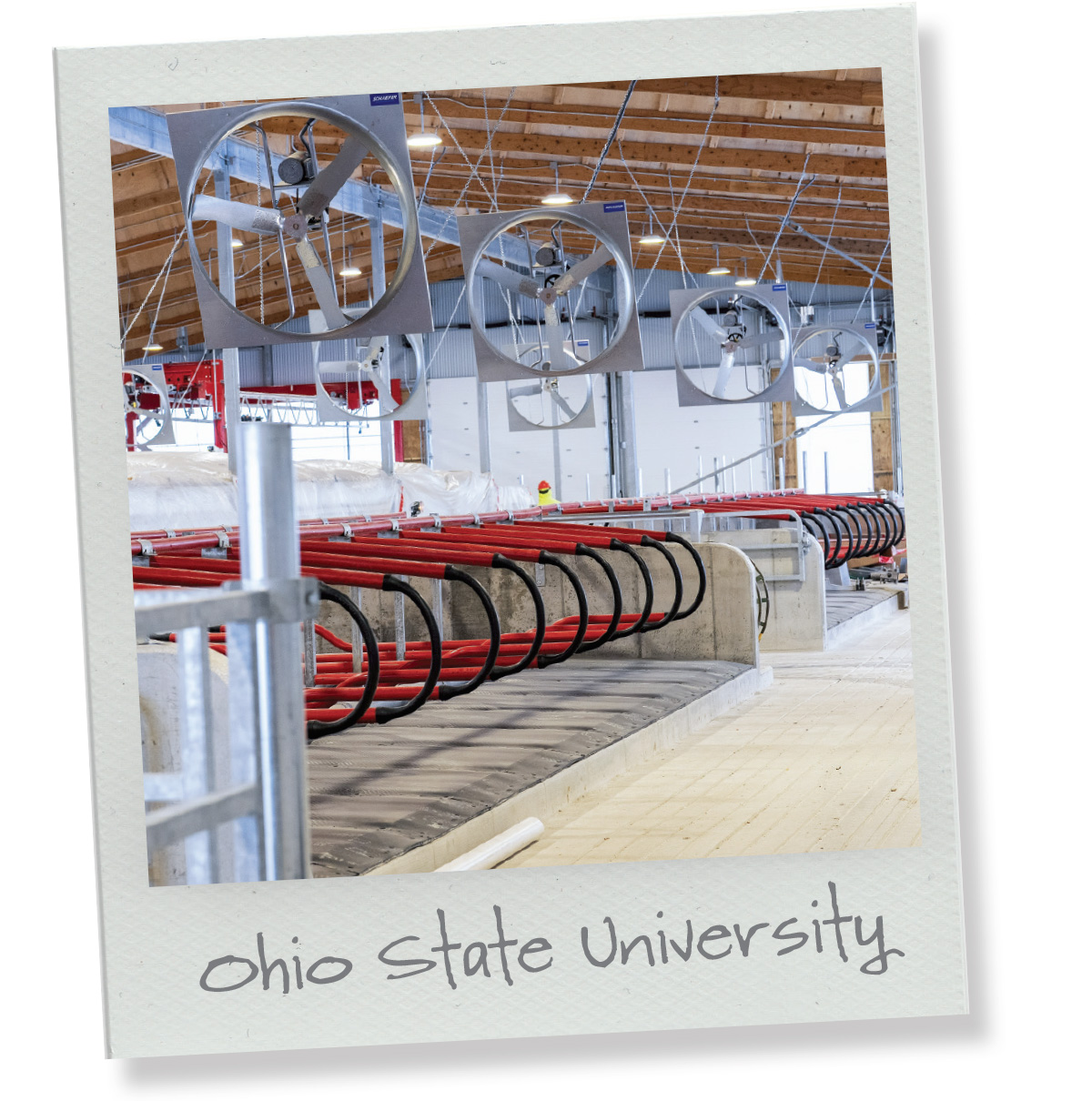
Two Lely A-5 milking robots, a Vector feeding robot and two manure robots are among the new technology at the OSU College of Food, Agricultural, and Environmental Sciences (CFAES) Waterman Dairy new facility in Columbus, Ohio. Dry and lactating cows returned from the Wooster campus in late February and early March, respectively, and are adjusting well.
“We did not have any problems with cows adjusting to the robots, so we did not have to sell any of the cows we brought from the Wooster campus,” says John Lemmermen, assistant director of the CFAES Multispecies Animal Learning Complex (MALC). “We are obtaining a lot of data from all the machines, and we are still learning how to best use all the information. We’re excited to see what unfolds as we continue to learn from the data.”
Courtesy image.
Cows were milked 2X in a traditional parlor in Wooster and now are averaging about 3.8 milkings per day with the robots.
“Milk yield has increased by 4 to 5 pounds per cow per day while also maintaining high levels of fat and protein,” says Maurice Eastridge, professor and senior associate chair of the CFAES Department of Animal Sciences.
Faculty at the Wooster and Columbus campuses are planning research projects at the new facility starting in the fall. Students have been hired to work at the MALC this summer, and fall recruiting is currently underway.
“This new facility will help us expand our research to advance the dairy industry, educate more students, get more students interested in a career in the dairy industry and enable us to educate the public about modern food production practices and how we do this while ensuring the welfare of the animals,” Lemmermen says.
Pasha Lyvers, professor and chair of the CFAES Department of Animal Sciences, agrees.
“Our producers can apply what we learn from the updated automation and technology at the dairy to their own operations, and it will also be a great opportunity to develop our workforce,” Lyvers says.
Eastridge is especially looking forward to teaching the dairy herd management course at the new facility during the fall 2026 semester. In support of teaching at the facility, a campus bus service will be provided.
“For the past two years, the class needed to travel about 30 minutes away for the dairy labs, but now we have the ability to teach right in the heart of our Columbus campus,” he says.
All animals are now housed in the same barn, and all groups will have access to pasture, except the calves. The research pen’s access to pasture will depend on the research being conducted. Dry cows will be housed in freestalls and moved to the maternity pen when signs of calving occur. The new facility replaces the older double-8 herringbone milking parlor, 100-cow freestall barn and 60-cow tiestall barn. The curtains, fans and sprinklers are automatically controlled based on temperature and humidity.
The herd is comprised of three groups, including 60 lactating cows (16 cows can be in a research group), approximately 15 dry cows and springers, and approximately 16 calves. They have not reached total capacity yet. Previously, the dairy herd consisted of 110 registered lactating Jersey cows.
While most of the work is complete, there are still a few things to do.
“We are still finishing up adding some equipment and completing final touches, including adding pasture drainage around the site. Also, we will be completing the fencing soon, so the cows will be able to have access to pasture through the Grazeway gate system,” Lemmermen says.
Additional K-12 engagement plans are still on the horizon, and Lemmermen says they are starting slow.
“We are getting a lot of requests for tours, but it is important to note that the facility is not fully operational yet,” he adds. “We are very excited to see what the cows can do with all this new technology and to use this technology to educate our students and the public about dairy and agriculture in general.”
"A key aspect of the facility is to be able to educate our students and the public about modern animal agriculture practices used in the industry," Eastridge says.
University of Idaho
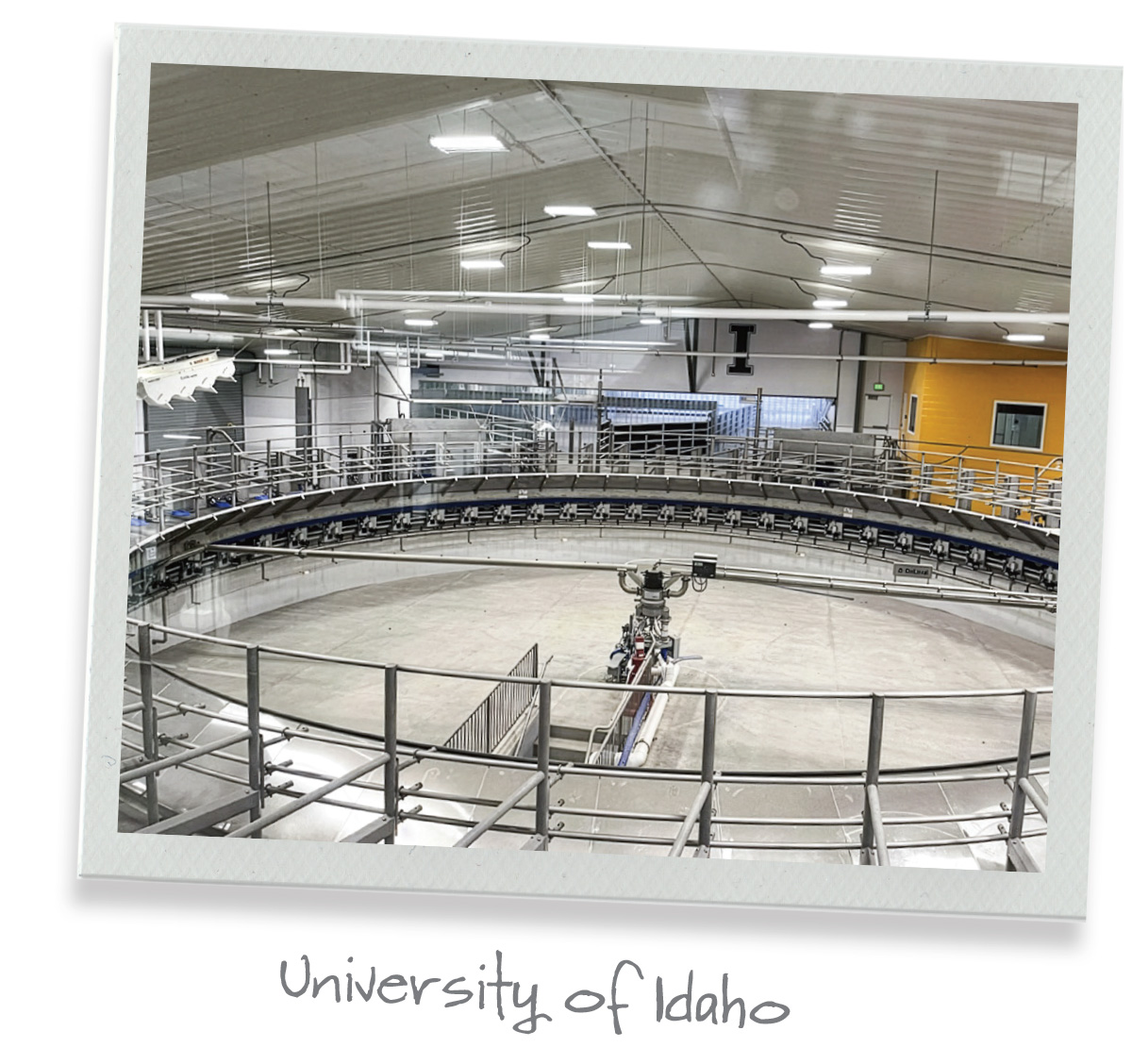
The dairy at the Idaho Center for Agriculture, Food and the Environment (Idaho CAFE) in Rupert, Idaho, is closing in on completion.
Since July 2025, the commodity storage, classroom building and maternity and research barns were completed, and construction of the lagoons and corrals began. While originally scheduled to be fully operational in early 2026, the lagoons and corrals must be finished before cows can move onsite.
Courtesy image.
Once cows move into the facility, they plan to build up to a herd size of 2,000 to reflect the average dairy size in the state. The dairy at Idaho CAFE will be the nation’s largest research dairy with increased capabilities for researchers to address the challenges facing agriculture, including environmental issues. While a freestall barn is in the later plans for the project, housing will primarily be drylot corrals, which are popular in the southern Idaho milkshed.
Over the past two years, three new faculty members who will play instrumental roles at the new facility were hired.
- Pramod Acharya is an extension forage specialist and is already conducting studies related to alternative forages and the agronomic performance and forage potential of cover-crop integrated silage corn.
- Emily Bedwell is an extension irrigation specialist, and her work will focus on optimizing crop yield and quality under limited water allocations, evaluation of irrigation systems and developing practical irrigation strategies and decision tools.
- Gilbert Miito is an extension air quality specialist, and his work is focused on quantifying the footprint of greenhouse gas on dairy systems and identifying manure management strategies to reduce methane and air pollution.
“Research is already underway at the Idaho CAFE, including a new collaborative project with Utah State University and the University of Idaho that will develop dairy forage, manure and water management strategies, involving Dr. Acharya, Dr. Bedwell and Dr. Miito, funded by a $1 million grant from Dairy West,” says Matt Powell, interim associate dean and director of the Idaho Agricultural Experiment Station. “This funding is provided on behalf of the Pacific Northwest Dairy Research Consortium, a partnership between Dairy West and the Idaho Dairymen’s Association (IDA) dedicated to advancing sustainability research in Western dairy production.”
USDA-ARS also received an appropriation that will be used to build a flexible manure handling system at the CAFE site, which will allow for testing and evaluation of manure separation and nutrient extraction technologies, in partnership with U of I researchers.
“We were delighted to learn in November 2025 that USDA-ARS has received an additional 3 million dollars in Community Project Funding secured by Congressman Mike Simpson,” Powell says. “This funding builds on investments already made that supported research equipment storage and a shop facility for ARS at their Kimberly site and the building of a basic manure separation facility. Additional funding will enable the creation of an advanced manure research facility at CAFE with multiple treatment technologies and enhanced nutrient recovery to maximize research outcomes and technology development.”
Washington State University
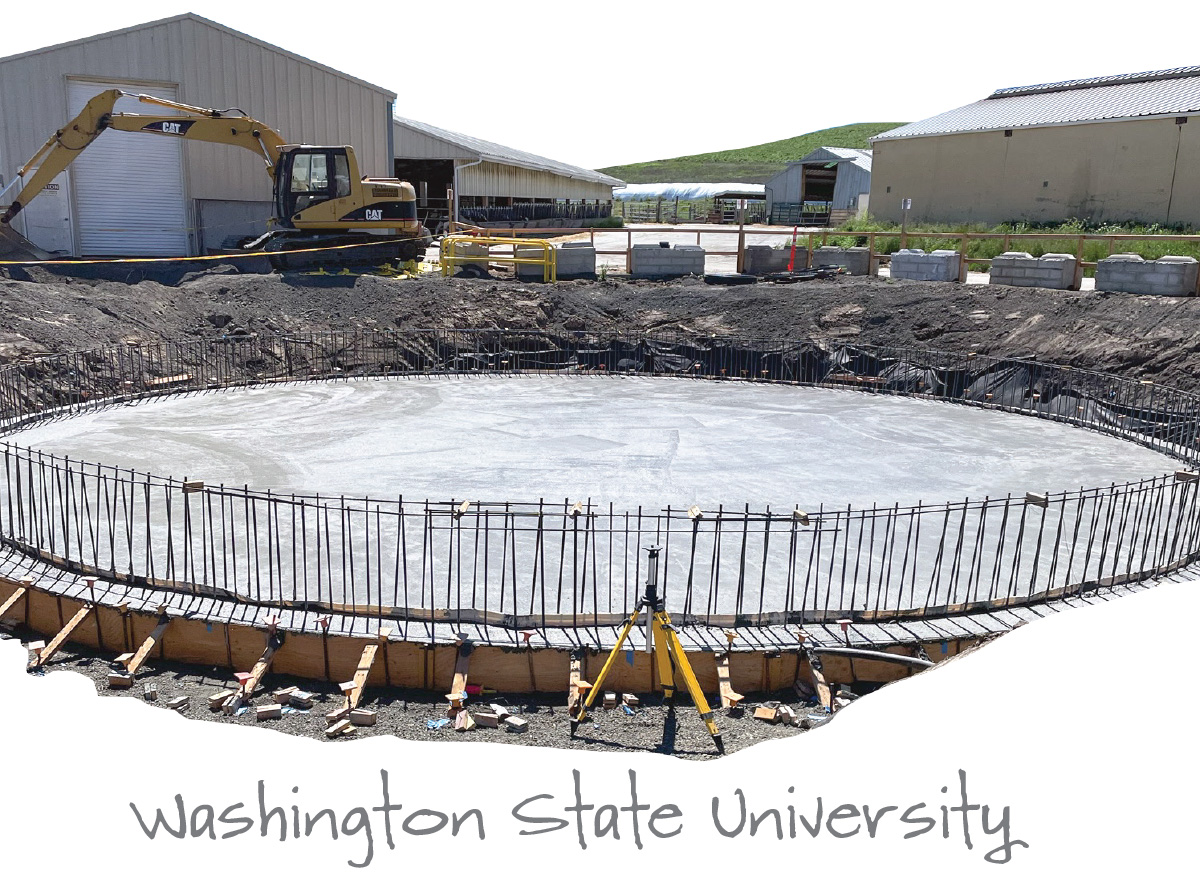
Construction crews broke ground on a new anaerobic digester this spring at WSU’s Knott Dairy Center (KDC) in Pullman, Washington. Commissioning will start in September, and it is projected to be fully operational by the end of 2026.
“Building a digester is quite an extensive process, and we are fortunate to have an expert construction (Skanska) and engineering team (Regenis) with direct biodigester experience,” says Gordon Murdoch, WSU Animal Sciences Department chair. “One unique parameter with our design and construction is that we not only want it to be durable, efficient and productive but also be a resource for research, teaching and extension. It must be safe, state-of-the-art and in our case, somewhat flexible and adaptable.”
Courtesy image.
The digester is located near the lagoon where the calf barn used to be. During earlier renovations, calves were moved to hutches on the other side of the dairy, and several other barns were reconfigured. Heifers and dry cows are adjusting well to the new compost-bedded pack barn that was completed in June 2025.
“There is need to perform farm-scale research on biodigesters as projections for their use across livestock operations is projected to rise,” Murdoch says. “Nutrient and manure management plans are being amended to capitalize on the ability to produce energy in a sustainable manner using farm waste. As a land-grant institution, we need to contribute to the assessment of these systems and their refinement, economics and operational management.”
Dairy sustainability new hire Addison Carroll has initiated research on methane mitigation. Zachary Seekford is also conducting reproduction and Immunol research. Seekford recently re-activated Dairy Club with 30-plus undergraduate students. Additionally, dairy ruminant nutritionist Dr. Linda Beckett is joining the animal sciences department and will be working with Seekford to re-establish the WSU Dairy Challenge team.