A new grain bag baler from Loftness
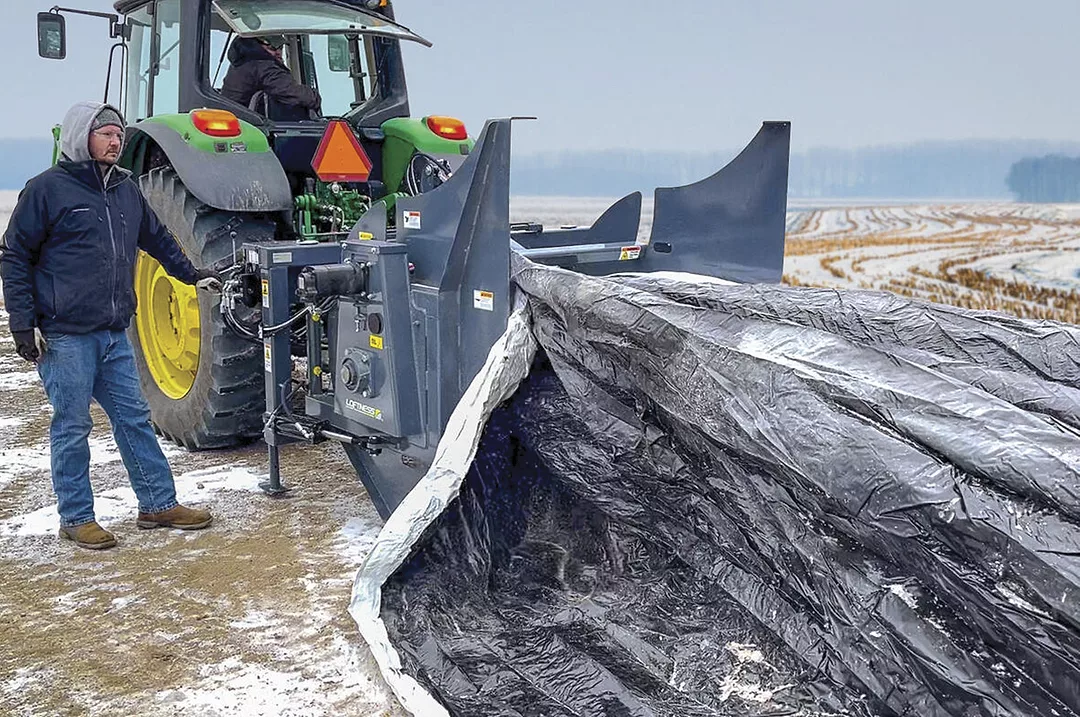
Loftness added another grain bag baler to its product line, capable of rolling up used grain bags with diameters up to 12 feet and 500 feet in length.
Early this year, Minnesota-based Loftness introduced a 12-foot grain bag baler, which can make disposing of used grain bags a simpler and less labor-intensive process.
It mounts to a tractor three-point hitch and rolls up 9-, 10- or 12-foot-diameter bags up to 500 feet long and gets them ready for recycling.
The bagger is hydraulically driven. It requires two selective control valve (SCV) outlets on the tractor to operate. Controls are located on the unit in a location that allows the operator to control it while monitoring the baling process. The bagger uses an integral bag tensioner to ensure bales are tight. They can be secured with twine when fully rolled.
To learn more online, visit their website.
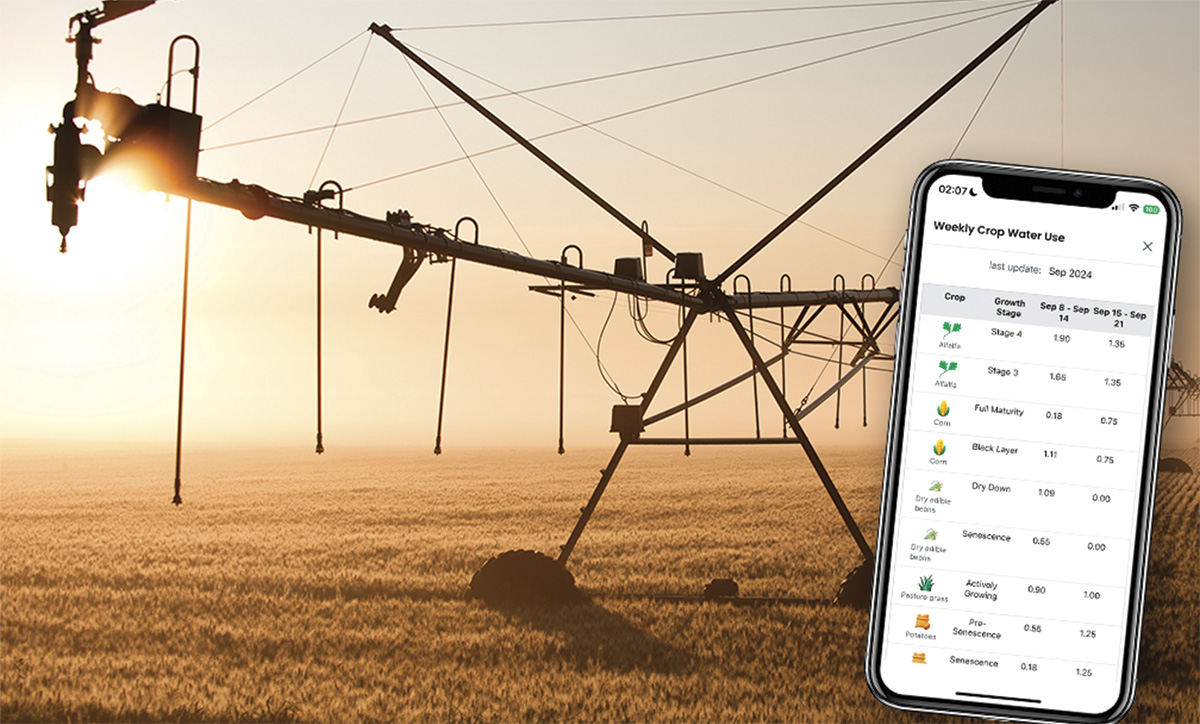
Image courtesy of PHEC Irrigation and Digital Agriculture.
Introducing the PLAN mobile app
Since 2020, the PHREC Irrigation and Digital Agriculture lab has successfully operated a web-based dashboard to support the Peer Learning Agricultural Network (PLAN). This platform has enabled growers to access critical data including real-time soil moisture readings, disease outbreak risks and weekly crop water use information for the Nebraska Panhandle region. Through collaboration with more than 30 growers and commercial partners via application programming interface (API) integrations, the team has expanded coverage to more than 100 commercial fields spanning approximately 10,000 acres of farmland.
While the web dashboard has proven valuable, field accessibility remained challenging. To address these roadblocks, PHREC-AGLAB is pleased to announce the release of the new mobile application: PLAN.
This app incorporates most features from the website while introducing significant improvements for in-field usage. The key features for the PLAN mobile app include real-time sensor data visualization, weekly crop water use reports, user-friendly irrigation scheduler, enhanced field monitoring capabilities and potential for artificial intelligence (AI) integrations.
The app features a specialized irrigation scheduler designed particularly for users without commercial soil moisture probes. Using a straightforward "checkbook" method with an intuitive interface, users can input irrigation information while the app automatically calculates irrigation needs based on data from nearby weather stations and corresponding weekly crop water use information.
PHREC-AGLAB encourages interested users to download the app and provide feedback using the floating comment icon within the application.
Learn more online.
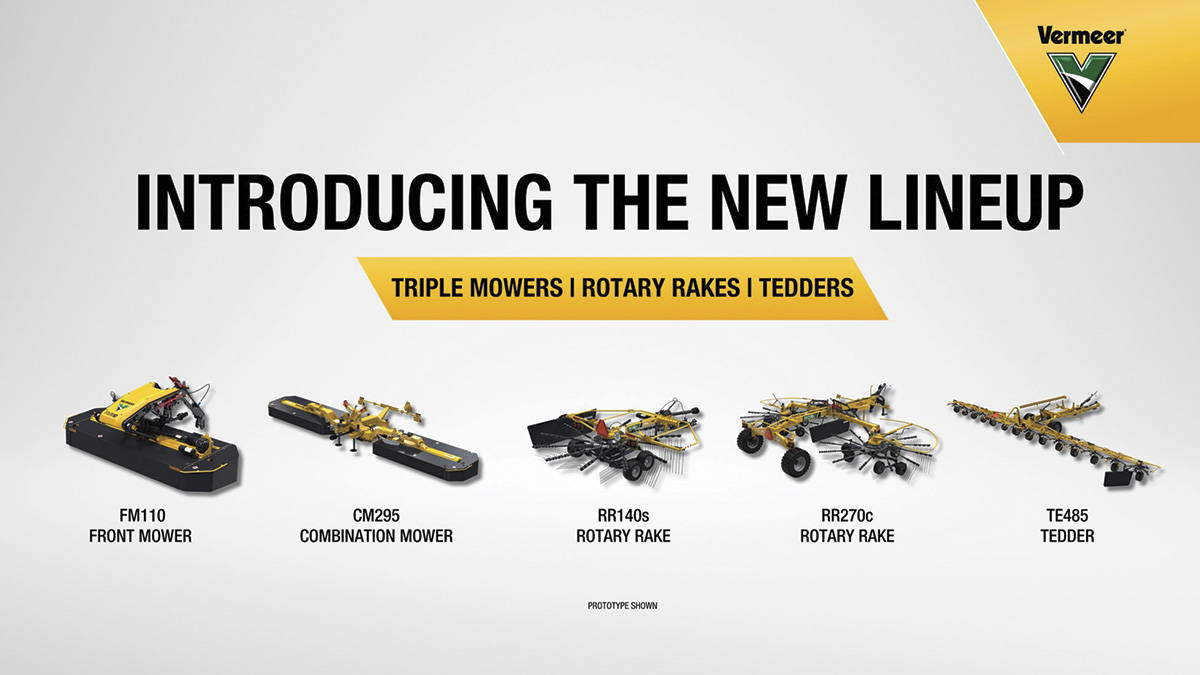
Image courtesy of Vermeer.
Vermeer adds triple mowers to lineup, expands rotary rake and tedder offerings
Vermeer announced an expansion of its product line to include triple mowers, rotary rakes and a large tedder. These new products are available for the 2025 hay season.
“Vermeer is 100 percent focused on hay, dairy and beef producers and the products they need to be successful in the field,” said Shane Rourke, managing director of forage. “The addition of these products into our lineup meets our customers' growing need for efficiency and productivity.”
Vermeer has partnered with SIP, a European company in engineering and manufacturing high-performance agricultural equipment.
Triple mowers
The addition of triple mowers complements the existing Vermeer range of disc mowers, trailed mowers and mower conditioners. Customers can expect to see productivity gains with an impressive 29.8-foot cutting width – featuring the FM110 front mower and the CM295 combination mower – each available as a plain mower, rubber roller or flail conditioner.
Engineered for convenience, ease of maintenance and durability, the cutter bar on these machines helps operators tackle acre after acre with confidence. It includes shear protection to help prevent damage to the cutter bar's internal components, quick-change blades for quick maintenance and hardened steel skids and discs for long-lasting performance.
Operators can achieve maximized yield and cut quality, even on uneven terrain, thanks to the advanced hydropneumatic suspension system. This closed-loop system allows the mower to adapt seamlessly to varying ground conditions, maintaining consistent down pressure across the entire cutting range for optimal performance.
Experience confidence in the field with robust hitch designs on both the front and rear for longevity and durability. The FM110 front mower’s hitch design allows for a high degree of movement on both the vertical and lateral planes by pulling the cutter bar instead of pushing it – helping to deliver better ground contouring, enhanced cut quality and minimizes unnecessary downtime due to maintenance.
RR140s and RR270c rotary rakes
Two new rotary rakes, the RR140s and RR270c, feature raking widths of 14 feet and 27 feet, respectively. As a long-standing leader in hay rakes, Vermeer offers a comprehensive range of large and small wheel rakes, as well as twin rakes. These new additions provide producers with another option for maintaining nutritional quality and reducing ash content.
Designed for maximized durability and ease of maintenance, these rotary rakes feature large 16.5-inch cam tracks. Due to large components and easily accessible grease points, they hold up in tough field conditions and eliminate complex maintenance and service procedures.
Enhance efficiency and simplify your maintenance process with a modular rotor featuring separately removable spring tine arm pairs. Each cam bearing module is secured with three bolts, streamlining maintenance for operators.
TE485 tedder
The TE485 tedder has a 48.5-foot tedding width and is the largest in the Vermeer lineup. Vermeer was among the first companies to introduce hook tines to the U.S. – hook tines provide optimized hay quality through more consistent and complete drydown as hay is inverted with wet crop on top and dry on the bottom. Plus, Vermeer hook tines are backed by three-year coverage.
Learn more online.
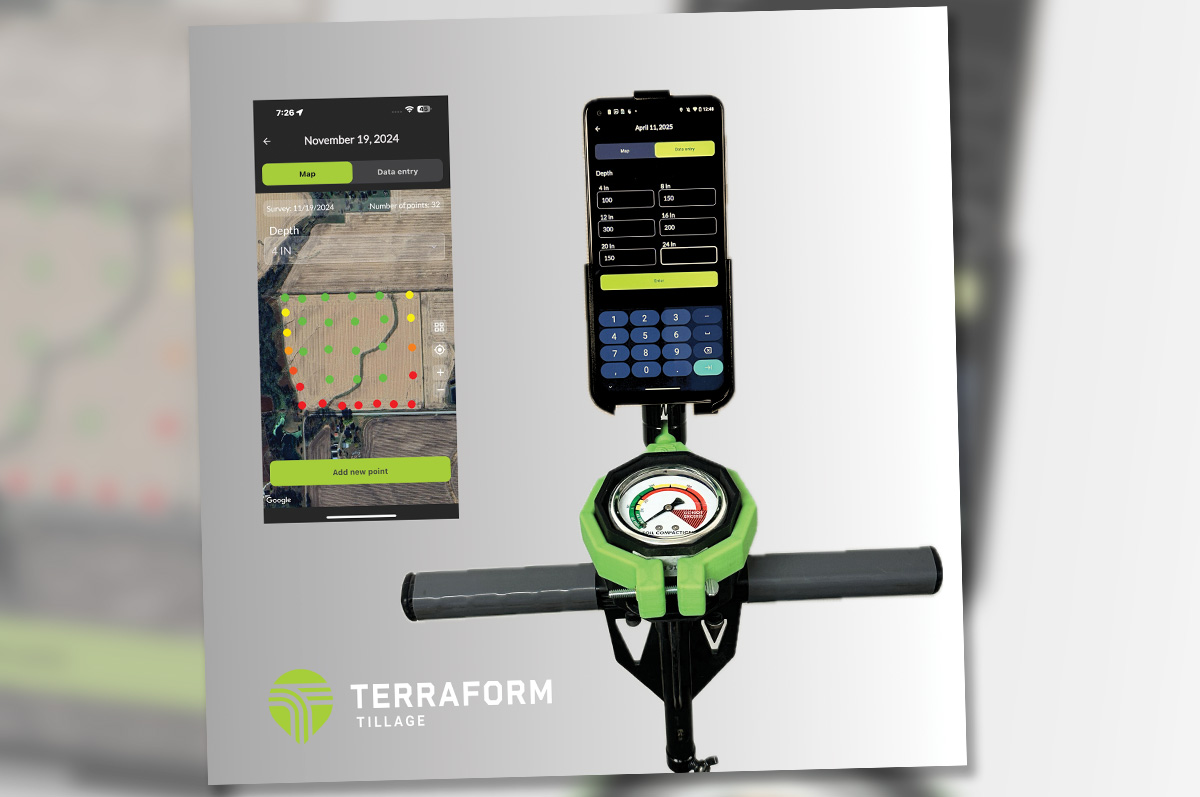
Image courtesy of Terraform Tillage.
Terraform Tillage develops free SmartProbe System app to map compaction
Soil compaction is a significant issue, robbing farmers of up to 50% of yield and highly variable across a field and at different soil depths. With the SmartProbe System, a grower can easily create real-time maps showing soil compaction at different depths and locations in the field.
With the new SmartProbe System app, users can improve yields by fixing problem acres in a field and can expect substantial increases in yield from addressing root restriction. These issues can often be simply fixed with tillage or cover crops.
Growers can reduce costs and forget about the days of having to treat every acre the same. With the SmartProbe System, growers can make site-specific decisions and save on time, fuel, maintenance and repairs.
By reducing tillage to only the acres that will see a benefit and implementing cover crops on the acres that tillage can't fix, growers can expect to see measurable gains in organic matter, water-holding capacity and biological activity.
The SmartProbe System features a new SmartProbe app and mounting kit to attach a smartphone to a soil penetrometer. Now, a grower can easily record penetrometer readings and create real-time maps showing yield-robbing soil compaction at different depths in the field. That allows tillage to be focused on areas of the field that need it – increasing yields, reducing costs and improving soil health.
To learn more online, visit their website.
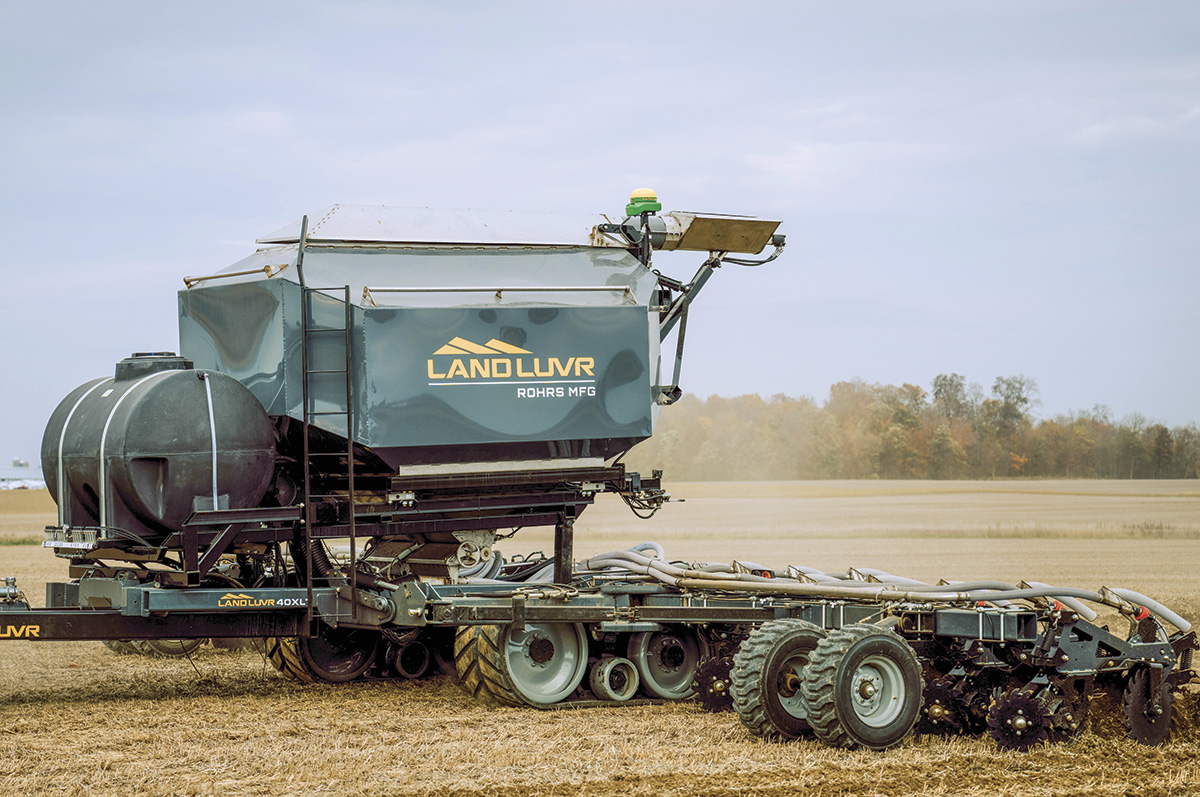
Image courtesy of Land Luvr.
Land Luvr showcases a new strip-till row unit
Rohrs Mfg. produces the Land Luvr line of strip-till, strip fresheners, high-performance implement track undercarriages, fertilizer systems and more.
Pictured is a 40XLT Land Luvr strip-till bar on 25-foot tracks that allows for better floatation, more stability and narrow road transport.
This Land Luvr bar is also equipped with 16 strip-till units. Land Luvr row units require less horsepower than competitors at 18 to 21 horsepower per row unit. This bar is equipped with a 12-ton low-density stainless tank, 14 tons of phosphorus and potassium, and a 525-gallon liquid tank.
Learn more online.