Electrical safety is critical in any situation, but especially in dairy barns, where equipment and machinery are essential to the operation. Dairy barns have unique challenges, such as exposure to moisture, dust and animals – all of which can create electrical hazards.

In this article, we will provide an overview on safety practices that can prevent electrical accidents, both inside and outside the barn. We will also discuss specific steps to take if you or a piece of your equipment comes in contact with a live electrical wire.
General electrical safety guidelines
Only qualified electricians should perform electrical work in the dairy barn. Unauthorized personnel should never attempt to repair or modify electrical systems. Always ensure that electrical systems are de-energized before performing maintenance or repairs. Use lockout/tagout procedures to prevent accidental energizing of circuits during maintenance.
Make sure all electrical circuits are equipped with circuit breakers or fuses to protect against overloads and short circuits. If a circuit breaker trips, investigate the cause before resetting it. Use GFCIs in areas where water is present, such as around milking machines, wash stations and other areas that may get wet. GFCIs help protect against electrical shock by quickly disconnecting the power in the event of a ground fault.
Conditions inside and outside the barn
Dairy barns are often wet and humid, especially near wash areas, feed areas or around water lines. Electrical equipment and outlets should be moisture-resistant and rated for wet locations. Ensure that electrical wiring is correctly installed and protected from physical damage. Cables should be routed away from areas where animals or equipment could damage them. Outlets and switches should be mounted above the ground to prevent water ingress. Electrical panels should be clearly labeled and easily accessible. Never block access to panels or circuit breakers. Ensure that they are kept clean and dry to prevent corrosion, which can cause failures. Extension cords should only be used temporarily and for specific tasks. They should be of the proper rating for the equipment being used and never be frayed, damaged or used in wet conditions.
Ensure that all outdoor lighting is properly installed and rated for outdoor use. This includes ensuring that bulbs, wires and light fixtures are weather-resistant and protected from the elements. Outdoor electrical systems, like those used for water pumps or wells, must be properly grounded to avoid electrical shock hazards. Inspect these systems regularly and ensure that all wiring is in good condition.
Overhead and underground electrical lines
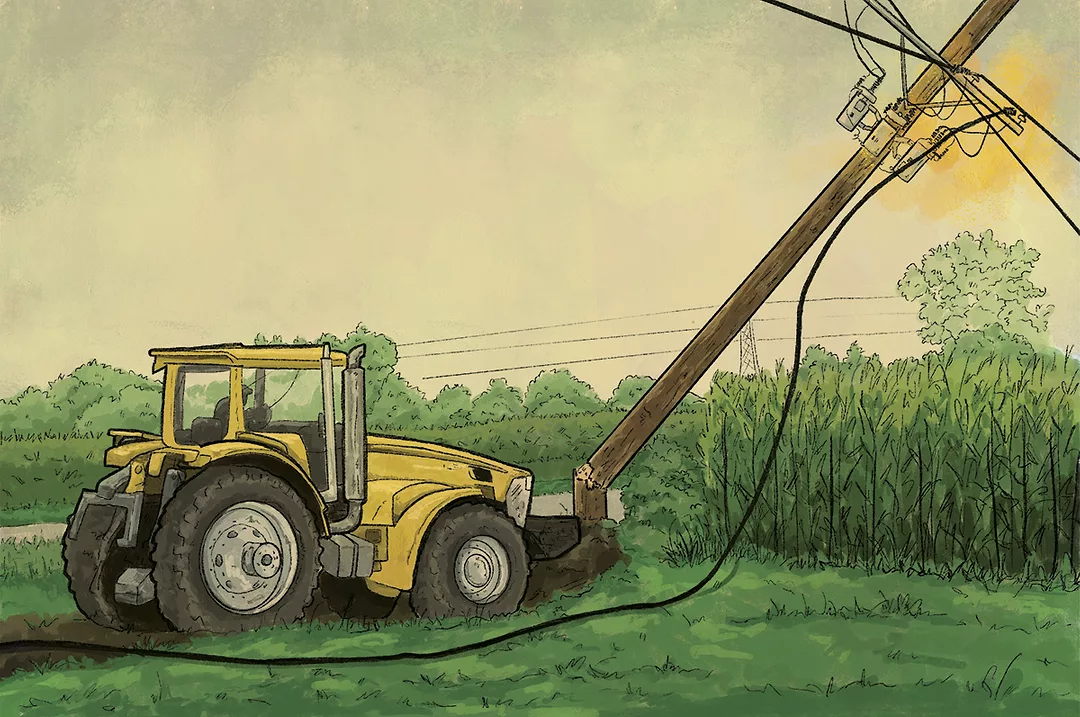
Be cautious of overhead and underground power lines when operating farm equipment outside. Always keep farm equipment and machinery a safe distance away from power lines. Keep yourself, equipment and large tools at least 10 to 20 feet (3 to 6 metres) away from overhead lines. Remember that electricity can arc or “jump” between the wire and a conducting object. The higher the voltage, the more likely for an arc to occur.
You must call before you dig. Whether you are digging with a shovel or large farm equipment, contact Ontario One Call or the equivalent organization in your area to request underground cable locates.
If farm equipment comes in contact with an overhead electrical line, follow these steps to stay safe
1. Stay in the vehicle (if possible)
- Do not exit the equipment unless there is an immediate danger like fire.
- The equipment and ground may be energized, so stepping out could cause electrocution.
2. Call for help
- Dial 911 immediately and report the situation. Call your supervisor.
- Inform the local utility company as well.
3. Warn others to stay away
- Keep at least 35 feet away from the equipment and the downed wire.
- Tell bystanders not to approach or touch the equipment.
4. Exit only in an emergency (If there is fire or another immediate danger)
- Jump clear of the equipment without touching it and the ground at the same time.
- Land with both feet together and shuffle away, keeping both feet close to the ground until you are at least 35 feet away.
5. Wait for the utility company to de-energize the line
- Do not attempt to move the power line or the equipment.
- Only professionals should handle the situation.
Other emergency situations
If someone is shocked by electricity, never touch the person if they are still in contact with the source of electricity. Shut off the power immediately. If you cannot do so, use a non-conductive object (such as a wooden broom) to separate the person from the electrical source. Call for emergency medical help immediately.
In case of an electrical fire, do not use water to extinguish the fire, as it can conduct electricity. Instead, use a fire extinguisher rated for electrical fires (Class C) or call the fire department. Ensure fire extinguishers are easily accessible in the barn.
Electrical safety is important on your dairy. Dairy barns have unique challenges which can increase the risks of electrical hazards. Following safe practices can help prevent electrical accidents on your farm. It is essential to use equipment and machinery in your day-to-day operation, but it is critical to take proper steps to ensure you or a piece of your equipment never comes in contact with a live electrical wire.
References omitted but are available upon request by sending an email to the editor.