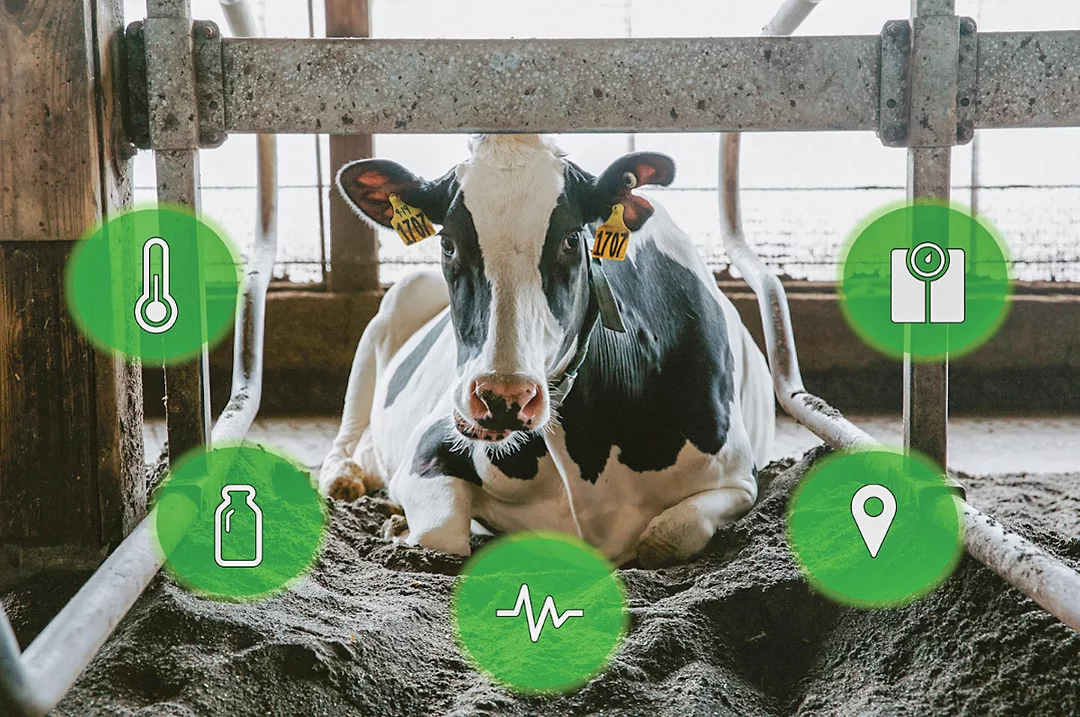
Camera technology and artificial intelligence (AI) are currently being hyped to the dairy industry. Companies selling these technologies promise game-changing outcomes for producers who use them. The reality, though, is more of a mixed bag.

While AI is often seen as a new breakthrough, the neural network architecture that powers the technology is over 50 years old. When it was invented, we did not have computers powerful enough to run the models. This changed when companies like Google, Meta and Amazon created vast data centers for their own needs, then started selling their computational power to others during off-times. Meanwhile, agriculture had begun to generate an abundance of data. This unique combination of money, data centers and data came together, and the current AI boom took off.
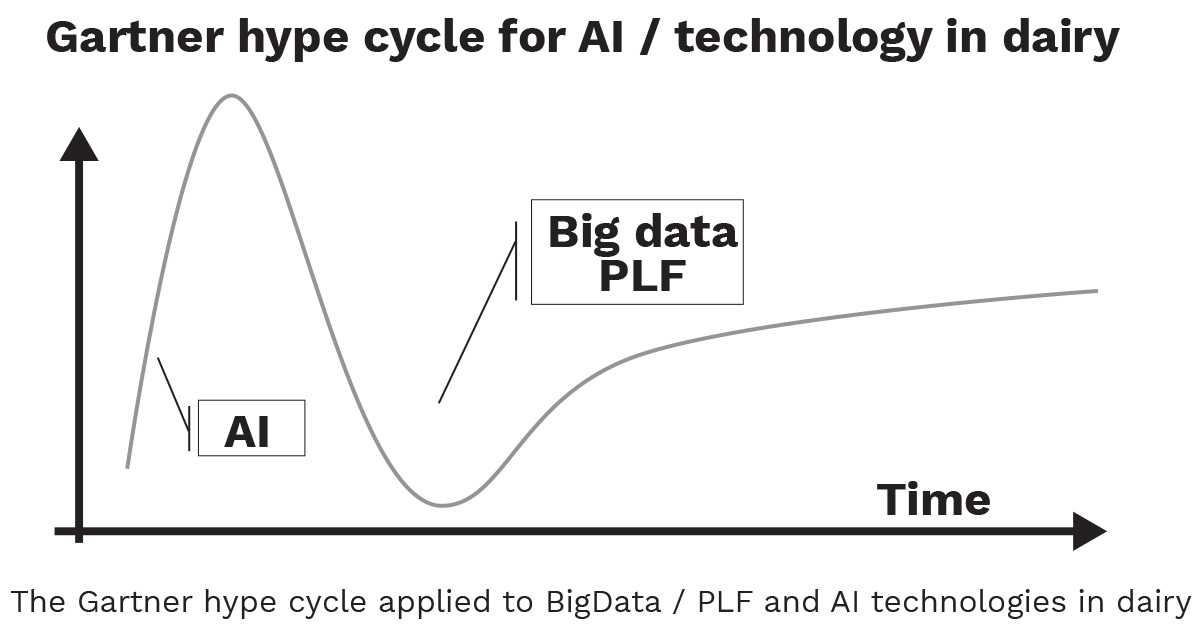
Right now, AI in dairy is in the midst of what the Gartner hype cycle calls a “technology trigger” — when a technology breakthrough generates a lot of interest and the media covers it extensively, but there are few commercial products with proven viability. If you look at a curve of the phenomenon, you will see that the breakthrough technology is embraced with enthusiasm before it falls into a trough of disillusionment and eventually climbs out again to settle into a plateau of productivity, a long-term, more realistic expectation of its usability.
AI for dairy is still some way from the top of the curve and still has a steep decline of enthusiasm ahead. We currently see new commercial products being hyped to the dairy industry that cannot live up to the claims. For instance, some of the companies releasing AI-powered video camera technology claim their product can do everything from identifying sick cows and lame cows to alerting farm managers of impending calving. In reality, many of these products can only do about 20 percent of what is promised.
In the case of video camera technology, the problem is that the video data stream is not enough. Yes, video-dependent surveillance can say that a cow appears sick based on her movements, for example, but it cannot tell us which cow. The camera is not able to read ear tags, so how can we know which cow needs medical attention?
My lab is looking at whether AI can identify a cow by her pattern, but what we’re finding is that a cow’s pattern changes over time. If you use a photo of her as a calf for identification, when she is older she may not look quite the same. That’s something that our AI models will have to take into account.
But AI is more than just creating a model. To create technology that can deliver on the promises, developers need to follow a four-step process. This is what we are doing in my lab.
The first step is to produce a prediction model. Most commercial developers do this and then, as quickly as possible, try to bring that model to the market. They skip the next steps.
In my lab, we produced a prediction model for milk yield at the start of lactation using historical data for dairy cows. Then we moved to the second step: validating the model in the field using new cows from farms that the model has never been applied to before. This is doubly important because not only do we need to check that the model works for new data, but the historical data we used initially is 25 years old. These are old models that we’re trying to use to train AI, so it’s important that we test it on data from current dairy cows, too. Then we can move to the third step: checking that the findings make sense biologically.
For steps two and three, my lab used sensor data from eight new farms and looked at whether the data said something about the start of lactation. We were able to show that our prediction model was correct. Cows that do well at the start of lactation ruminate more and eat more, and we know these things make sense biologically.
When you create a model that works, the final step is to bring it to market, but the big question is, who owns it? Imagine I created the model, but several universities built it together and it was federally funded, so who does it belong to? Think also about the data used to train the AI. It came from a farm. So, should the farm be paid for that data since it has worth? Farms sell milk and manure; maybe data is next.
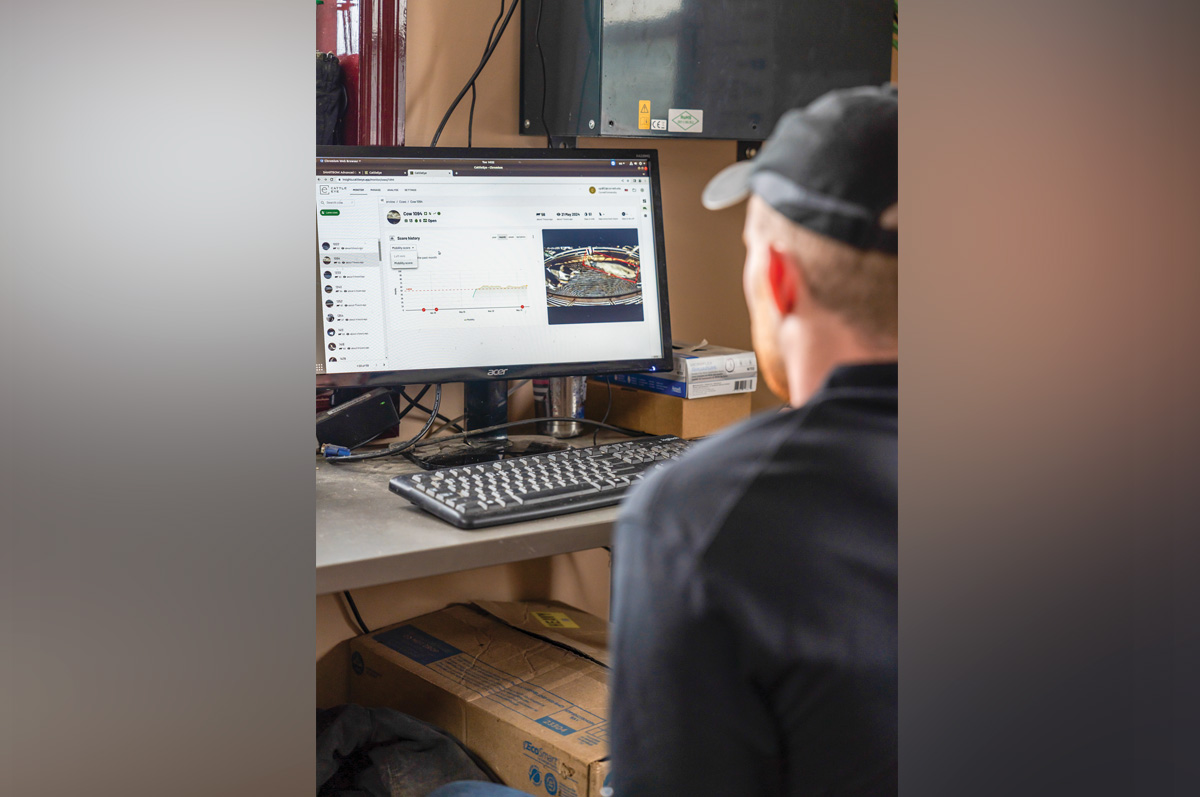
How can we make these AI-powered data tools more useful for producers? Data integration is the key. By combining data streams, we can bring all the information together to better understand and manage the herd. Many farms have multiple computer monitors in the office, each one showing data from a different piece of technology. The data streams are segregated, which is a problem if you want AI to learn from all of them and make complex analyses. My lab is working on combining streams so that ultimately all the data from many different technology tools can be combined, analyzed by AI and accessed by the dairy producer on one screen.
Another important aspect is how we interact with these models. I want to go to a system where producers only interact with their data through questions. For example, they could ask, “What does the milk yield for my dairy look like over the last six months?” or “How would I formulate feed if I want to use a feed additive to reduce my dairy’s methane emissions?” The model would then show the producer the information.
For this to happen, we need to attach a large language model to the neural networks that make up our dairy model. But we must make sure the large language model — for instance, Chat GPT — learns the right things, because an AI is only as good as the data it was trained on.
My lab used a pre-trained large language model and then augmented it with all the knowledge from the Journal of Dairy Science, so the model became smarter about dairy science. Now we are talking with farmers’ journals about possibly using their articles to teach the language model how to respond in a way more suited to farmers.
In the future, these new technologies will reach the point where they are dependable and integral to dairy production. We aren’t there yet, but we are well on our way.