The financial impact of heat stress is mind-boggling. U.S. dairy farmers lose an incredible $1.5 billion annually due to impacts of heat stress, including reduced productivity, reproductive setbacks and increased health issues.
When temperatures climb, dairies respond quickly – activating fans, sprinklers or adjusting ventilation – to safeguard milk production and animal welfare. But there is more to heat stress management than these measures. Today’s technology offers ways to monitor, predict and even breed around the problem.
Tracking temps with tech
With technology platforms, dairies can monitor heat stress in real time. Features such as automated alerts and historical trend analysis help producers stay ahead of fluctuations (Figure 1). These data allow for faster interventions, reducing the risk of milk production dips and health challenges.
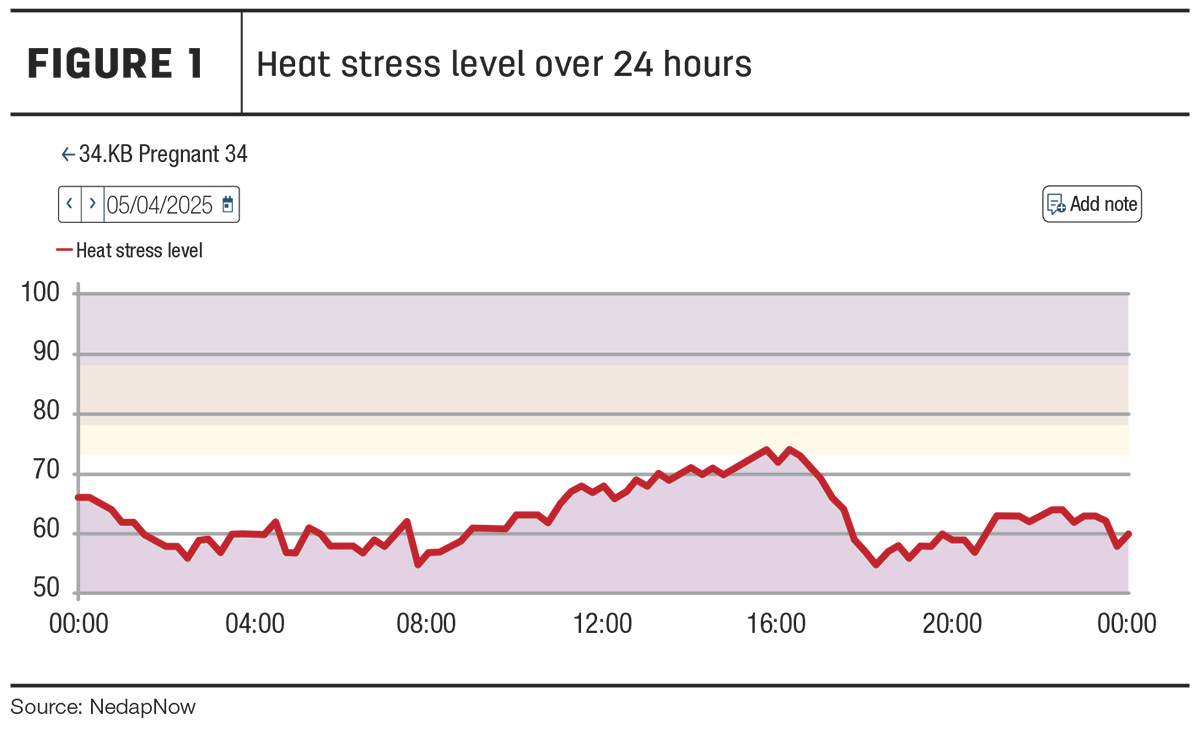
Dairies can see their herd’s current stress intensity and how long it's persisted – at the pen or group level. This empowers dairy producers to act quickly with measures like turning on fans or activating sprinkler systems.
A validation study on test farms showed that these heat abatement steps can reduce stress levels by at least one full level, directly supporting cow comfort and productivity.
Dairies use tools like this to optimize barn conditions, safeguard herd health and avoid costly productivity losses – all while navigating the hotter time frames with greater control and confidence.
Financial implications
That $1.5 billion in losses? It becomes even more sobering at the herd level. A recent analysis shows cows lose up to 8.2% of a day’s milk over the week following a day of heat stress. This loss ranges from 1.6% to 2.2% following a day of low stress, 3.2% following a day of moderate stress and 8.2% following a day of extreme stress.
Extrapolating these results over time, on average, herds examined in the research lost 1% of annual yield each year due to heat stress, though the exact loss varied year over year. For example, losses were higher during a particularly warm summer. Over the five-year period studied, sample herds lost $245 million in revenue. These losses have a noticeable impact on a dairy’s bottom line, particularly when margins are thin.
When does heat stress hit?
Sooner than you might think. The temperature-humidity index (THI) chart is a commonly used indicator of when heat stress occurs. The index is based on a combination of air temperature and relative humidity.
In cows, a mild form of heat stress occurs above a THI value of 68. As heat stress rises, animals show signs such as an increased respiratory rate, reduced appetite, lower activity, lower milk production and reduced reproductive success.
Effect on health and milk production
Heat stress not only decreases milk yield but also affects milk components and somatic cell count (SCC). Studies show the fat and protein content of milk decreased by 0.026 pound and 0.019 pound, respectively, for each unit of increase in THI above 72. And when the average THI increased from 68 to 78, the protein and fat contents of milk decreased from 2.96% to 2.88% and 3.58% to 3.24%, respectively. Additionally, feed intake decreased by 9.6% and milk yield dropped by 21%.
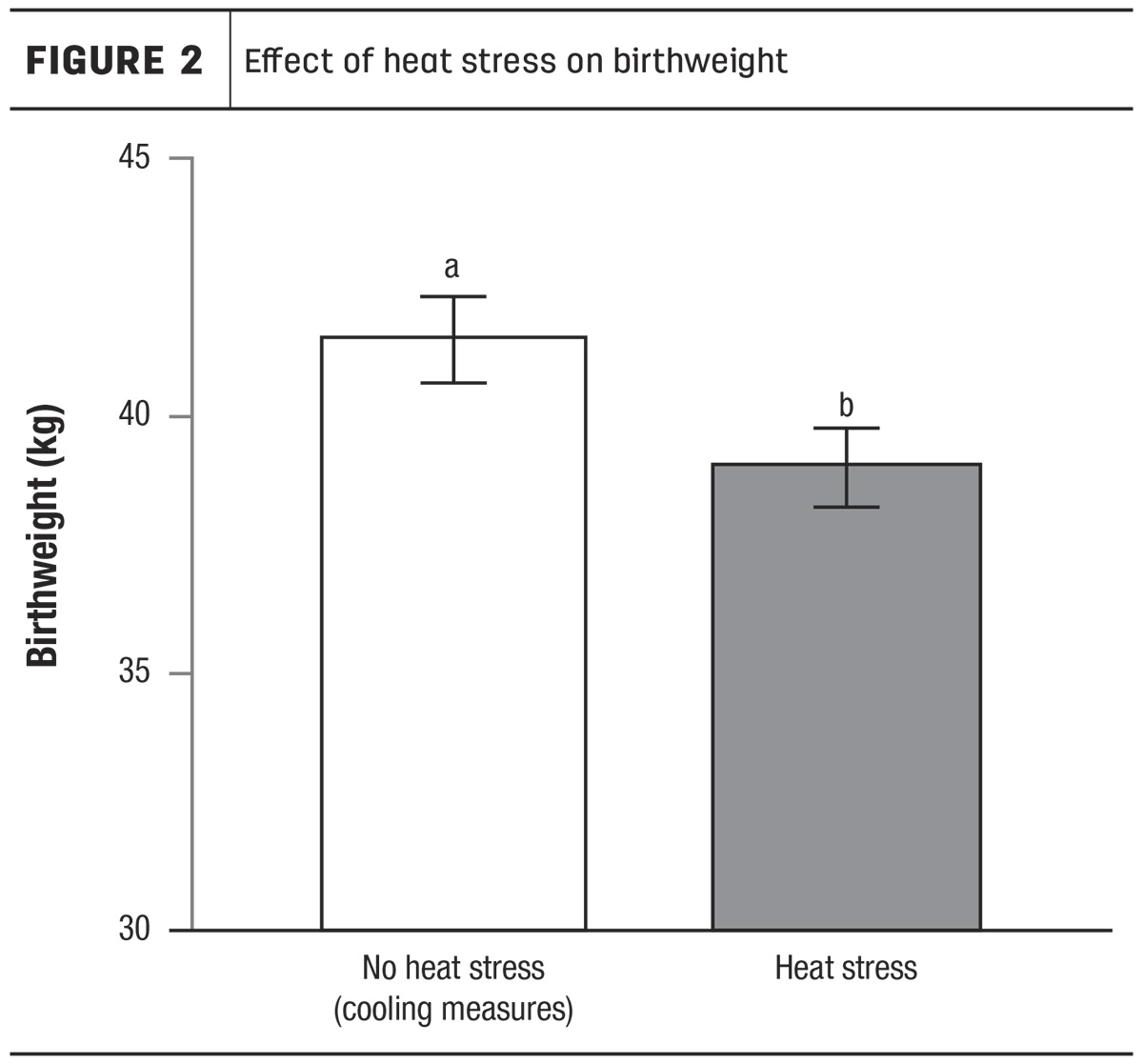
But the impact doesn’t stop there. There are broader, long-term effects, especially on developing calves. Research shows that calves born to dry cows exposed to heat stress in late pregnancy weigh 1.1 to 12.5 pounds less at birth than those whose dams remained cool (Figure 2).
These lighter calves also consume less feed and water after birth, resulting in slower growth and development. Over time, the impact persists: Their milk production in the first three lactations is consistently lower compared to that of non-stressed cows.
Breeding for heat tolerance?
Additional research shows the impact of heat stress on important fertility traits, implying this challenge not only physiologically affects reproductive performance, it can also influence breeding programs.
The study found clear and detrimental effects of heat stress, measured by the THI, on four fertility traits in Holstein cows:
- Conception rate (CR) and interval from first to last insemination (IFLI) declined sharply once THI exceeded 60. CR dropped by about 10% when THI increased from 60 to 70. IFLI lengthened by five days in that same range.
- These two traits exhibited a downward trend that steepens over time with increasing THI and are particularly sensitive indicators of the impact of heat stress on reproductive efficiency.
- Calving interval (CIV) and interval from calving to first insemination (ICFI) were affected at a lower threshold of THI 50.
- These thresholds were defined based on the average THI across the three days surrounding artificial insemination (THI3), which was the most predictive measure of heat stress impact.
It also found genetic variance and heritability increase under heat stress. For instance, genetic variance for all traits increased and heritability rose, especially for ICFI. These results indicate greater potential for genetic selection under stressful conditions.
In other words, fertility traits become more genetically visible during heat stress, allowing dairies to select for animals more resilient to this challenge.
Bottom line
What does this mean? Given the increased heritability and genetic variance under heat stress, there is strong evidence that breeding for heat-tolerant fertility traits is achievable.
Dairies using activity monitoring technology to measure the effects of heat stress on their cows can unlock a valuable opportunity: integrating this data into breeding decisions as part of a comprehensive, data-driven herd management strategy.
References omitted but are available upon request by sending an email to the editor.