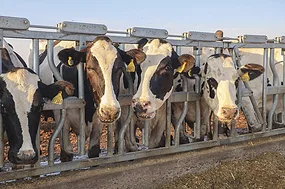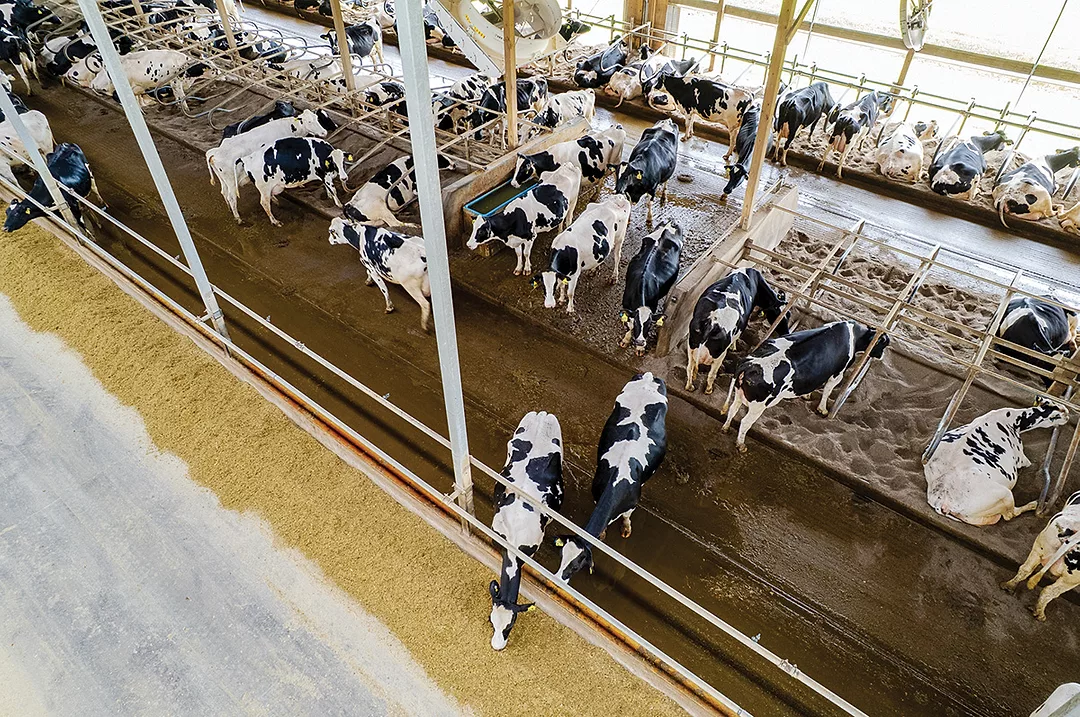
Overcrowding is a commonly used management practice in our industry to maximize output and remain competitive, driven by economic pressures and limited space. While implementing this strategy may offer short-term gains, overcrowding long term often drifts toward higher stocking rates and unforeseen impacts. Current heifer and beef prices and overall farm efficiency provide the opportunity to ask an important question: Do you know your farm’s optimal stocking number?


Every herd has an ideal number based on a series of factors including management practices, facility design and prevalent stressors based on season, region, etc. This tells us why some farms see less impact with higher levels of overstocking, while others find it challenging even at low levels.
What are the impacts of overcrowding?
When considering the impacts of overcrowding, we often primarily think about the effect on cows’ behavior. Stalls, feedbunk space and water space can all be limiting resources, depending on facility design and heat stress. Of these, stall space is the primary concern. Research tells us as we near a 120% stocking density that a cow’s lying time begins to be affected. Losses in lying time can’t be made up by the cow and when it drops significantly enough, we start to see the direct impacts on milk production and lameness. Cows will react accordingly and show a much higher tolerance when feeding access is restricted due to their remarkable ability to adapt their feeding behavior. They will change mealtimes, meal duration and feeding rates to support dry matter intake.
Overcrowding is a subclinical stressor, silently chipping away at herd health and performance as the cow uses excess resources to handle the stress. These behavioral changes are not distributed equally across the herd – subdominant and younger animals endure most of the stress.
Research from the Miner Institute concluded cows that were fed low-fiber diets or slick bunk feeding practices while also being overcrowded experienced exacerbated impacts. More specifically, cows experienced more subacute ruminal acidosis (SARA) from overcrowding than fiber changes to the diet, and when combined, had more SARA than treatment alone. Just think about that: Management is causing more ruminal upset than the diet itself.
What other management issues could your cows be facing?
Here are some examples to consider:
- Is feed pushed up or offered consistently so cows can make up their intake, or is that also going to limit them?
- Is there sufficient cooling for the cows or is the slug feeding and lameness going to be tough to recover from when it finally cools off this fall?
- If cows come back from the parlor and lie down at once rather than stand to eat, are your teat-dipping protocols adequate, or could mastitis spike?
Think about your bottlenecks and continue to minimize as many as possible. Sometimes, these can’t be avoided due to labor, facilities or reality, and lowering your stocking rate is the best choice. Here are many timely reasons to test that theory now.
Timely reasons to find your optimal stocking density number
Milk production opportunity
Journey back to the spring of 2020. Coronavirus sent shock waves through the agricultural industry, and dairy producers in some parts of the country found themselves in a unique situation of trying to limit milk production or even dumping milk. Many farms turned to culling to achieve less milk production. Curiously, some of these producers experienced an increase in the bulk tank instead of the decrease they were expecting. This was an excellent example of farms finding they were past their optimal number.
A few extra cows on paper can look attractive, with the assumption they achieve average milk production of the herd. But the hidden cost to the rest of the herd can outweigh those extra cows. In the case of our producers above, once less crowded, their cows more than made up the difference to the bulk tank than the extras could provide. Less cows also benefits feed costs and efficiency. As decent milk prices appear steady through this fall, how much milk and profit could be on the table?
Cull beef prices
If you want to test your bulk tank and stocking numbers, current beef prices are a fantastic safety net. The goal is to find the number that fits your system. Start slow and keep an eye on your total tank weights and herd data. Beef prices can serve as that short-term risk management tool to find that right balance for your herd without compromising profitability if you cull some excess.
Consider the long-term impacts as well. While crowding more animals to chase beef prices may provide some short-term gains, how much can this negatively affect the future profitability of your herd?
Heifer replacement costs
Recent heifer replacement costs are giving most producers sticker shock. Breeding more cows to beef and an increased focus on reducing excess heifer inventories has led to the recent shortage of heifers in the market. Those needing to buy replacement heifers due to high turnover rates are feeling the pinch. However, even those carrying extra heifers due to high non-completion rates or high turnover rates are losing out on those opportunities to capture high beef prices.
Overcrowding is not just a lactating/dry cow problem. A frequent saying is: “My heifer genetics are my future progress.” This is true, but where things unravel is deciphering between genetics and epigenetic impacts on that heifer’s future. Yes, her genetics have greater potential, but are those heifers able to live up to that potential?
A notable example is multiple bouts of respiratory disease as a calf being correlated to lower future milk production. While she had the genetic potential, her environment and challenges limited the extent that genetic potential could be truly realized. Crowding heifers can lead to developing slug feeding behavior, variation in bodyweight of the pen, dirtier pens and increased mastitis risk, and greater disease opportunity with those stress resources depleted. With such high replacement costs, it makes sense to maximize each heifer’s likelihood of survival to calving with her potential intact.
The benefits of longevity and maturity
Longevity and maturity at first calving have also been hot topics of conversation. Though culling animals and getting good beef prices look great in the meantime, economic success for many farms can lie with achieving more mature herds. Cows don’t break even on replacement costs until the middle of their second lactation, and more mature animals (third lactation and greater) can have greater feed efficiency and milk opportunity than younger animals as they are finished, spending resources on growth.
What are your top reasons for involuntary culling? Overcrowding is often directly correlated to several of these such as lameness, mastitis and metabolic disorders, especially if crowding dry cow pens.
Maturity at first calving is also an opportunity to increase milk potential in the first lactation, as first-calf heifers will not have to divert those resources to finish growing. This milk increase can also carry over into future lactations. Overcrowding heifers can limit proper growth rates, leading to immature animals calving in or needing to delay breeding age to make up the difference.
Conclusion
Overall, finding the best stocking density is more than just a numbers game; it’s a strategic decision that balances short-term gains with long-term herd health and profitability. With differences in management and facilities across farms, your optimum will likely be different than your neighbor. Consider these current market conditions to find future success, animal health and overall farm profitability that is right for your herd.