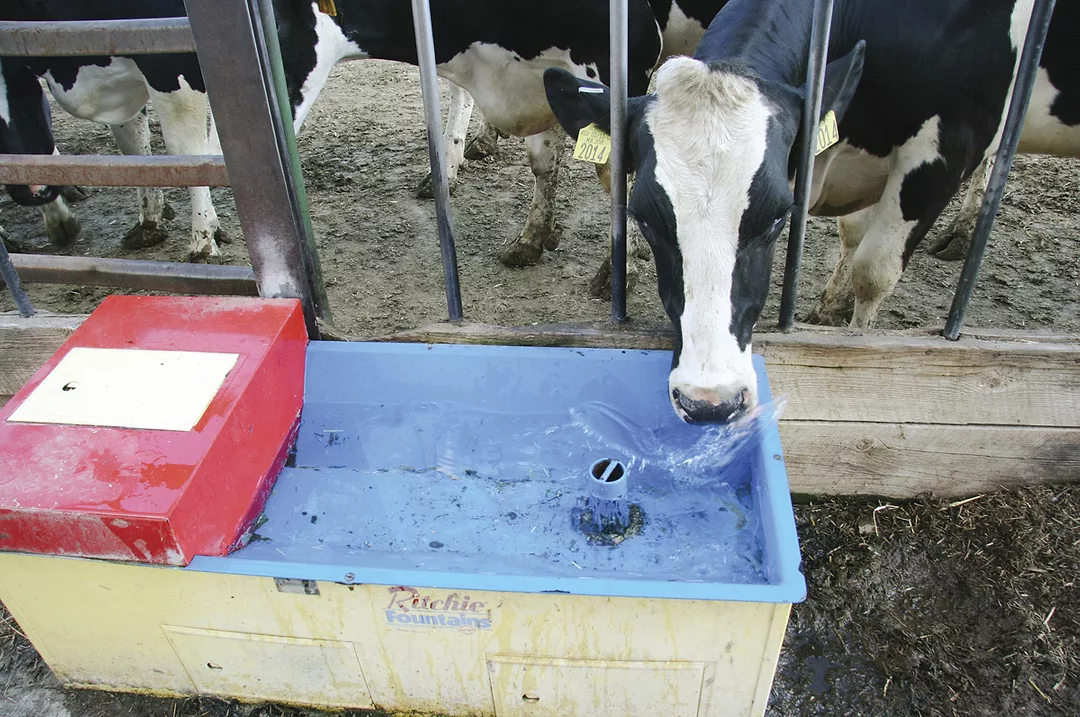
A plentiful supply of good clean water is essential for normal digestion and metabolism, including rumen fermentation, proper movement of feed through the intestinal tract and effective nutrient absorption. It also supports normal blood volume and tissue hydration.

Lactating cows need 4.5 to 5 pounds of water to produce 1 pound of milk, so a 100-pound-per-day producer could drink up to 50 gallons daily. Environmental factors (heat, humidity) can push water needs even higher – up to 60 gallons per day in extreme conditions.
When that much water is needed, reduced water consumption because of contamination or the cow’s disinterest can be detrimental. Even a small drop in water intake can reduce dry matter intake by 1 to 2 pounds per day, which can then lower peak milk yield by 2 to 5 pounds.
In fact, a 5-pound dip in milk yield can cost more than $500 a day in a mid-sized herd – a cost too large to ignore.
Telltale signs water quality could be pulling your herd down
Many factors can cause the same performance issues as poor water quality. Reduced animal body condition, a drop in milk production and failing reproductive performance are just a few. Even some mastitis cases and suppression of the immune system have multiple causes – water quality being one.
Odor, discoloration and taste are telltale signs that water may be the problem in a herd. An off odor or taste may cause cows to drink less. High manganese, iron or excessive levels of sodium, sulfate and chloride can make water taste bitter or salty, affecting palatability. Nitrates may cause reproductive failure, depress growth in youngstock and result in poor oxygen-carrying capacity of the blood. Other contaminants like bacteria, viruses and parasites in surface water can cause algae blooms, make water smell and taste bad as well as produce toxins.
Contaminants are not always easy to detect or reduce intake, but they can upset cows’ digestive systems. Certain dissolved minerals are antagonistic to trace minerals like copper, selenium and zinc in the diet and reduce absorption of needed nutrients. Water pH – acidic or too alkaline – also can cause digestive upset.
Water analysis is a worthwhile risk management practice
Having your water tested is not costly. In fact, it’s an investment in peace of mind and a risk management practice that should be done routinely, twice a year. The process is simple:
- Acquire sterilized sample bottles from a testing lab and make sure the samples arrive at the lab within 24 hours of sampling. This list of drinking water testing labs certified by the EPA will help you find a lab near you.
- Sample the same water source during times when animals are drinking.
- Sample water at the inlet and avoid sampling from waterers and troughs
- The timing and frequency of sampling will depend on your geographic location and the water source. For example, in a drilled well, unless something unique occurs, mineral content won’t fluctuate a lot, but bacteria will. Drilled wells should be tested annually. A pond or other surface-water source should be tested several times a year because precipitation and runoff can impact sediment, bacteria and algae levels.
- For the first sampling, a broad-spectrum analysis should be done. Most labs offer a livestock water analysis package including bacteria, calcium, chloride, copper, hardness, iron, manganese, magnesium, nitrates, pH, phosphorus, potassium, sodium, sulfates, TDS (total dissolved solids) and zinc.
- If the water contains any elements that approach or exceed the upper levels appropriate for livestock, a follow-up sampling should be conducted.
Don’t take your treatment system for granted
It’s also important to test if a water treatment system is being used. This provides a comparison of the raw water, how effective treatment is and the quality of water cows are consuming. For example, if there is a lot of bacteria at the trough but not at the source, contamination is happening in the trough, and we should look at management and cleaning.
When water treatment is in use, one to three samples are taken for each water source.
- One sample of water as it enters the facility (straight from well or pond taken at pressure tank)
- One sample taken after any treatment, like water softening
- One sample of water at the water trough, where cows are drinking
Making changes based on water analysis
Once you have sampling results in hand, it’s good to speak with your nutritional consultant or someone who has experience with water. Some water quality findings can be more detrimental than others. For example, high magnesium may not impact cows, but it can clog pipes – which can lead to water availability problems. Lines may need to be replaced if a problem goes unchecked.
Samples also may be sent to our water analysis program for a graph of your results compared with acceptable standards. This program allows you and your nutritionist to evaluate the mineral content of your ration for things such as water-based antagonistic relationships in case the mineral supplementation needs to be adjusted.