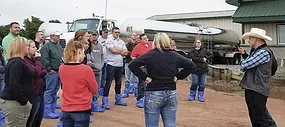
The next generation of agricultural producers, professionals and leaders will need a diverse set of skills to manage their businesses, farms and organizations. A unique one-day conference provides high school students with the opportunity to hone their communication and leadership skills while interacting with university researchers and touring campus facilities.
Stride Youth Leadership Conference is an annual event presented by Professional Dairy Producers (PDP) and hosted on college campuses. High school students aged 15 to 18 participate in a mix of interactive leadership development training and hands-on laboratory and research experiences to demonstrate the variety of career options in the agriculture industry.
“In every segment of agriculture, we need the best and brightest of the next generation to bring their ideas and enthusiasm to help our industry sustainably meet the needs of a growing world population,” says Amber Keel, PDP program coordinator. “It’s our responsibility to share with young people the career paths that exist in agriculture and food production, whether as producers, scientists, engineers, communicators, technicians or any of the many other career positions available. There are truly opportunities for everyone.”
Stride is one of the youth development programs supported by Dairy’s Foundation. As the only public-held national foundation supporting dairy education and initiatives across the entire dairy industry food chain, Dairy’s Foundation provides financial support for programs that nurture the next generation of dairy leaders, develop the skills of current dairy farmers and strengthen the bond of trust between consumers and producers.
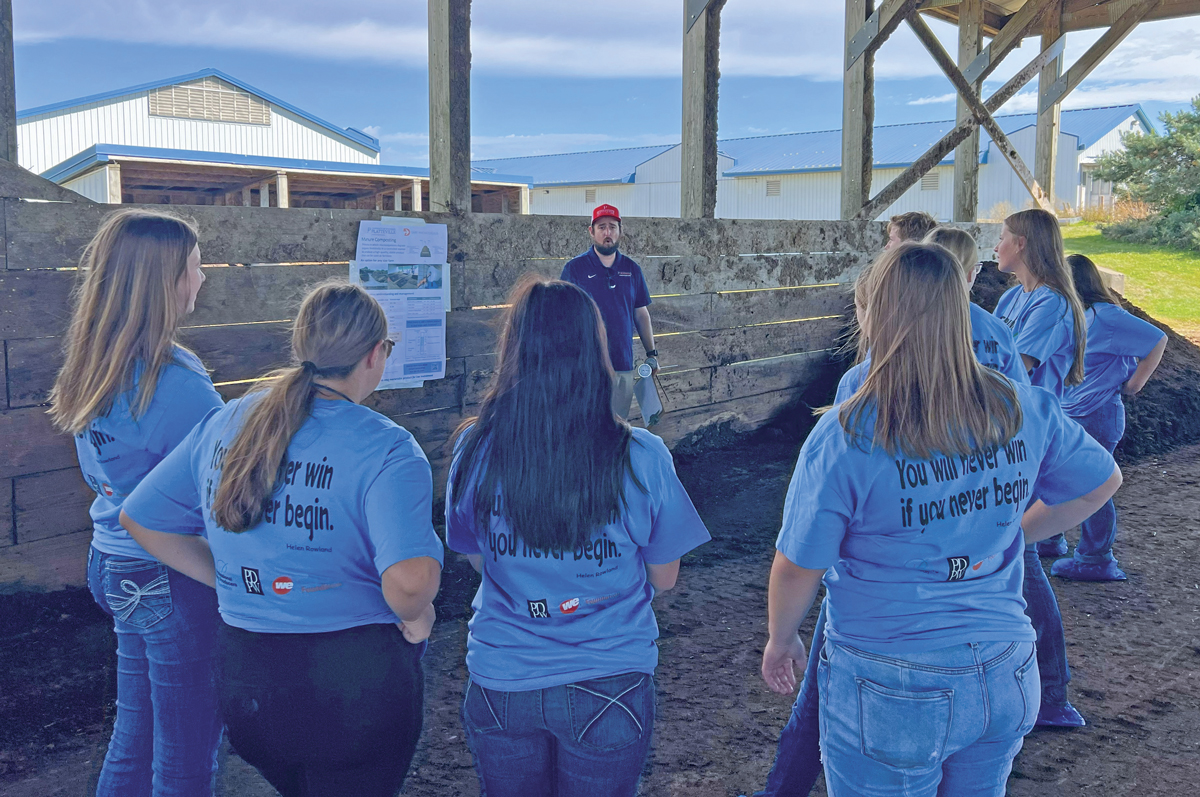
Dr. Joe Sanford describes the manure composting process to a group of 2024 Stride attendees. Image courtesy of Professional Dairy Producers.
University partnerships are key
In recent years, the one-day conference has been hosted at various colleges in the University of Wisconsin system to provide options for students in different areas of the state, while also exposing return attendees to the various campus facilities, professors and graduate students.
“Partnering with university faculty and researchers to host students on campus is one of the keys to success for Stride because it gives students insights to how some of the most innovative ideas in agricultural research are being developed and tested,” Keel says.
The University of Wisconsin – Platteville hosted Stride in 2024, where students toured the university farm and participated in interactive experiences in the dairy foods lab and research lab, reviewing the potential of biochar in nutrient management. In 2023, students learned about food science, agronomy, soil science and animal science with hands-on labs at the University of Wisconsin – Madison.
“Programs like Stride Youth Leadership Conference open students’ eyes to the wide range of potential career pathways within the dairy industry,” says Dr. Joe Sanford, assistant professor in the School of Agriculture at UW – Platteville. “When we hosted Stride, students had the chance to learn directly from faculty in manure management, animal science, food science and agribusiness.”
The hands-on labs are a highlight for both students and university teams.
“At Platteville, hands-on learning is at the heart of what we do. These activities not only give students an opportunity to explore some of the campus, but also immerse them in real-world examples of how the agriculture industry operates,” he says. “Whether it’s turning and monitoring a compost pile or putting their arms in a cow’s rumen to grab a sample, these experiences spark curiosity, make the learning memorable and give students concrete stories and insights to carry with them as they consider future career paths.”
Sanford notes the conference offers value to students from farm and nonfarm backgrounds alike. For students who grew up on or have worked on farms, programs build on the foundation they already have and highlight the wide range of interconnected areas in agriculture that work together to improve the industry and move it forward. For other students, it could be the first real dive into the complexity of the dairy industry.
“Students learn that agriculture can go far beyond feeding animals or planting crops. It encompasses food science, technology, environmental stewardship, supply chain management and more,” Sanford says. “This exposure helps them appreciate the breadth of the industry and consider how their interests and skills could fit.”
Critical communications skills are also a focus
The leadership development portion of the Stride program is facilitated by Michael Hoffman, founder and owner of Igniting Performance Inc., a Dallas-based company that specializes in sales, customer loyalty and leadership. He brings a high-energy, interactive style that engages students and provides positive reinforcement throughout the event.
Featured sessions at Stride have focused on helping students identify and optimize leadership styles, understand their influence and how to use it, and learn how to speak authentically with confidence.
“Attendees build skills that will serve them well in high school, college and in whatever career field they choose,” Keel says. “As the dairy industry becomes more complex and interconnected, knowing how to communicate effectively and collaborate across multiple organizations is more important than ever before.”
The above update is provided by the Professional Dairy Producers Foundation (Dairy's Foundation), which raises funds nationwide and awards grants and sponsorships for educational programs and initiatives that benefit the U.S. dairy community. Dairy's Foundation is committed to uniting the dairy community on issues of common concern to achieve its vision of a professional, proactive and prepared dairy community. Dairy’s Foundation was established by PDP in 2002. The foundation is a 501(c)(3) entity.