Winter weather creates some of the most difficult operating conditions for dairy producers. From frozen feed gates to snow-clogged barnyards and subzero starts, equipment and operator efficiency can take a serious hit if not properly prepared. And while dairy cows may be brought into warmer enclosures during the colder months, the demand on machines only intensifies. Feeding schedules remain strict. Cleanouts still need to happen. And snow waits for no one.

To keep dairy workflows running smoothly, even in the harshest climates, proactive planning is key. Here are five cold-weather equipment tips to help reduce downtime and stay productive throughout the season.
1. Warm up engines and batteries before work begins
Cold-starting equipment is more than an inconvenience; it can wear down components and delay critical daily routines such as feeding. Using block heaters or diesel-fueled preheaters allows the engine to reach temperature more efficiently while reducing strain on the starter and battery.
In freezing temperatures, batteries also lose cranking power, which can make starting difficult or impossible without assistance. Storing equipment indoors whenever possible is the best way to avoid cold-related battery rundown. Insulated battery blankets or plug-in maintainers can also help keep batteries in optimal condition when equipment must be left outside.
Some agricultural machines include Eberspacher heaters to preheat engines before the workday begins. This ensures machines are ready for use at the first feeding or pen cleaning of the day. For example, on a large Midwest dairy farm where crews start work before sunrise, block heater timers can be set to activate two hours in advance so loaders are warm and ready when operators arrive.
Build warm-up time into your winter schedule. Allow hydraulic fluids and internal systems to reach proper operating temperature before placing the machine under load.
2. Replace fluids with cold-weather formulas
Fluids throughout your machine get thick as temperatures drop. This change in consistency leads to more friction. The machine is now working harder, which can lead to unexpected downtime. Cold weather can impact systems throughout your machine, including the engine and hydraulics. This is especially true for today’s advanced fuel systems, where diesel fuel gelling up can seriously impact fuel efficiency and overall productivity.
To avoid a chilly outcome, replace fluids with cold-weather versions during late fall or early winter maintenance cycles. Look at the specifications on your engine oil, hydraulic fluids, antifreeze and diesel fuel, and replace or use additives as necessary.
Sustained cold – not just a single overnight drop – is the indicator for making these changes. Regular maintenance intervals in late fall are the ideal time to switch.
It's also important to keep an eye on diesel exhaust fluid (DEF) systems. Since DEF contains a significant amount of water, it freezes at 11°F and expands 7% when frozen. Industry-leading manufacturers engineer selective catalytic reduction systems to be as easy as possible, even in cold weather, but there are still things operators can do to ensure these systems are maintained. Look for equipment that runs on a timer that pulls DEF out of the engine and returns it to the DEF tank. Following proper shutdown procedures ensures that all the fluid is purged from DEF lines. This helps avoid cracking the lines or damaging the engine components if the DEF freezes.
3. Maintain tire pressure and traction
Traction is critical in winter, not just for safety but also for minimizing delays during feed delivery or barn cleanouts.
Colder air reduces tire pressure, which compromises traction and machine stability. This is especially hazardous when navigating icy alleys, frozen manure paths or sloped silage pads with a telehandler, which relies on proper tire pressure for stability and effective operation.
Check tire pressure daily, especially on equipment stored outdoors. Skip outdated practices such as adding liquid ballast, which can freeze and damage tire structure. Instead, use ag-specific tires or wide-track configurations that increase surface contact and minimize slippage. Some machines also offer limited-slip differentials or traction control settings that help navigate snowy or uneven terrain.
It is also worth noting that cold temperatures make rubber hard and brittle, which can result in a rougher ride and more risk of tire damage in rough terrain.
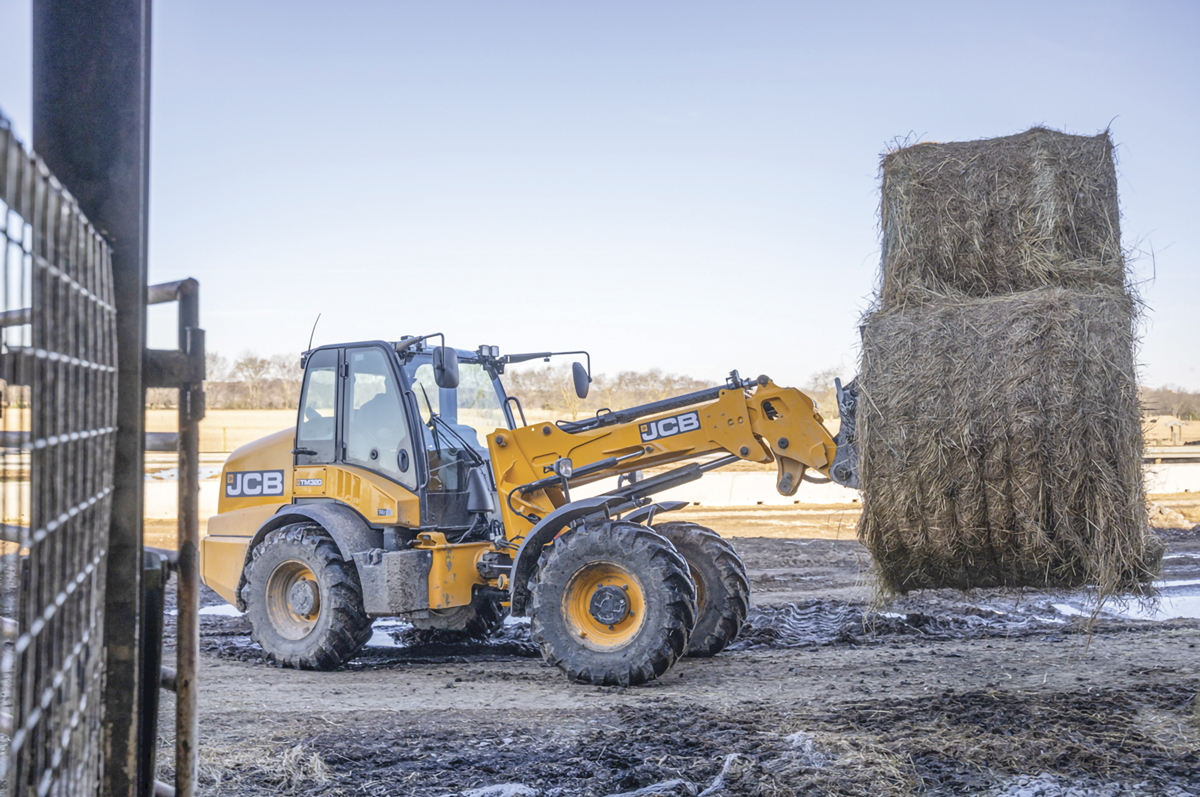
Colder air reduces tire pressure, which compromises traction and machine stability. Check tire pressure daily, especially on equipment stored outdoors. Image courtesy of JCB.
4. Maximize visibility in low light
Reduced daylight hours during winter mean more work takes place in the dark. Poor visibility can lead to unsafe working conditions and reduced efficiency.
Many machines designed for agricultural environments now include 360-degree LED lighting packages. These provide consistent visibility around the machine, which is particularly useful when reversing near fences or maneuvering through narrow gates. Producers using LED-equipped telehandlers often report improved efficiency during early morning feeding, as operators can work confidently without waiting for sunrise.
Inspect lights daily and clean windshields and lenses to ensure optimal performance. Good lighting improves safety, reduces fatigue and helps avoid costly mistakes.
5. Use telematics to monitor usage and efficiency
Modern telematics platforms help producers understand how and when equipment is used. This is particularly valuable in winter when idle time increases and fuel consumption can spike.
Telematics can track engine hours, alert you to maintenance needs and identify inefficiencies such as machines idling for long periods simply to maintain a warm cab. Features such as auto-shutdown timers reduce unnecessary engine wear and fuel usage.
Monitoring this data helps producers make informed decisions about scheduling, staffing and equipment deployment during the colder months.
Hot tips for cold temps
Cold weather is inevitable, but downtime is optional. Whether it is switching fluids, checking tires or warming up machines before use, a proactive approach to equipment management will help keep dairy operations moving.
Work with your equipment dealer ahead of freezing temperatures to winterize machines and stock up on seasonal supplies. When cows need feeding and snow keeps falling, only the prepared keep moving.