After years of worrying about drought, this year’s challenge for many Nebraska hay producers was the opposite problem: too much rain during haying season. I heard from many hay producers that they were having a hard time getting things dried out to be baled. Now, as samples from the past season come through our laboratory, I'm reviewing a lot of high-moisture hay samples. So what does this mean for livestock producers planning to feed this forage during the winter? Here are four parameters producers should consider when planning their winter rations and supplements.

Moisture
As mentioned above, many hay producers had a hard time getting things dried out enough to bale, less than 18% moisture. So the first thing to consider is the moisture content of the hay. If it is above 18%, be cautious stacking bales, as spontaneous combustion risk is moderate. When moisture is above 22%, do not stack bales, as hay fires from heat combustion are highly likely. Once you’ve assessed moisture risk, the next concern is what that heat did to your protein.
Heat-damaged protein
Heat-damaged protein is the protein associated with lignin. This protein often becomes associated with the fibrous portion of the forage through heat damage. Often, this can be caused by baling hay above 18% moisture. Haylages are also more susceptible to heat damage. Haylages are stored at a higher moisture content and heating can occur during ensiling.
The heating reaction that causes the protein to bind to the fiber in the forage is known as the Maillard reaction. This reaction ties up protein with the lignin, making that protein unavailable to the animal. Heat-damaged forages are often associated with the caramelization of sugars in the forage. This results in a sweet, tobacco-like smell and makes it more palatable for livestock consumption. However, not all heat-damaged forages have such an obvious change in color and smell.
Therefore, it is key to evaluate forages for heat-damaged protein (HDP) and use available protein in place of crude protein when significant heat damage has occurred. The bigger the gap between crude protein and available protein, the more likely the animal will not meet nutritional requirements if crude protein is used to determine a supplementation plan or balance a ration. The animal will be short-changed, and health and production performance will be negatively impacted. Sick, underperforming livestock are a strain on any operation’s finances. After establishing that protein requirements will be met, it is time to turn our attention to energy content of the forage.
Water-soluble carbohydrates
Soluble carbohydrates contribute to the energy level of the forage. With a wet growing season and hay harvest come the risk of rain-damaged hay. When we consider rain-damaged hay, the loss of soluble carbohydrates, and therefore energy, is a concern.
With rain damage, leaf loss is often an issue. Leaf loss not only depresses yields but also accounts for significant loss of soluble carbohydrates typically found in the leaves. Additionally, forage seeps these soluble sugars. So between leaf loss and seepage, rain-damaged forages have an increase in the proportion of fibers relative to other carbohydrates in the forage.
Since a larger portion of the forage is made up of slowly digestible fibers, such as stalks and stems, as opposed to rapidly available sugars, the overall digestibility of the forage decreases. This has a trickle-down effect where forage quality indexes show reduced forage quality.
This may mean that the livestock being fed cannot consume enough to meet protein and energy requirements. Conversely, if intake increases due to caramelization from heat damage, the increased intake can make up for the higher fiber content to meet energy needs. So the reported fibers and digestibility numbers need to be evaluated along with feed intake observations. Once protein and energy needs for the animal have been considered, it is time to dive into the micronutrients available in the forage.
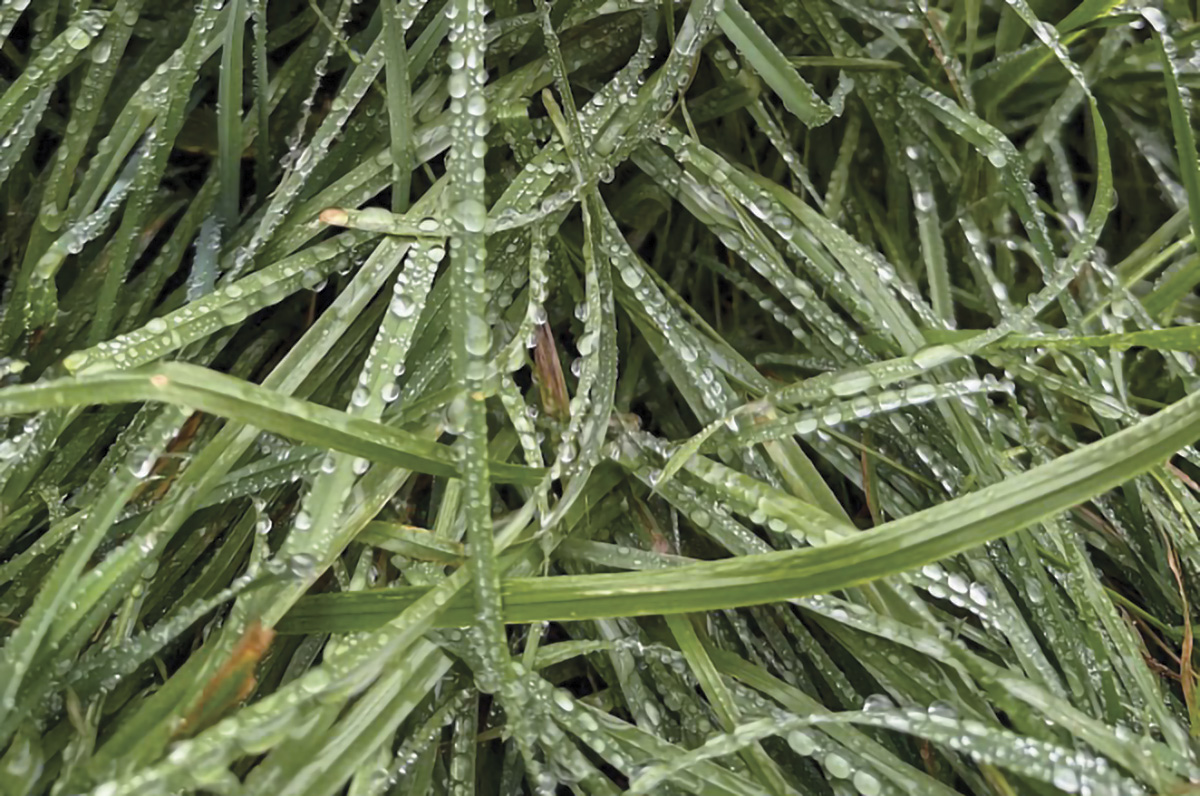
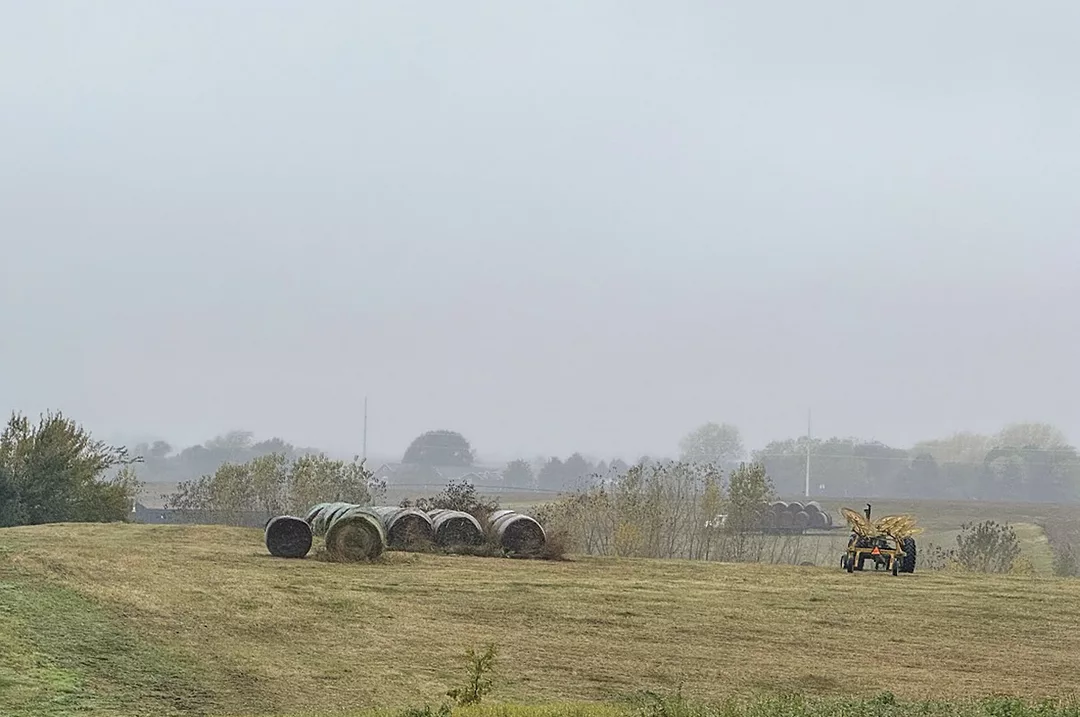
Rain droplets gather on orchardgrass regrowth in October after a rainy haying season. Image by Rebecca Kern-Lunbery.
Micronutrients
Along with the loss of sugars in rained-on hay comes the loss of key minerals and vitamins. Minerals and vitamins are concentrated in the leafy portion of the forage, so losses occur through both leaf loss and seepage. The addition of a mineral analysis to a standard forage report can help producers choose a mineral supplement that can fill the gap in micronutrients available in the forage and required to meet animal health and performance goals.
Beyond the report parameters
Beyond evaluating these four parameters on your forage analysis, if the hay is exceptionally wet and stored in the elements, then mold may also be a risk. Visual evaluation of the hay to look for mold spots and areas of deterioration is also key to providing good animal health. In 10 years, I have not seen heat damage coincide with moldy hay, but I have seen high moisture levels as a risk factor for either. If your visual evaluation shows white areas of the hay, this could be mold or more likely yeast. At high enough numbers, yeast and mold can also cause animal health problems. Then that hay should also be evaluated for mold count.
Typically, when mold or yeast counts are high, the solution is dilution. Having mold or yeast in hay is not good, but it can still be fed with proper mixing and careful observation. Yeast and mold can also be the result of hay that was stored unprotected in the elements. In those cases, it is usually just the outer layers of the bale that host the mold or yeast. Discarding those layers can avoid animal health issues but does sacrifice a significant volume of hay. Those outer layers can make up to 40% of the bale’s mass.
After years of watching the skies for rain, this season reminded us that rainy weather can bring its own challenges. Wet hay years call for a closer look at the details: moisture heat damage to protein, lost sugars, missing minerals and potential for mold. Each test result tells a story about hay production conditions and how we need to manage it as a feed. Taking time to understand what’s really in the bale can prevent disappointment in the bunk and help livestock stay healthy and productive through the winter.
So whether this year’s hay smells sweet and caramelized or looks a little rough from the rain, let visual evaluation and the forage report be your guide. Understanding a few extra data points today can make all the difference when snow is flying and good nutrition matters most.