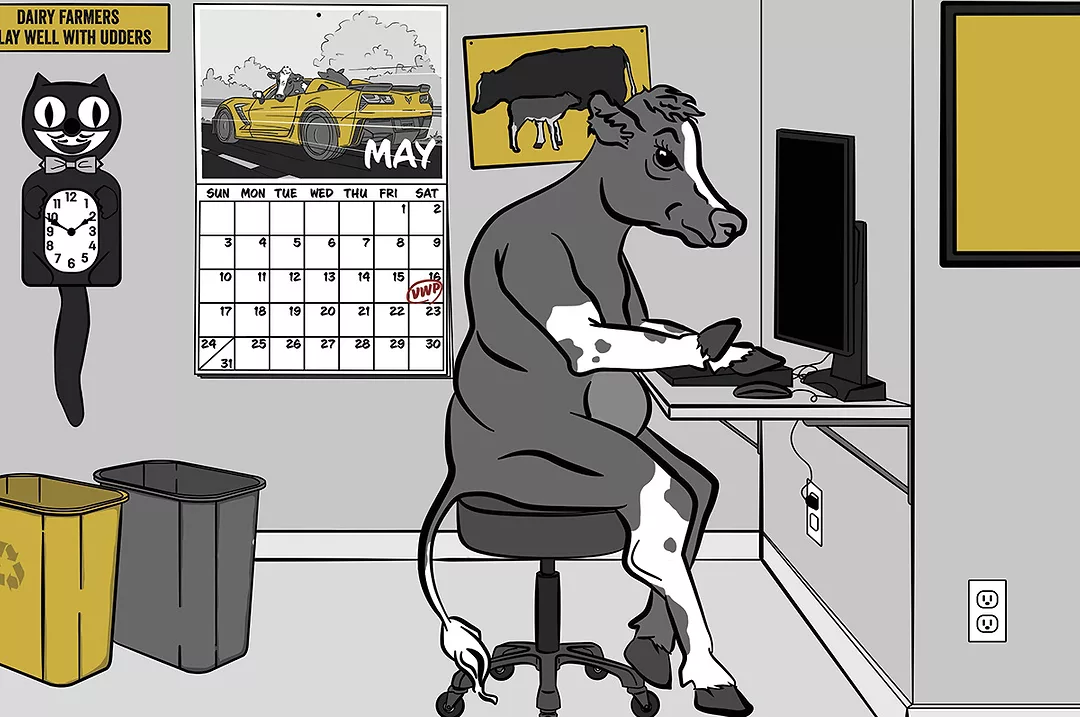
The voluntary waiting period (VWP) is the interval between calving and a cow’s first breeding, during which the cow is intentionally not inseminated even if she shows signs of estrus. It is a management decision that, along with insemination and conception risk, directly influences how early a cow becomes pregnant.

Determining the appropriate VWP is a critical component of any reproductive program, as it impacts both reproductive performance and overall herd profitability. The optimal VWP may vary depending on the lactation number, season and the farm’s breeding strategy, and it is a fine line between maximizing fertility and ensuring timely conception.
Setting up your herd for success
Traditionally, the VWP is set around 50 days in milk (DIM), but many herds successfully extend it to 80 DIM or more, depending on their reproductive goals. Herds with poor estrus detection or that have low conception rates may benefit from a shorter VWP, as these cows will often require multiple inseminations to achieve pregnancy. However, it is essential to remember the primary function of the VWP: to allow time for uterine involution and resumption of ovarian cyclicity, processes that typically require at least 45 days following a problem-free calving. Breeding cows before this threshold increases the risk of lower conception rates and poor reproductive outcomes.
In contrast, herds with few transition issues and strong reproductive management can often extend the VWP without compromising fertility. In these farms, cows typically require less services to get pregnant, allowing more flexibility in breeding decisions. Farms that rely heavily on timed artificial insemination (A.I.) protocols can also adjust their VWP more easily, as synchronization programs provide greater control over breeding schedules.
Benefits to the cow
Extending the VWP can also be biologically beneficial. As cows move further into lactation and begin recovering from the negative energy balance of early postpartum, their fertility tends to improve. Delaying first service supports uterine recovery, enhances metabolic stability and gives more time for cycles to get started, particularly on first-lactation cows. Research supports that these benefits are associated with higher conception rates at first service, but this must be weighed against a longer overall time to pregnancy.
A longer VWP could also be beneficial to high-producing cows. These cows are in significant negative energy balance in early lactation, so extending the VWP can allow them to get back into balance before breeding ensues. Also, extending the VWP will add more days to the lactation and push off their dry-off date. Producers don’t like drying off cows milking 100 pounds per day, so extending the lactation gives them more days of production at a high level.
Points of consideration
If a farm is struggling to get cows bred by the intended VWP, it may be time to reassess their reproductive program. Common checkpoints include evaluating or updating synchronization protocols, improving heat detection efforts or considering adding labor resources to identify more cows in estrus. If cows are being bred but not conceiving, it might be time to retrain the breeding team or investigate transition cow health and metabolic issues.
Activity monitors can greatly assist with both challenges by improving heat detection and flagging health issues before clinical signs emerge. These systems can also allow for individualized breeding decisions, adjusting VWPs based on metrics such as number of estrus alerts since calving, intensity of estrus or health events before insemination. This targeted approach can help identify cows that may need extra time or additional interventions before breeding, helping maintain reproductive performance across the herd.
One piece to the reproduction puzzle
It is important to recognize that the VWP is just one component of a complex system. While adjusting the VWP can have meaningful effects, reproductive success is multifactorial. Improving fertility typically requires a comprehensive approach, addressing heat detection, semen handling, breeding technique, transition health and cow comfort. All these factors can interact with and influence the effectiveness of the chosen VWP.
To evaluate whether the farm is meeting its VWP goals, a good indicator is average days at first service. The numbers should be relatively close. If there is a significant difference, look into heat detection, protocol compliance or transition and fresh cow health factors. Another key metric is the distribution of first services by DIM. This shows whether cows are being inseminated on time, indicates compliance with protocols and highlights variability within the reproductive program.
Lastly, while time to first service and first-service conception rate are important, they are not the only determinants of when a cow gets pregnant. It is critical to consider the dynamics of all services. Extremely short VWPs may compromise fertility by breeding cows too soon, while excessively long VWP can delay time to pregnancy and reduce opportunities for conception. Ultimately, the right VWP should be determined case by case. It should align with the farm’s specific goals and align with herd health and reproductive performance data. A well-defined and consistently monitored VWP can help optimize reproductive efficiency and contribute meaningfully to the farm’s economic success.