We have seen record-high cattle prices lately, and if forecasts are correct, 2026 will be a good year for beef producers as well. Why? One reason must be that there are simply fewer animals out there to be sold on the market.

My colleagues and I partner with the Virginia Department of Agriculture and Consumer Services (VDACS) and the Virginia Cattlemen's Association to hold eight sales per year of backgrounded steers and heifers on the Virginia Quality Assured (VQA) program. In 2025, the number of animals we sold was down significantly, but the animals we did sell brought more than $1 million more than our calves sold for in 2024.
This year, profits were so good that many producers worried about selling cattle late in the year, fearing that the extra income might result in higher taxes with little to no time to bury the money in their operation.
Let’s stop right here and get a few things straight. Our farmers are doing better, but none of them are becoming independently wealthy. Several have bought new equipment, and I'm sure several have heard “It must be nice” from neighbors and friends.
Honestly, that rubs my fur the wrong way. Why shouldn’t the people that feed us have nice things? Do you know how many, or to what extent, past sacrifices have been made?
I don’t know about you, but I want our farmers to do more than just survive. Truly sustainable farming isn’t so much about production practices as it is about profits and people. Our operations need to be generating profits to attract the next generation of farmers.
Soapbox time aside – purchasing a new truck, tractor or implement can be an exciting time, but it also can bring a good amount of stress as well.
I would be remiss if I didn't remind you that good times can hide bad decisions. If you are highly leveraged, the best thing to do with any windfall is to pay down bills and improve your equity. That said, there are times when a new purchase is all but a necessity.
We all want a bargain, but with so many farmers in certain segments having money to spend, dealers are reluctant to dicker on the price they will take for that new paint. One thing I'm seeing is that not every part of the country is doing as well as others.
I like to buy locally whenever possible, but I have found huge differences in prices if you are willing to travel, and with the internet, those miles add nothing to the cost of shopping for a deal.
Before finalizing that new purchase, several important pieces of information need to be collected so that several important decisions can be made.
First and foremost, you need to know what your expenses truly are. Funny but true story: Two friends were in partnership with cattle on a rented farm. They agreed they would split the profits and the expenses right down the middle. One day, while they were riding around, one of them looked in the truck glovebox and found some receipts for gate hinges, chain and locks.
“What’s all this?” he asked his partner.
“That’s supplies I picked up to finish hanging that gate we bought for the front entrance,” the other explained.
The glove box diver exclaimed, “Good Lord! If you keep up with every little expense, we’ll never make any money!”
It is true that big expenses can sink you, but little ones can add up as well.
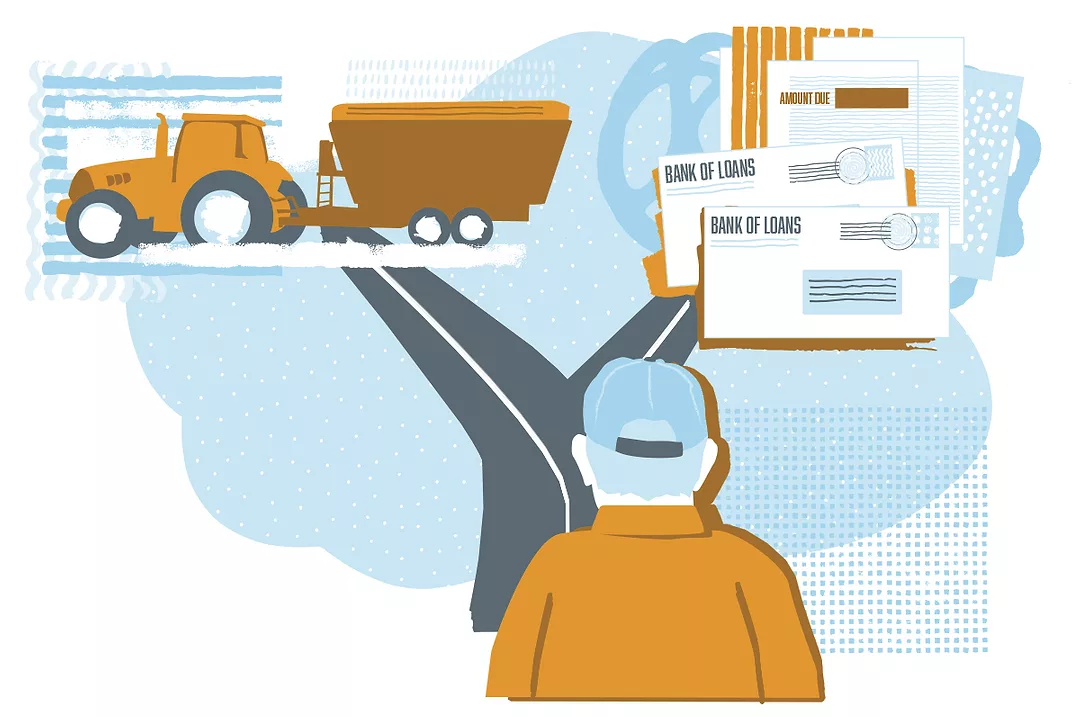
Knowing your expenses and when they are due will guide you in deciding not only what you can afford to pay but also the manner in which the debt is defeated. My wife and I are cash on the barrel head types; we hate payments.
There are times, however, when “paid in full” can cause some real issues with cash flow. An empty bank account can fall victim to seasonal expenses, such as planting or harvesting, or to annual expenses, such as insurance and property taxes. If that is a potential problem, structure your payments to fit your needs.
Do be aware that annual payments, depending on the terms, will likely cost you more in interest. The reason for this is that monthly payments begin to whittle away at the principal payment sooner than yearly payments.
Leasing can be an option, depending on your personal circumstances. A lease payment is considered a business expense, like any rental payment; however, you must owe enough taxes to absorb the write-off.
Leasing may also be a tool in some states that have aggressive estate tax situations. As a resident of one of those states, you may also want to keep some large items off your balance sheet until your end-of-lease buyout. Whatever the buyout price is will be the recorded value at that time – usually about 10% of the purchase price.
If neither of the above situations apply to you, leasing can be nothing more than high-rate financing.
As interest rates have climbed, there has been some movement to push the length of the purchase terms further out. Be careful doing this.
First, know what the normal life of your purchase is by looking up its depreciation schedule. Second, know that depreciation schedules are subject to change like any tax law.
For trucks and tractors, depreciation is five to seven years. Barns are generally 20-year properties, unless they are a specialty barn like a dairy parlor or greenhouse, where 10 years is the normal expected life.
You never want to be obligated to make payments on something that is past its normal life. Using that same line of thinking, could you make double payments on the purchase? If not, how are you going to afford the purchase that replaces this one? There needs to be some cushion time when you get full use of the purchase without a payment.
Incidentally, have you noticed that many direct-to-public agribusinesses have a small kiosk as the point of sale? It may be just a small shack with just enough room for one person and a cash register. This is also due to depreciation rules.
Anywhere money changes hands is considered a 39-year property. Think if you owned a nursery business with roadside greenhouses. If you had $40,000 in each greenhouse, putting a cash register in it would cost you at least $7,000 per year.
Finally, you may be asked to buy an extended warranty or provide proof of insurance before the deal is officially completed. Once again, this is an area to do your homework. Warranties and insurance are essential for protecting new purchases, but like candy, you don’t want to overdo it.
Happy shopping. You've earned it.