Producers across the southeastern U.S. are accustomed to mild winters that support year-round forage production. In the coastal plains, cool-season annual forages complement the perennial warm-season grasses, such as bermudagrass and bahiagrass. Further north, tall fescue dominates winter forage production, with a gap often occurring between December and February, when stockpiled and annuals forages play an important role.


This year, however, a combination of a dry fall and repeated extreme cold events challenged even the most diverse and resilient forage systems (Figure 1). Many areas in the Southeast received only 30% to 50% of normal rainfall during late summer and early fall, which limited the capacity for stockpiling forages (both warm-season perennials or tall fescue) and resulted in delayed planting and slow establishment for cool-season annuals.
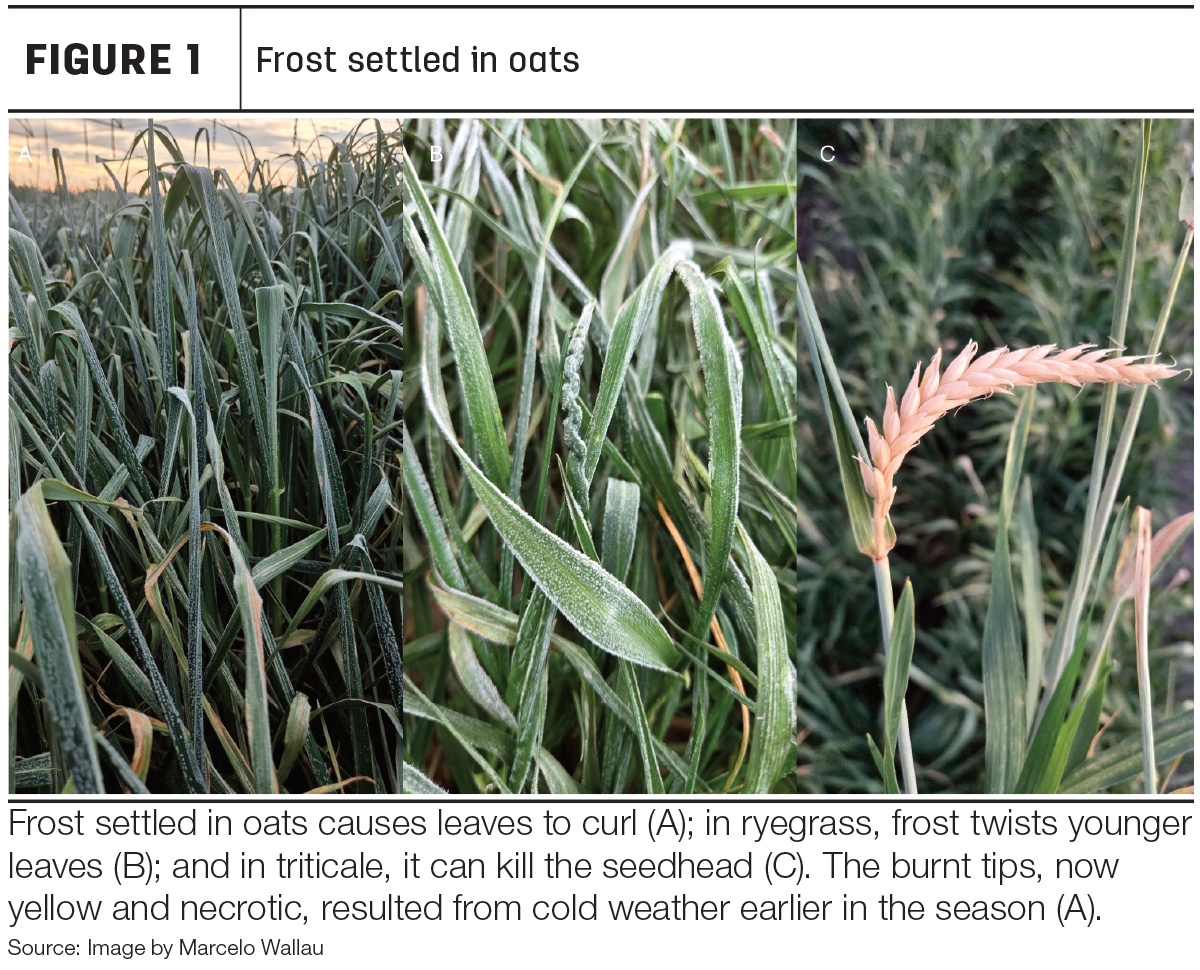
On top of that, record low temperatures and sustained cold weather deeply impacted cool-season forages. From our on-farm trials, under wastewater irrigation, we estimated a reduction in productivity of 61% this season, compared with the average of three previous seasons. We explored the effects of cold weather on cool-season annual forages and shared lessons learned this year to help producers prepare for a future of more uncertain weather patterns.
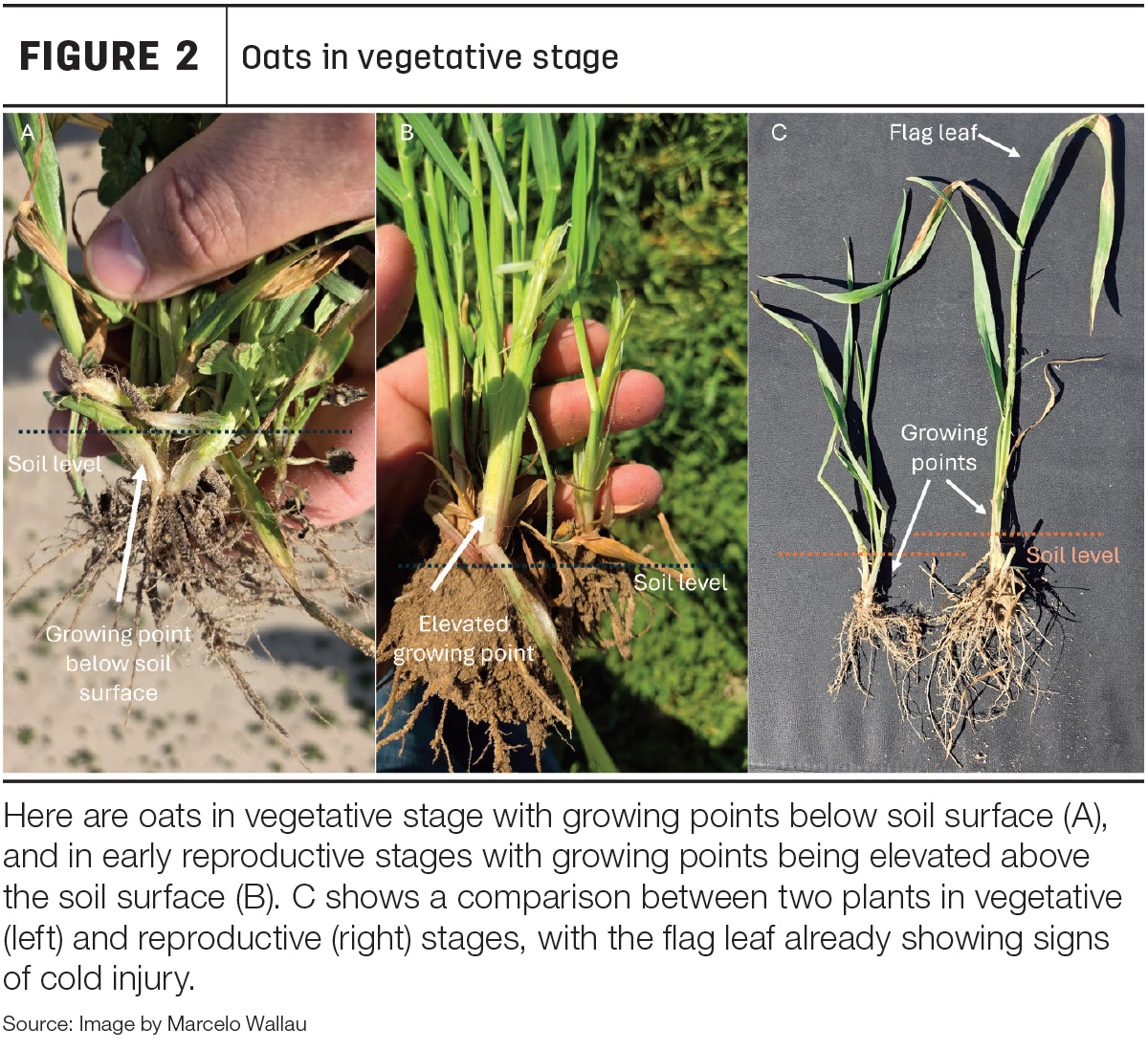
To understand the effects of cold weather on forages, we need to dig into plant physiology. Cool-season forages grow best at temperatures between 65ºF and 75°F. Temperatures below 45°F will stop growth. The critical temperature at which irreversible damage begins depends on the plant growth stage and the exposure duration. The two most sensitive stages are the seedling (before tillering) and the early reproductive phase. New plants (seedlings) are quite tender, take time to harden and can be damaged by frost or even killed if exposed to prolonged cold. As plants grow and form a closed canopy, they insulate the canopy against cold temperatures. During the vegetative stage, the growing points (meristems) are protected below ground because soil temperatures fluctuate less than air temperatures (Figure 2).
Later, as plants enter the reproductive period, the growing points are elevated (jointing) and reproductive structures start forming (bolting and flag leaf stage). Freezes can then injure that elevated growing point. Further along, when the reproductive phase starts (late boot or heading stage, when pollination starts), cold temperatures can kill the antlers, stigmas, or the small embryos and produce “blank” or “bleached” seedheads (Figure 3). During early reproduction, temperatures below 30°F that last for more than two hours can result in sterile florets.

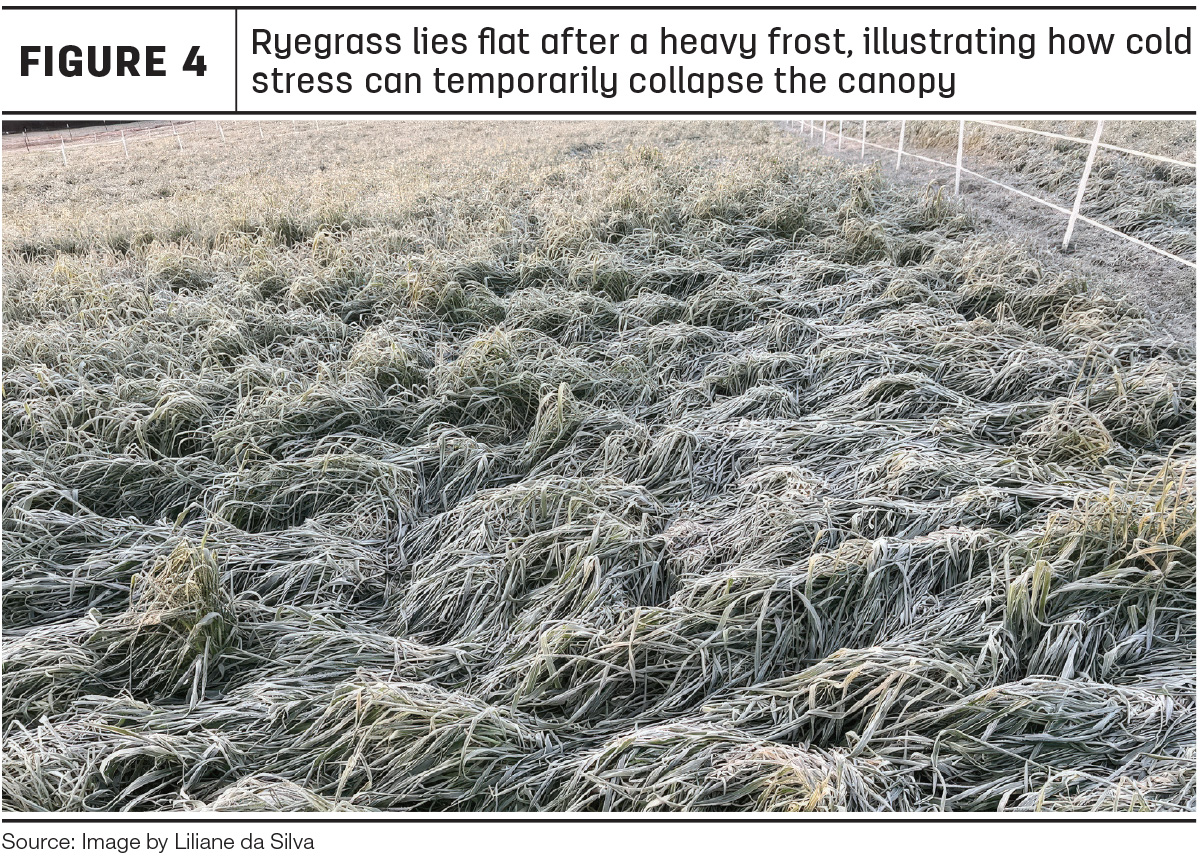
Large swings in temperature can increase the susceptibility to damage. Warmer temperatures, like we saw in December, will promote growth. The resulting new tissue is more susceptible to sudden freezes. However, if temperatures are consistently low, plants can acclimate, or “harden,” and become more tolerant of cold. Beyond temperature alone, the length of exposure affects how much damage is incurred. Other factors such as soil fertility and moisture, layout of the field and plant vigor have a large impact on response. More than ever, we saw that plants that have established well and are not limited survived the cold much better than in limited environments (see Figure 4).
There is a large variation in cold tolerance between species and varieties. In general, rye is more cold tolerant than triticale and ryegrass, while oats are often the most sensitive, along with “spring” wheat (most of the wheat we plant in our winter in the Southeast is the spring type because of its faster growth compared to “winter” wheat). However, variety also matters (in Figure 3). There is a trade-off between selection for early maturity and cold tolerance. Early varieties are desirable for early grazing or to cut for silage before corn planting.
Since those forages mature earlier, they are also more likely to enter the reproductive stages when chances for frost are still high. In our trials in Florida, we observed that late varieties were less injured by frost. But that is only working to some extent, as the cold weather has continued, resulting in widespread damage after three days with temperatures below 20°F.
How to define if the damage was significant
- At first, plants will be lying down (Figure 4), appearing limp or flaccid, as cell rupture will compromise plant structure. They will be dark green. Often, the damage is on the tips and top leaves, causing them to curl, but severe cold weather can affect the entire canopy.
- Look for twisted leaves (new or flag leaves are more sensitive), normally showing two to three days after the frost.
- After two to three days, leaves will lose color and appear chlorotic (white); next, in around a week, they will die and appear necrotic (yellow to brown).
Making decisions
- If cold damage is significant, consider harvesting or grazing shortly after to avoid greater losses.
- Especially for dairies that are banking on a single cut, if the damage is extensive, the oats and triticale may not recover in time before the end of February for silage harvest.
- In grazing systems, especially if ryegrass is planted together, grazing off the frozen plants will open the canopy for more growth. Do not overgraze; you will expose growing points and limit regrowth (Figure 4). The goal is to remove only the damaged tissue and still allow for plants to be able to continue to grow within the season.
- If small grains are already jointing (elevating the growing point) or bolted (entering reproductive phase), the damage is likely irreversible, and those plants will not grow much more afterwards.
- If pastures have recently been fertilized with nitrogen (less than one week), there can be an accumulation of nitrates in tissue. If that is the case, hold off grazing. Haying will not reduce nitrates (although ensiling can), but cold-damaged forages can then be diluted with other forage or feed sources. Additionally, a rainfall event would help plants grow and dilute accumulated nitrate concentrations, but it would require delaying grazing even longer after the rain.
Planning for the future
What can we do to improve pastures for the future, given variable weather conditions?
- Select varieties that are adapted to your region, but be aware of tradeoffs between early forage production and susceptibility to cold weather.
- Consider using forage mixes. Oats are more sensitive to cold weather, though they are among the highest-yielding and offer high nutritional value. Adding a small grain, such as triticale, and ryegrass can extend the grazing season and provide an additional layer of resilience, given triticale's disease resistance and cold tolerance. However, this year, even triticale (especially the early varieties) has suffered from the cold weather. Be aware that some of the legumes, and, especially, the brassicas can get hit hard by cold weather.
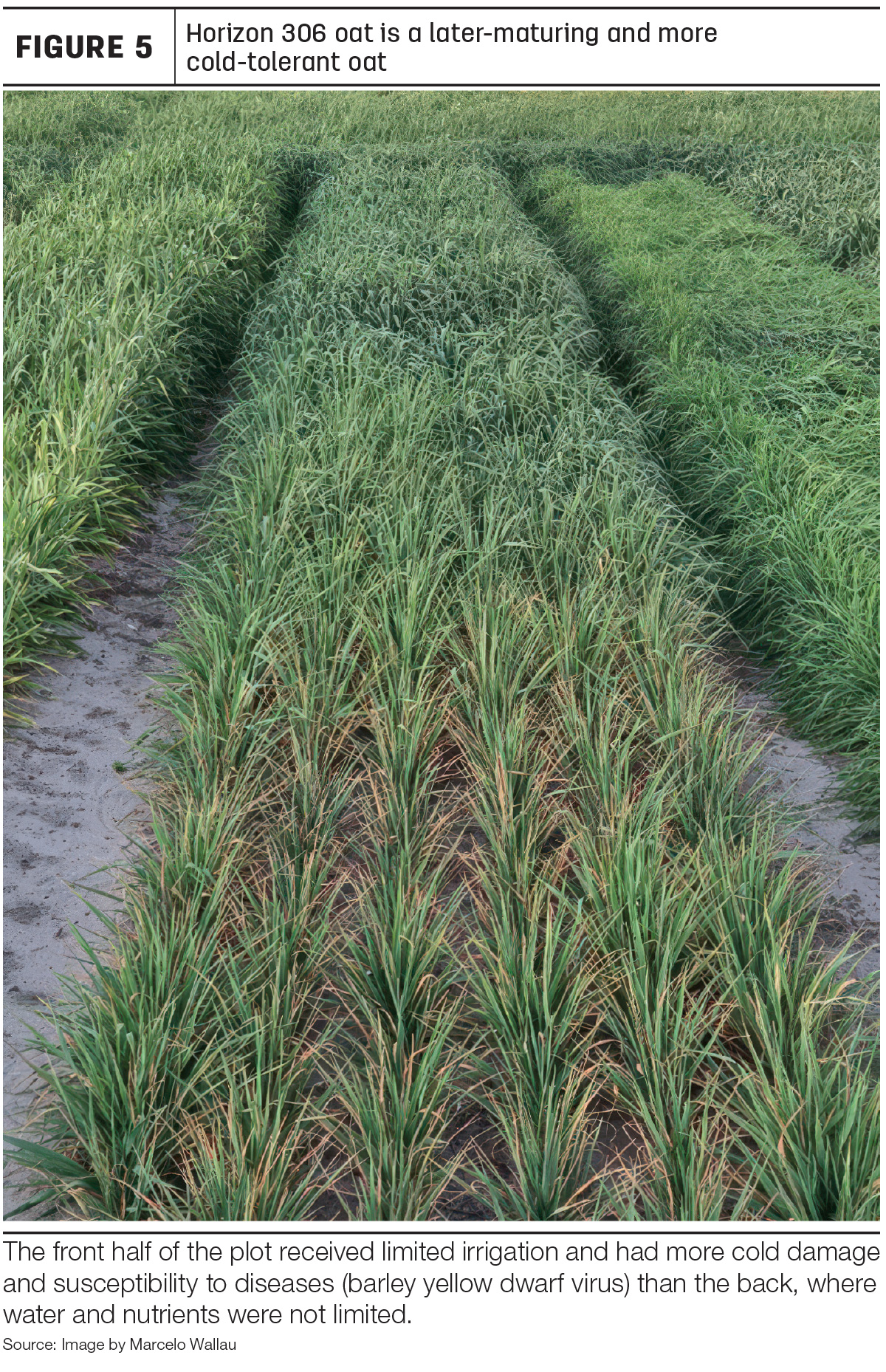
- Planting within the recommended window and providing pasture conditions that support rapid early growth are essential for annual forage productivity. That early development is critical for the productivity of annual forages. Once well established, they are more tolerant of stressors. Lack of nutrients or water will cause plants to grow slowly and be more exposed and weaker. Weak plants are more susceptible to stressors, including abiotic (like cold) and biotic (insects and diseases) stressors. Figure 5 shows the same variety of plant in the same plot but with limited irrigation in the front half. Where growth was slower, plants sustained greater frost damage and were more prone to barley yellow dwarf virus.
- Can irrigation help? A soil close to field capacity (i.e., moist but not excessively) is ideal but will not prevent canopy damage. For forages that are still in the vegetative stage, with growing points low (below ground level), this might be an effective practice. Moist ground cools off more slowly than dryer soil. However, this is different than the frost protection used in many fruit crops, where water is used to keep plants above freezing temperatures; and, if temperatures are sufficiently low, ice will form around leaves or fruits and isolate them from further cold. This will not be a feasible strategy with forages, as they will need constant irrigation throughout the area. On the contrary, a wet canopy can lead to a microclimate that will hold temperatures for longer. If the temperature gets too low, then that moisture might prevent the canopy from warming up during the day.
- Remember your dormant warm-season perennial grass stands during spring regrowth. After unusually cold temperatures, it is crucial to assess perennial warm-season stands once they regrow during spring to determine winterkill. The unusual temperatures (upper 70s) we experienced in early January may have indicated to dormant plants that conditions are right to start growing again. When that happens, energy storage can be compromised. Maintaining proper fertilization and harvest/grazing management throughout the season is crucial to ensure proper conditions and to improve winterhardiness on those stands, but they may still be prone to winter damage.
This winter reminded us that “normal” is becoming increasingly rare. Whether it is the markets, hurricanes or cold spells, factors outside the farm gate are ever more present, affecting our production system. Building resilience is key, and we can start by investing in healthy and diverse pastures to form a strong forage base. And always have a backup plan.
References omitted but are available upon request by sending an email to the editor.