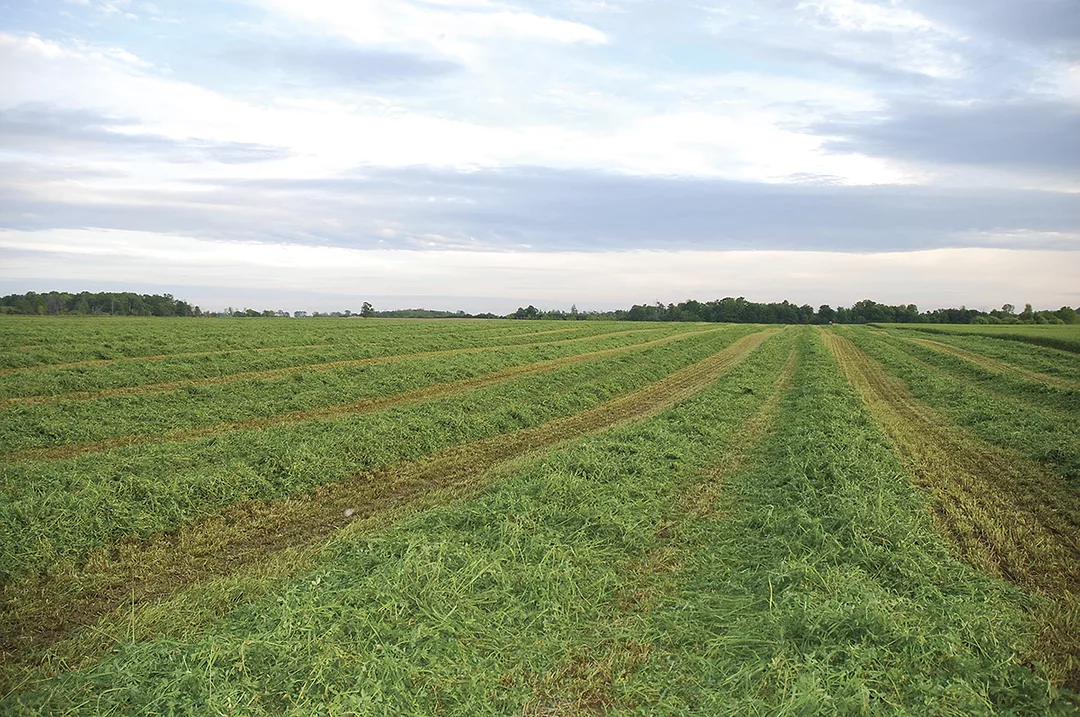
Spring turns a producer’s attention to the season ahead, from emergence to fertility and weed control. Yet the real pressure point this year may be the fertilizer that isn’t arriving.

Although many are concerned with the Iran conflict, it’d be easy to believe producers are more fixated on what’s in the ground. Yet in the short term, it’s the fertilizer that isn’t being applied to those crops that may be the more pressing concern.
The closure of the Strait of Hormuz has created uncertainty in the fertilizer market, and the long-term outlook is not overly optimistic based on certain indicators. Currently, pricing on nitrogen (N) has seen the biggest price swings, primarily because three of the top 10 urea and anhydrous exporters are based in the Persian Gulf (Iran, Qatar and Saudi Arabia). However, Josh Linville, vice president of fertilizer at StoneX, cites phosphate as the greater impact, given it was starting from a worse position, supply wise, compared to N.
“Unfortunately, we’re getting to the point where – at least from a North American perspective – it’s too late,” says Linville. He adds it's unlikely fertilizer supplies can be replenished, even with an immediate cessation of hostilities. “If you think about what it takes to load a vessel and sail it to U.S. shores, that’s a 30-day process, and that doesn’t even get it inland.”
In the near term, Linville believes an end to the war would see a drop in prices, at least for urea, a result of a four-week period through much of March when traders were dealing in high-stakes buying and selling. Shortly after a resolution, he says the market will revert to uncertainty amid concerns about the safe passage of ships through the Strait of Hormuz. There are also repairs needed at natural gas facilities in Iran and Qatar, and even after those are restored, the Persian Gulf is not designed to load dozens or hundreds of vessels at the same time.
“It’s going to take months before that is normalized,” says Linville. “You’re going to see the [market] fundamentals take over as the world realizes it’s still not fixed, and it’s going to take a lot of time before it is fixed.”
Reason for optimism
If there’s a bright side to the fertilizer picture, it tends to favor forage producers. News surrounding N-based fertilizer pricing and availability tend to garner more attention, yet forages are heavier users of phosphorus (P) and potassium (K), and both are abundant in livestock manure.
“All of the nutrients are essential, and they’re required in different quantities,” says Charles White, associate professor and extension specialist of soil fertility and nutrient management at Pennsylvania State University. “Potassium is somewhat unique because there’s a huge amount of potassium removal with forages compared to grains.”
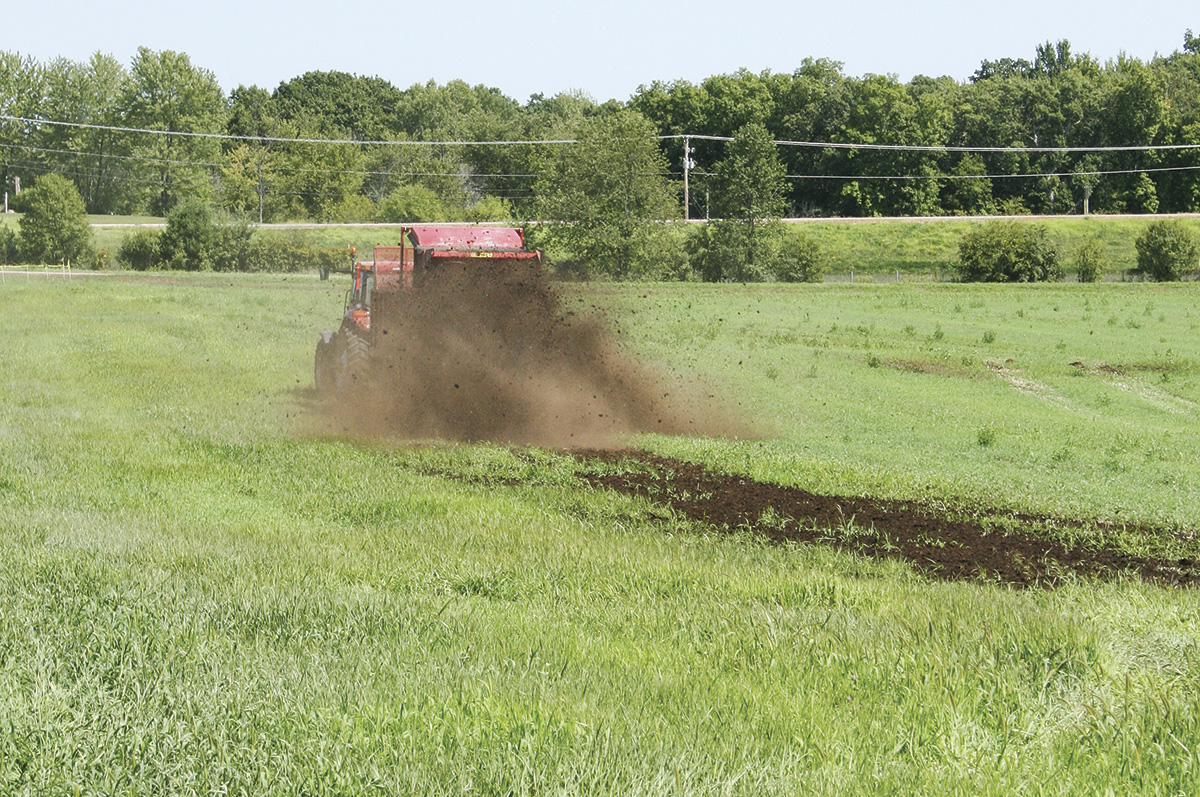
Manure supplies phosphorus (P) and potassium (K) to forage crops, while producers often add commercial nitrogen to meet demand and maintain forage quality. Staff image.
The biggest concern where manure is a primary source of nutrients is with N-P-K ratios, which are not balanced for what a forage crop requires. Typically, there’s more P and K present than what a forage crop needs. But since plants don’t have the ability to limit nutrient uptake (particularly with K in forages), there is the danger of overapplication. That can lead to quality issues with nutrition, especially in dairy cows, where K balance in forages is a critical health component.
“There are many farms that have utilized manure extensively over the years, and their soil test levels of phosphorus and potassium might be too high,” says White. “In that case, they might be better off purchasing some commercial nitrogen and letting the crops use the phosphorus and potassium that are already in the soil.”
Manure is a readily available source for livestock producers, but it should be regarded as a complement to synthetic fertilizers. White advocates for developing a plan to maximize manure utilization, then to supplement it with synthetics. But always coordinate that relationship with nutritionists and soil laboratories to find that suitable balance. He also suggests it’s possible for livestock producers with manure in storage to determine the economic benefits of purchasing fertilizer or sourcing manure on the farm.
Pennsylvania State University has two online tools that can help: its Soil Fertility Testing Recommendation Handbook and a Manure N-P-K Economic Value Calculator. A quick internet search reveals there are other similar resources available.
Test, test, test
Central to the discussion on the use of manure and its impact on soil health is the ongoing need for testing, of both soil and manure sources. Soil tests are a standard recommendation, and Ray Ward, founder of Ward Laboratories in Kearney, Nebraska, steps beyond a one-in-three-year approach, particularly with manure on forages. There are too many variables that can affect the quality of the forage crop.
“A soil test is the inventory of the fertility that’s left in the soil,” says Ward. “Another way to look at it is that you don’t put more fuel in the tank when the tank is full.”
That analogy echoes White’s comments about the need to assess soil nutrient levels, to ensure a better match of nutrients with those utilized by a forage crop. According to Ward, it can take several years for potassium or phosphorus levels to diminish, depending on application rates as well as feed rations, amounts of water or carbon (via cornstalks or straw) in the manure and soil types. Depending on the soil test results, it may be possible to go without applying any fertilizer, except for N or sulfur (S).
But the key is testing – to know precisely what’s in the soil and what’s in the manure. And Ward advocates it be done annually.
“Until you establish a pattern, because sometimes the tests jump up and down quite a bit from year to year,” he says. “It’s important to sample manure when the target is forage crops. Think of manure as ‘nutrient cycling’; if you take a forage crop off the field, you’re taking all the nutrients off that’s in that forage. Then you feed it to the animal and then the nutrients need to be hauled back to the field in appropriate rates to replenish what was removed.”