Loading cows onto a trailer can be a challenging and stressful task, often requiring careful attention to the conditions, location and equipment being used. Every farm setup is different, and loading areas may vary, meaning that the process needs to be tailored to each specific circumstance. While the focus is often on the welfare of the cows, the safety of animal handlers must be equally prioritized during the loading and unloading process.
Proper planning and safety practices are essential to ensure the well-being of both the animals and the handlers. Before beginning the loading process, consider the following factors: the trailer and equipment used, the location of the loading/unloading area and the experience of the handlers.
Trailer and equipment
- Use the right trailer: Ensure the trailer is appropriate for the type and size of animals being loaded. Verify that all necessary tools and equipment are readily available before starting.
- Adjust the height: Position the trailer as low to the ground as possible to reduce the effort the animal needs to exert when getting onto the trailer. A ramp can also be helpful.
- Follow connection procedures: When connecting and disconnecting trailers, always ensure they are properly secured and locked in place. Use spotters to stand clear of the path of travel.
Location for loading/unloading
- Choose a safe and clean location: The loading and unloading area should be free of distractions, obstacles and any hazards such as slippery surfaces. Adequate lighting is essential for visibility.
- Secure gates and doors: Ensure all gates and doors are properly fastened to prevent other animals from entering the loading area.
- Align the trailer: Back the trailer up so the entrance is as close to the loading area as possible. The trailer should be positioned in a way that prevents animals from escaping. Use existing structures or movable barricades to block potential escape routes, but never use a person to block an animal’s path.
Animal handlers
- Plan ahead: Develop a strategy for loading/unloading and anticipate any potential behaviours from the animals. Ensure all handlers remain calm and focused during the process.
- Maintain a safe position: Stand in a safe location where you are not at risk of being kicked or trampled. Avoid the animal’s blind spots and ensure that no pressure is applied in a way that may provoke the animal to kick.
- Escape routes: Everyone involved in the process should have at least two escape routes and must be able to move out of the way quickly if the animals become agitated.
- Use a team approach: Loading/unloading should involve at least two trained handlers who are capable of managing the situation effectively.
- Stay alert: If multiple animals are being loaded, ensure you are aware of all the animals and their positions. Pay extra attention around gates, as an animal backing into a gate can cause it to spring open toward you.
- Close gates quickly: After loading the cows, quickly close the back gate. Always stand to the side when latching and securing the gate, and be cautious of cows kicking the door as it closes. Keep your body parts clear of pinch points.
Loading cows onto the trailer
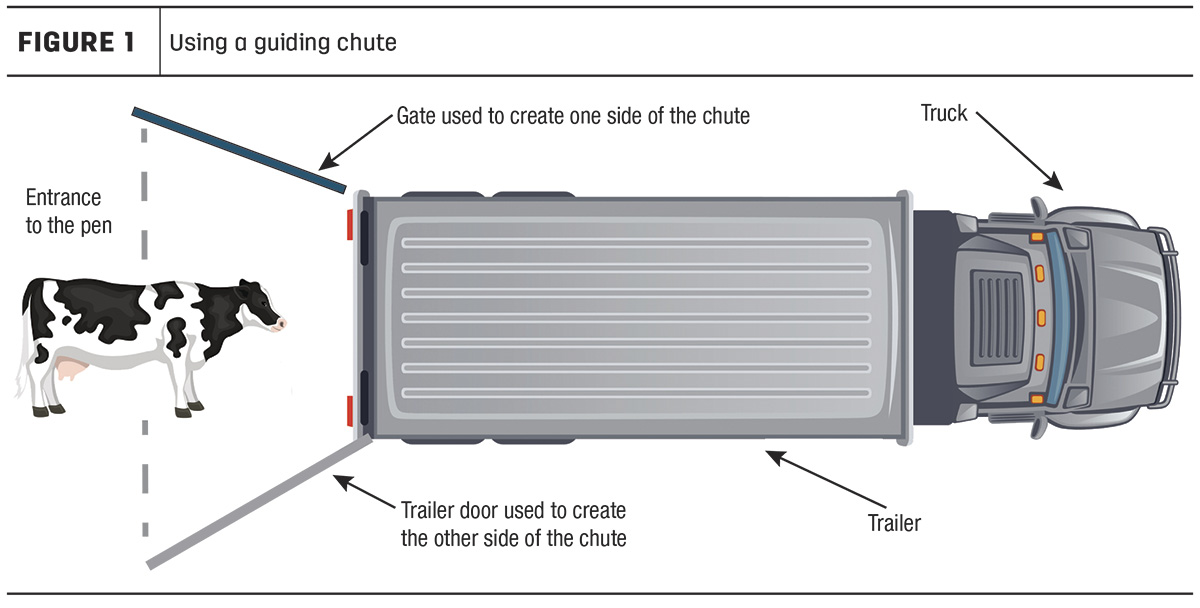
- Use a guiding chute: When possible, create a guiding chute by backing the trailer into a pen or fenced area. The gate and trailer door can form two sides of the chute. This method helps direct the cows into the trailer (Figure 1).
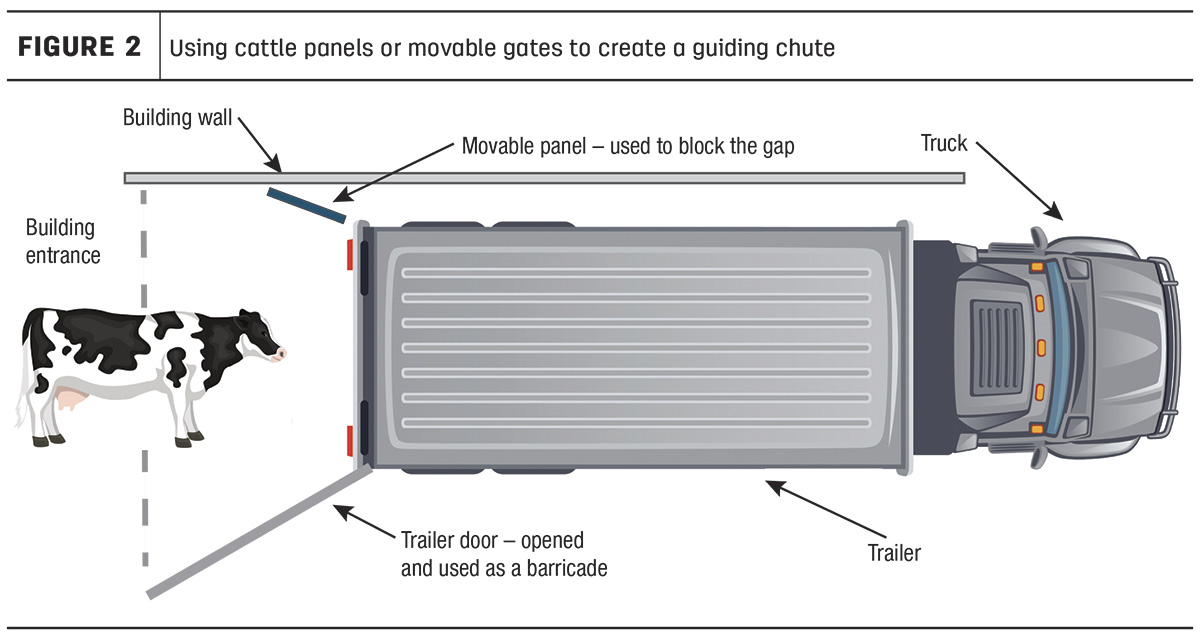
- Secure the path: If you cannot use a gate and trailer door combination, use cattle panels or moveable gates to create a guiding chute. Ensure there are no gaps or potential escape routes, and never use a person to block the cows’ path (Figure 2).
- Stabilize barriers: Secure any moveable gates or panels to the trailer to prevent cows from escaping. Ensure that barricades are stable and will not fall on animals or handlers.
- Guide the cows calmly: Whenever possible, let the cows walk calmly onto the trailer without pushing them. Use the zigzag technique to encourage movement without rushing them, as cows naturally avoid this pattern. Avoid getting too close behind the cows to prevent entering their blind spot.
- Close the trailer door carefully: Once the cows are inside, close the trailer doors without causing injury. Be mindful of the cows kicking the door during the process. Stand to the side when closing the door.
Loading with a lead line
- Step into the trailer first: If using a lead line, step into the trailer before the animal. Never force the animal into the trailer or rush the process.
- Tie the lead line securely: For bumper pull trailers, make sure the heaviest animals are positioned in front of the axles for proper weight distribution. Tie the lead line high up with a slipknot that can be quickly undone when needed.
- Maintain a safe distance: When leading the cow into the trailer, ensure you are not in a position where the animal could kick you. Step away quietly, giving the cow space to adjust. If multiple animals are being loaded, make sure they are aware of your presence before you approach them.
Unloading the cows
- Safety during unloading: When unloading, step off the trailer first and stay as far from the entrance as possible to allow the cow to safely exit. Allow the cow to jump off rather than forcing it. Always pull the lead line slowly, away from you, as you guide the cow off the trailer.
While each farm may have different circumstances, it’s crucial to prepare thoroughly and ensure that everyone involved in the loading and unloading process understands the necessary safety precautions. By following these safety practices, you can help prevent accidents and ensure the well-being of both the animals and their handlers during this important task.