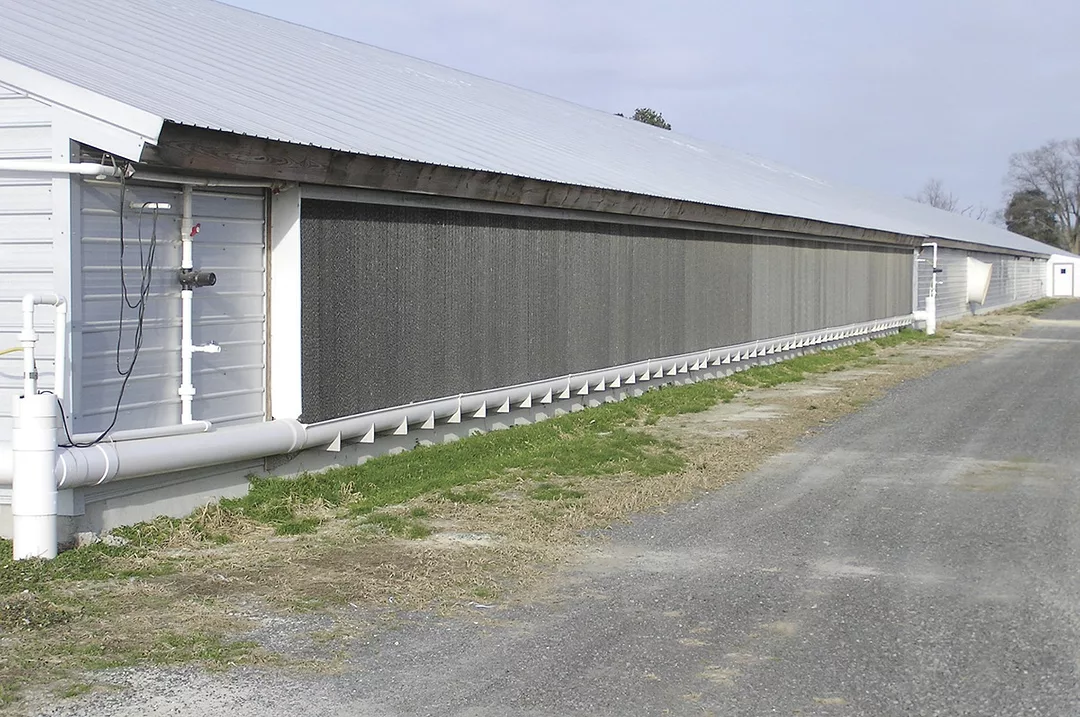
Heat stress is one of the leading causes of reduced productivity in dairy cattle, affecting feed intake, growth, milk production and overall animal welfare. Even small increases in temperature and humidity can cause animals to expend more energy to stay cool, directly impacting growth rates and milk yields. By maintaining lower temperatures in the barn, evaporative cooling systems help animals stay comfortable, healthy and productive. The design of the evaporative cooling pad system allows outside intake air to pass through a porous pad soaked with cold water. As the water evaporates, it effectively lowers the temperature of the incoming air.

This cooler air is then moved through the livestock facility at high speed using large exhaust fans, reducing the air temperature and helping prevent heat stress in the animals. Historically, this system has been used primarily in poultry barns, but in recent years it has also been incorporated into power ventilation systems in larger dairy facilities.
When designing an evaporative cooling system, it is important to account for the increased exhaust capacity required. Moving air through the restricted pad opening creates higher static pressure within the building, and maintenance and cleaning are critical. Dust and dirt buildup can further restrict airflow, reducing the system’s effectiveness.
Evaporative cooling pads come in several designs, including cellulose, aspen and synthetic materials. Each material offers different water retention and airflow characteristics. Proper pad selection depends on the size of the facility, local climate and airflow requirements. Thicker pads provide more cooling but also increase static pressure, which must be accounted for in the fan design.
Climatic conditions at the project site are another key consideration. Since the system adds moisture to the air, it increases humidity levels inside the barn. In dry climates, this is generally not an issue. However, in regions where high heat coincides with high humidity, the cooling effect is significantly reduced. Excessive humidity can even lead to respiratory distress in the animals.
For high-heat and high-humidity environments, it is recommended that the ventilation control system monitor both indoor and outdoor humidity and have the ability to shut off the water pump if levels exceed safe thresholds.
A critical component of this ventilation approach is the use of large-diameter, high-speed exhaust fans to exchange the barn air with fresh intake air. These fans must operate at peak efficiency for the system to work effectively. Many of these fans use a belt drive from the motor to the blade, so regular inspection is essential to ensure belts are tight and free of wear. Slipping belts not only reduce airflow but also increase electricity consumption. The interior fan housing, exterior fan guard and interior louvres should also be kept dust- and dirt-free to avoid airflow obstructions.
Water quality is another important factor. Hard water or water with high mineral content can lead to mineral buildup in the pads, reducing efficiency and increasing maintenance. Regular flushing or treatment of the water system can help maintain consistent performance and prolong the life of the pads.
While evaporative cooling adds energy costs for water pumping, the overall system can reduce electricity use compared to running additional fans or mechanical cooling systems. Proper maintenance and cleaning not only ensure maximum airflow but also prevent unnecessary energy consumption. Monitoring fan performance and pad condition regularly can extend equipment life and keep operating costs under control.
On many modern dairy farms, evaporative cooling is combined with tunnel ventilation systems, where air is pulled through long rows of pads and exhausted at the opposite end of the barn. This creates a consistent, high-speed airflow that helps maintain cooler temperatures for animals even during peak summer conditions, demonstrating the practical benefits of combining evaporative cooling with effective ventilation.
As always, it is recommended to consult with a local ventilation specialist to review and evaluate whether evaporative cooling is the best solution for your operation. Properly designed and maintained, an evaporative cooling system can significantly improve animal comfort, protect productivity during hot weather and enhance the overall efficiency of your facility. Taking the time to assess your barn’s layout, climate conditions and ventilation needs will ensure that your investment delivers the maximum benefit for both your livestock and your operation.