Just a few decades ago, manure application operations required a group of workers who could spend weeks at a time in the field monitoring pumps and driving tankers from field to field. As dragline operations became more common, the number of pumps to monitor increased and the crew celebrated higher flow rates. Now, like most farm work in the 21st century, manure application has implemented incredibly helpful automation technology to improve efficiency tenfold.

Efficiency with a reduced crew
The required crew members and responsibilities of dragline operations have changed over the years with the changes in technology. As new equipment is developed and manure application becomes more efficient, the roles of crew members adjust. Aside from the preplanning tasks before pumping, a manure application job can be completed with just three employees: a site supervisor, a hose mover and an applicator driver.
The site supervisor stays at the manure source with the agitator and lead pump, ensuring equipment is fueled, pits are stirred effectively and manure samples are taken. This will also be the person to pig the line to purge hose of excess liquid between field sets. The hose mover must be proactive in monitoring the line and know when the applicator needs slack in the hose. A crew’s hose mover lays out and picks hose sets, as well as places booster pumps monitoring the line. A hose mover should have a good understanding of friction loss and pump curves. The applicator driver has the manure management plan ready while applying slurry in the field.
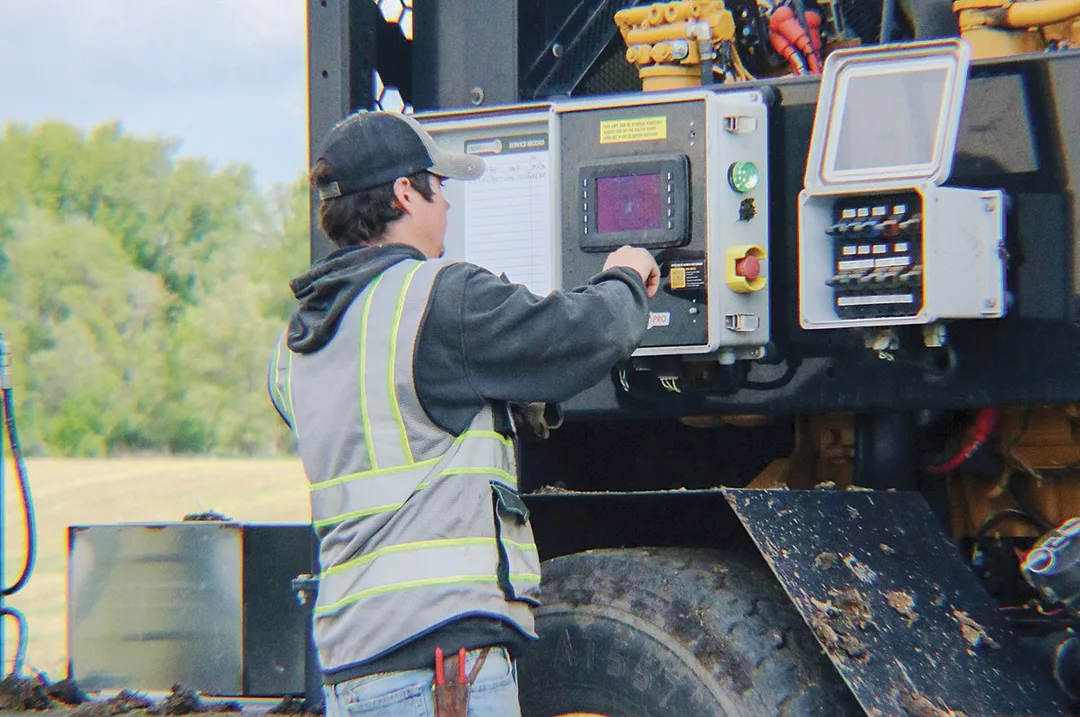
This core group efficiency with a three-man crew is only made possible today with automated controls. An automated control system connects every pump in your line to telemetric capabilities. No extra person is needed to specifically monitor booster pumps in the field. The time savings automated systems provide for startup and shutdown procedures has not only improved daily operational effectiveness, but it has also increased custom applicators’ ability to stay within the manure regulations of their region.
With an automated control system, the whole crew can help monitor and make adjustments. The site supervisor can start the engines and begin agitation when the crew communicates that they are ready. Control of agitation nozzles and gates are at your fingertips, as well as the ability to monitor pressures and pit levels at site. Opening the lead pump outlet gate and monitoring slurry flow from the site is made easy with automated technology.
Beyond the manure storage site, booster pump monitoring is capable from anywhere, whether on the pump or from a tractor cab a mile away. Advanced control systems have an auto-throttle setting to input desired functioning parameters. User-defined flow rates and pressure limitations are used by both the local and web automation to compensate for system irregularities. While the system makes necessary adjustments in real time, operators can focus on the application process.
Automation over human interference
Line breaks and catastrophic events are mitigated with automated shutdown procedures that can be set up and executed faster than manual intervention. Before a crew member can both notice and process that engines need to be shut down, an automated system has already begun the process. This is particularly important when there is no crew member close to the pump. Automatic shutdowns and engine shutoffs from a distance are helpful for operational efficiency but vitally important in additional safety on the job.
The advances for pump unit automation allows for streamlined operations and semiautomatic control. This not only improves the efficiency of the operation but also reduces opportunity for operator fatigue or error. Real-time data from every pump in a dragline system is not only available to the operators on-site. Management and owners have the ability to view and interact with the operation directly. Web-enabled systems make it easy to interface from anywhere, as well as provide a console for asset management.
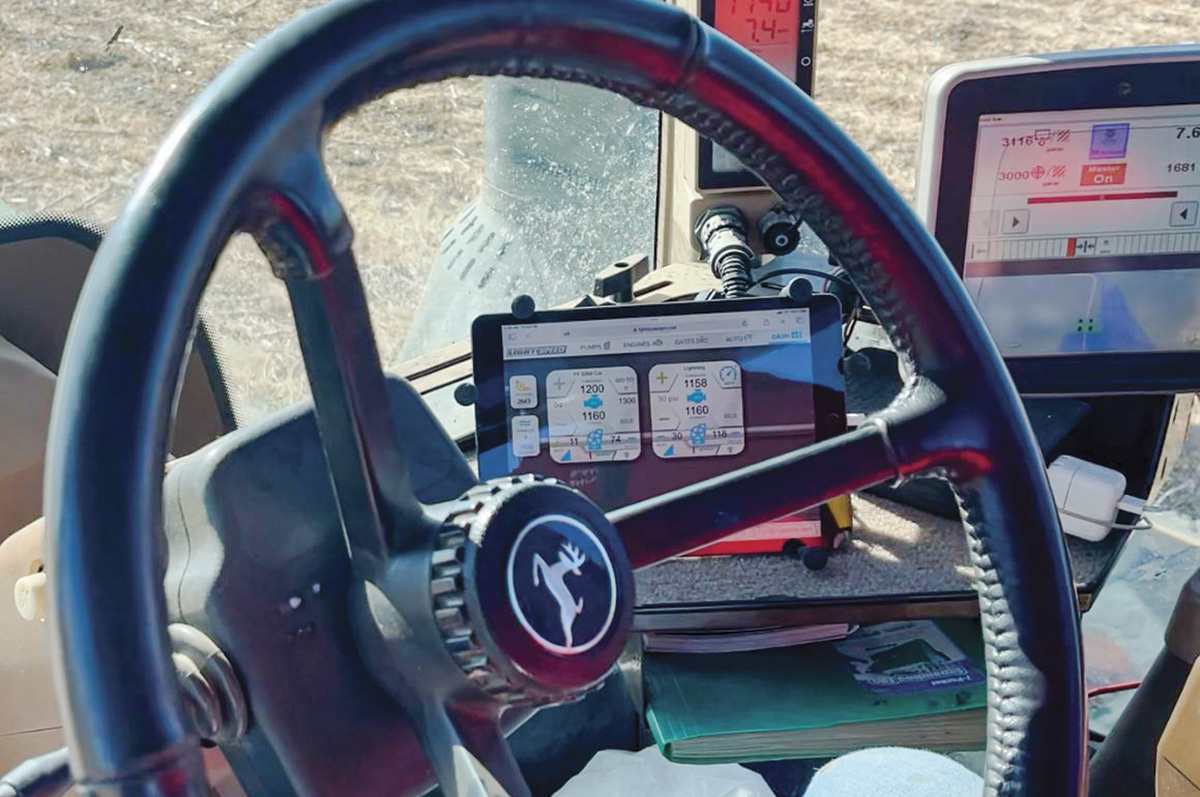
The advances for pump unit automation allows for streamlined operations and semi-automatic control, resulting in reduced operator error. Image courtesy of Puck.
Reducing administrative headaches
The crew members on-site are not the only ones benefiting from an automated control system. Managers and owners alike can plan for upcoming jobs as some control systems have field mapping capabilities. By examining field maps and deciding hose layouts before arrival, the crew will know exactly which equipment to bring and how much hose they’ll need for a job. At the end of the season, equipment maintenance and review is simple with diagnostic tracking and analytic reporting. Like any job, administrative work is made easier with technology recording the important but tedious information.
These systems also provide a standardized, map-based representation of field, site, pump placement and hose routing. This affords the crew time savings and communication enhancements based on previous layouts. Pigging operations to purge the line of excess liquid can be preloaded, and air can be managed by the applicator. The prep work allows the other crew members to lay out new fields, transfer hose or equipment, or assist in site operations. Becoming more efficient and finishing a job faster gives the team more time to take on another job or enjoy extra time at home.
Automated controls can minimize the required number of crew members on a job, in addition to the peace of mind it provides off-site managers through telemetric monitoring. The safety and efficiency provided by automated control systems in dragline application indicate a future with fewer catastrophic failures and more nutrients effectively applied to the field.