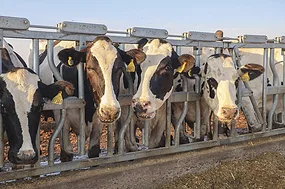
In dairy-related news the third week of April 2026:

- Bird flu back in Idaho dairy
- Texas facility groundbreaking marks major milestone in NWS preparedness
- Lallemand launches educational platform on the ruminant digestion
Bird flu back in Idaho dairy
The first cases of HPAI in dairy for 2026 were found in Idaho last week. The USDA confirmed HPAI was detected in five dairy cows, marking the first new cases since it was found in a milk sample in Wisconsin in December.
Since the outbreak began in March 2024, Idaho has reported 117 cases in dairy cattle, the second-highest state to be affected by HPAI in dairy, behind California’s 773 confirmed cases.
Texas facility groundbreaking marks major milestone in NWS preparedness
The USDA and U.S. Army Corps of Engineers (USACE) held a groundbreaking for the new sterile fly production facility at Moore Air Base in Edinburg, Texas.
The facility is a cornerstone of U.S. Secretary of Agriculture Brooke Rollins’ five-pronged strategy to combat New World screwworm (NWS), expanding the nation’s domestic capacity to protect livestock, wildlife and public health from this serious pest.
The new facility is being built with an aggressive timeline designed to quickly expand the nation’s sterile fly production capacity:
- Initial operational capability targeted for November 2027, reaching production of 100 million sterile flies per week
- Construction continues immediately beyond initial operations to scale full production capacity to 300 million sterile flies per week.
- The USDA and USACE have slashed red tape, securing expedited procurement and eliminating other barriers.
- Together, the USDA and USACE will oversee installation and commissioning of specialized systems that will make this facility operable on time, delivering the critical sterile flies we need to continue to defeat this pest.
A sterile fly production facility plays a crucial role in NWS prevention and response. In a biosecure environment, NWS flies are raised and sterilized using irradiation before being released in targeted areas. Because female screwworm flies mate only once, mating with sterile males results in eggs that do not hatch. Sterile insect technique, paired with surveillance, animal movement restrictions, and education and outreach has been the foundation of successful screwworm eradication efforts for decades.
This new facility will complement USDA’s ongoing production of 100 million sterile flies per week at the Panama-based COPEG facility. The USDA has also invested $21 million to support modernization of Mexico’s Metapa facility, expected to be operational in summer 2026.
Lallemand launches educational platform on the ruminant digestion
Lallemand Animal Nutrition has launched a comprehensive educational program focused on ruminant digestive health through the newly relaunched website, an interactive learning platform designed to help nutritionists, veterinarians, producers and advisers better understand the full ruminant digestive tract and its role in cattle welfare and productivity.
Previously focused primarily on rumen health, the updated platform now expands its scope to cover the entire ruminant digestive system, including the lower gut. The redesigned website introduces an enhanced interactive format that combines scientific research with practical insights, helping animal nutrition professionals translate emerging knowledge into real-world management strategies.