Bermudagrass is the foundation of forage production across the southeastern U.S., serving as the primary feed source for many beef and dairy operations. Among the available bermudagrass cultivars, Jiggs bermudagrass has gained widespread adoption due to its persistence under frequent defoliation, rapid establishment and tolerance to poorly drained soils. These characteristics make it well suited for grazing and hay production systems. Like most warm‑season perennial grasses, however, bermudagrass production is highly seasonal, resulting in periods of excess forage growth followed by times when forage is limited. This seasonal pattern has encouraged producers to rely on forage conservation to maintain consistent feed supplies.

Hay remains the most common method of forage preservation, but climatic conditions in the Southeast often present challenges. High humidity and unpredictable rainfall frequently coincide with peak forage growth, slowing the drying process and increasing the risk of weather‑damaged hay. Silage and baleage offer alternatives that require shorter drying times and allow harvest at higher moisture levels. Despite these advantages, producing high‑quality silage from warm‑season grasses can be difficult. Bermudagrass typically contains high moisture and relatively low concentrations of water‑soluble carbohydrates, which can result in weak fermentation, excessive protein breakdown and increased risk of spoilage if not properly managed.
To address these challenges, producers often turn to silage additives, such as microbial inoculants and chemical preservatives. Propionic acid-based preservatives are widely used because of their ability to inhibit molds, yeasts and undesirable bacteria, thereby improving fermentation efficiency and extending aerobic stability. Microbial inoculants, on the other hand, are designed to stimulate the growth of beneficial lactic acid bacteria and promote faster acidification of silage. While both approaches have shown benefits in certain forages, their effectiveness in bermudagrass silage has been inconsistent, and limited information has been available regarding their combined use.
Recent research evaluated the effects of propionic acid, applied at different rates and with or without a microbial inoculant, on Jiggs bermudagrass silage characteristics and animal response. The work included both laboratory‑scale silos and wrapped round bale silage, as well as a feeding trial using beef heifers. The goal was to determine whether propionic acid could improve fermentation quality, nutritive value and intake of bermudagrass silage under realistic production conditions.
Across multiple experiments, the application of propionic acid consistently improved key fermentation characteristics. Silage treated with propionic acid exhibited lower pH values, indicating a faster and more stable fermentation process. Lower pH is particularly important in warm‑season grass silage because it suppresses the activity of undesirable bacteria that contribute to nutrient losses. In addition, silage treated with propionic acid generally contained higher concentrations of lactic acid, the primary acid responsible for preserving silage and preventing spoilage.
One of the most meaningful improvements observed was a reduction in ammonia nitrogen (N) concentration. Ammonia N originates from excessive protein degradation during fermentation and is a hallmark of poor silage quality. High ammonia levels reduce true protein availability to the animal and often indicate the presence of clostridial fermentation. By lowering silage pH and inhibiting these harmful microorganisms, propionic acid helped preserve a greater proportion of crude protein in the forage.
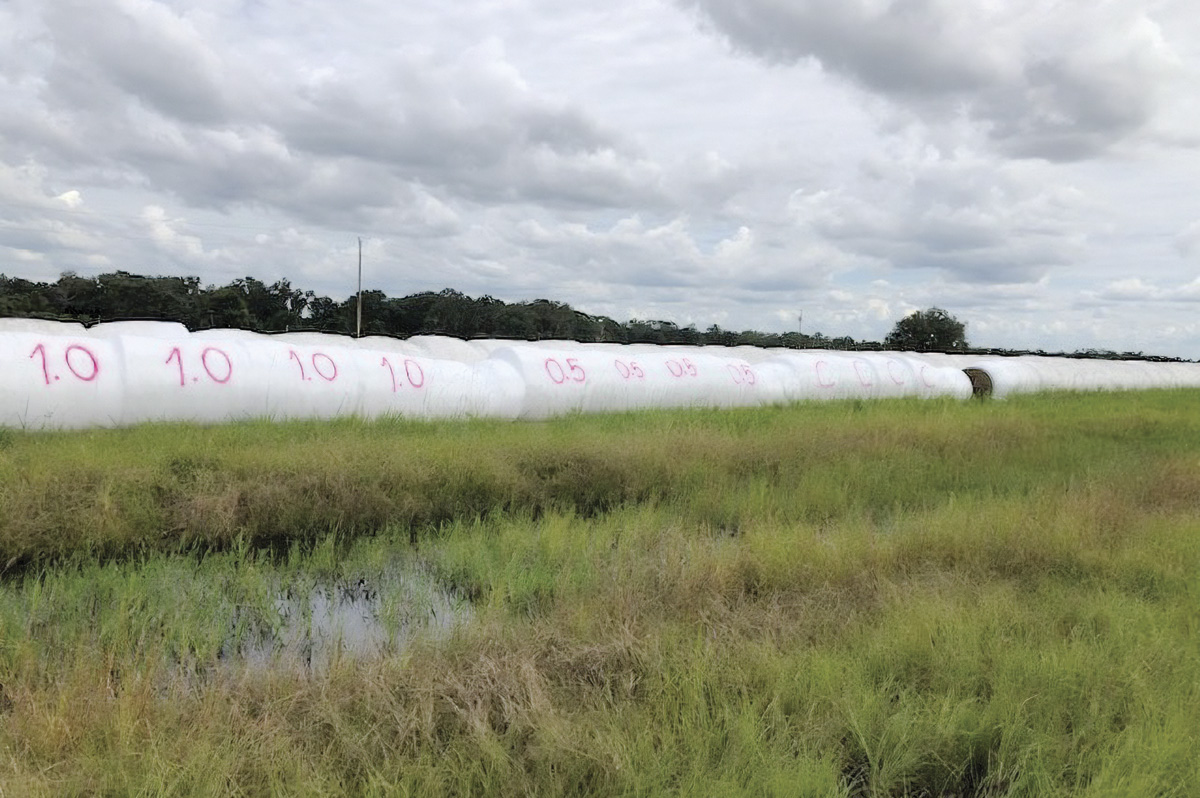
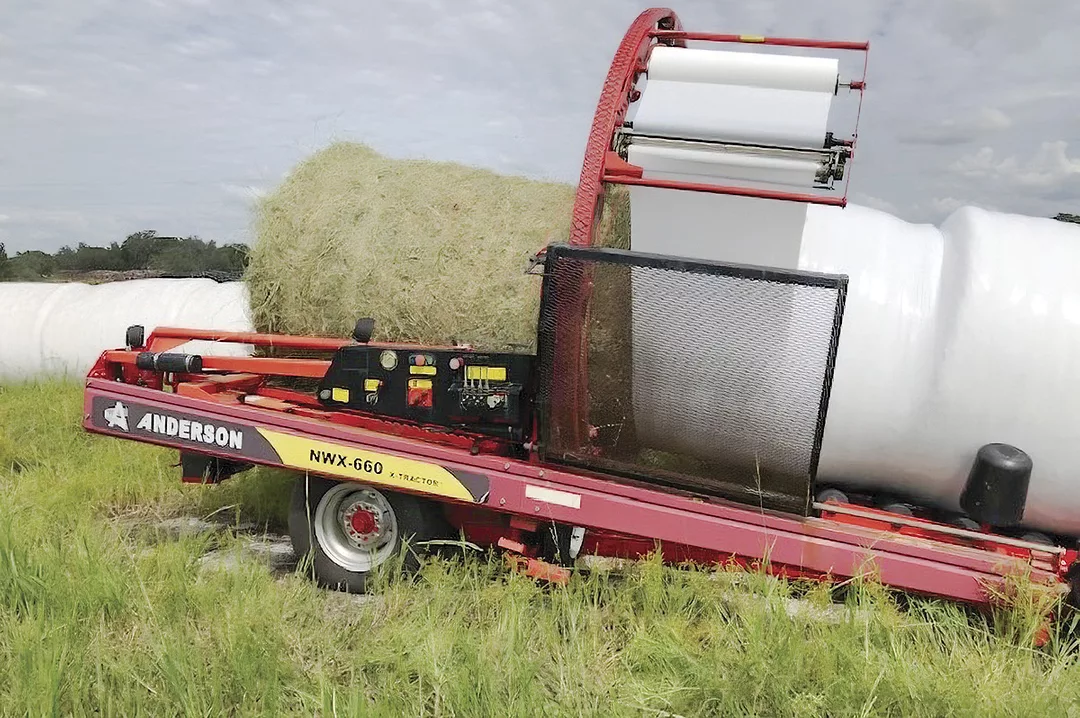
Bermudagrass bales are wrapped after receiving a propionic acid treatment to support fermentation. Image by Joao Vendramini.
In some cases, silage treated with propionic acid displayed lower fiber concentrations and higher estimates of total digestible nutrients (TDN), suggesting improved preservation of digestible carbohydrates. These responses were not identical in every experiment, reflecting the variability that can occur under different environmental conditions and harvest years. Nevertheless, the overall trend showed better maintenance of forage nutritive value when propionic acid was applied.
Another important outcome of propionic acid treatment was improved aerobic stability. Aerobic stability refers to the length of time silage remains cool and resistant to spoilage once exposed to oxygen during feeding. In warm climates, spoilage after opening often develops rapidly, leading to heating, dry matter losses and reduced intake. Silage treated with propionic acid remained stable significantly longer than untreated silage, even though mold and yeast counts were sometimes similar across treatments. This finding suggests that propionic acid can suppress microbial activity and delay deterioration even when overall microbial numbers do not change dramatically.
The addition of a microbial inoculant in combination with propionic acid altered the microbial community present in silage. Specifically, the combined treatment increased the relative abundance of beneficial genera such as pediococcus while reducing undesirable groups associated with spoilage and proteolysis, including enterobacter and clostridium. These microbial changes reflected a more favorable fermentation environment. However, from a practical perspective, the combined treatment rarely resulted in greater improvements in fermentation quality or stability than propionic acid alone.
Increasing the propionic acid rate from 0.5% to 1% produced limited additional benefits. While the higher rate increased propionic acid concentration in the silage and further suppressed certain spoilage organisms, most fermentation and nutritive value responses were similar between rates. This suggests that moderate application rates may be sufficient to achieve desirable outcomes in bermudagrass silage systems.
To determine whether improvements in silage characteristics influenced animal performance, beef heifers were fed silage treated with different levels of propionic acid. Measurements focused on dry matter intake (DMI) and apparent digestibility. Intake and digestibility did not differ among treatments, indicating that propionic acid did not negatively affect palatability or rumen function. The absence of an intake response is likely related to the generally acceptable quality of all silages evaluated and the relatively short duration of the feeding trial.
Although improvements in fermentation did not translate into greater intake or digestibility during this study, the benefits of propionic acid should not be discounted. Improved preservation reduces nutrient losses, enhances feed consistency and lowers the risk of spoilage‑related refusals, all of which can have meaningful economic value on commercial operations.
Overall, this research demonstrates that propionic acid is an effective management tool for improving bermudagrass silage fermentation and storage stability. Application at a rate of approximately 0.5% of fresh forage provided consistent benefits in fermentation quality and aerobic stability, with little advantage observed at higher rates or with additional microbial inoculants. While animal performance responses were not observed in the short term, the improvements in silage preservation indicate that propionic acid can help producers protect forage quality, reduce waste and increase flexibility in feeding warm‑season grass silages.
This research was published in the Applied Animal Science Journal: da Silva, H.M., J. M.B. Vendramini, P. Moriel, J. E. Garzon, V. F.B. Miranda and L. F. Ferraretto. 2026. Nutritive value and fermentation characteristics of bermudagrass silage treated with propionic acid microbial inoculant. Applied Animal Science 42:9-18. https://doi.org/10.15232/aas.2025-02743