Many well-managed dairies have built their reproductive programs around enrolling 100% of cows in a Double Ovsynch protocol. The appeal is understandable: Every cow receives the same sequence of injections, every cow has a timed A.I. on a predictable schedule and the resulting pregnancy per A.I. (P/A.I.) to first service is impressive – often 50% to 60%. Producers and their consultants have grown accustomed to this number, and it has become the headline metric on many reproductive scorecards. When someone proposes a change that might lower that number, the natural response is resistance.

This is exactly the barrier that targeted reproductive management (TRM) faces. TRM is not a program for herds that are struggling; it is the next step for operations that are already performing well (with 21-day pregnancy rates at or above approximately 30%) and want to reduce cow handling, decrease the number of hormonal injections and make smarter use of the activity monitoring technology they have already invested in. But adopting TRM requires a shift in how we evaluate reproductive success because the metrics that made sense under blanket synchronization do not tell the full story under a targeted approach.
How TRM works
TRM uses activity monitoring data to sort cows into two groups before enrollment into a timed-A.I. program. Cows that have demonstrated at least one estrus event by approximately 50 days in milk (DIM) are classified as estrus cows. These animals, typically 40% to 50% of the herd, do not receive hormonal synchronization. Instead, they are allowed to be inseminated at detected estrus as soon as the voluntary waiting period (VWP) ends. Any estrus cow not inseminated within a defined window is then enrolled in a timed-A.I. protocol as a backup. Cows that have not shown estrus by 50 DIM (the anestrus group) are enrolled in a timed-A.I. protocol, such as Double Ovsynch, just as they would be under a blanket synchronization program.
The result is that not every cow receives her first A.I. on the same day. Estrus cows may be bred earlier and at varying times after the VWP, depending on when they express heat, while cows that do not show heat follow a fixed-time A.I. schedule. This staggering of first inseminations is a fundamental feature of TRM, and it is the source of the metrics that can initially concern producers.
Why numbers look different under TRM
There are two metrics that commonly decline when a herd transitions from blanket Double Ovsynch to TRM, and both deserve honest discussion.
First, P/A.I. to first service across the entire herd may be approximately 4 percentage points lower under TRM compared to 100% timed A.I. enrollment. This is expected. Under Double Ovsynch, every cow receives a protocol designed to maximize ovulation synchrony and progesterone priming, which drives high conception rates at that single service. Under TRM, the estrus group is bred at spontaneous heats without that level of hormonal preparation. While estrus-detected inseminations are biologically sound and result in good conception rates, they may not match the tightly synchronized ovulation achieved by Double Ovsynch. When the two groups are combined, the overall first-service P/A.I. is diluted relative to blanket synchronization. This does not mean fewer cows are getting pregnant – it means the first-service number no longer captures the full picture.
Second, the 21-day pregnancy rate can look worse depending on how eligibility is defined. If eligibility starts at a fixed VWP for all cows, some cows are counted as eligible when they are not truly available for service, either because they are in a timed-A.I. program or waiting for their first spontaneous heat. These cows can accumulate eligible days without being inseminated, which temporarily lowers the service rate early in lactation. With blanket synchronization, every cow receives her first A.I. at the same fixed time, eliminating any gap between eligibility and first service. Under TRM, inseminations are staggered, creating a short, real lag for some cows, but this gap is quickly resolved once they are bred.
Measuring what actually matters
The solution is not to abandon TRM because the traditional scorecard looks different; we just have to use the right scorecard. When evaluating reproductive performance under TRM, the metrics that best reflect the speed at which cows become pregnant are the percentages pregnant by 100 and 150 DIM. These outcome-driven benchmarks integrate first-service fertility, reinsemination speed and problem-cow management into a single number. Well-managed TRM herds should target greater than 55% pregnant by 100 DIM and greater than 75% pregnant by 150 DIM. Research has shown cows managed under TRM had a 17% higher overall pregnancy rate compared to herds using only timed A.I., with pregnancy rates 25% higher among cows in their second or later lactation. This is not because any single service had a higher conception rate but because when monitoring technology is used throughout the lactation, reinsemination is accelerated, ensuring no cow is left behind.
If pregnancy rate remains the preferred metric, producers and consultants must pay careful attention to how the VWP is defined in their calculations. Setting the eligibility start point too early will penalize TRM programs by inflating the denominator with days when estrus cows are not yet ready for service. Adjusting the VWP to align with the actual first breeding opportunity of the two groups (cows that initially showed heat and those that did not) gives a more accurate picture of reproductive efficiency.
Keep the monitors on until pregnancy is confirmed
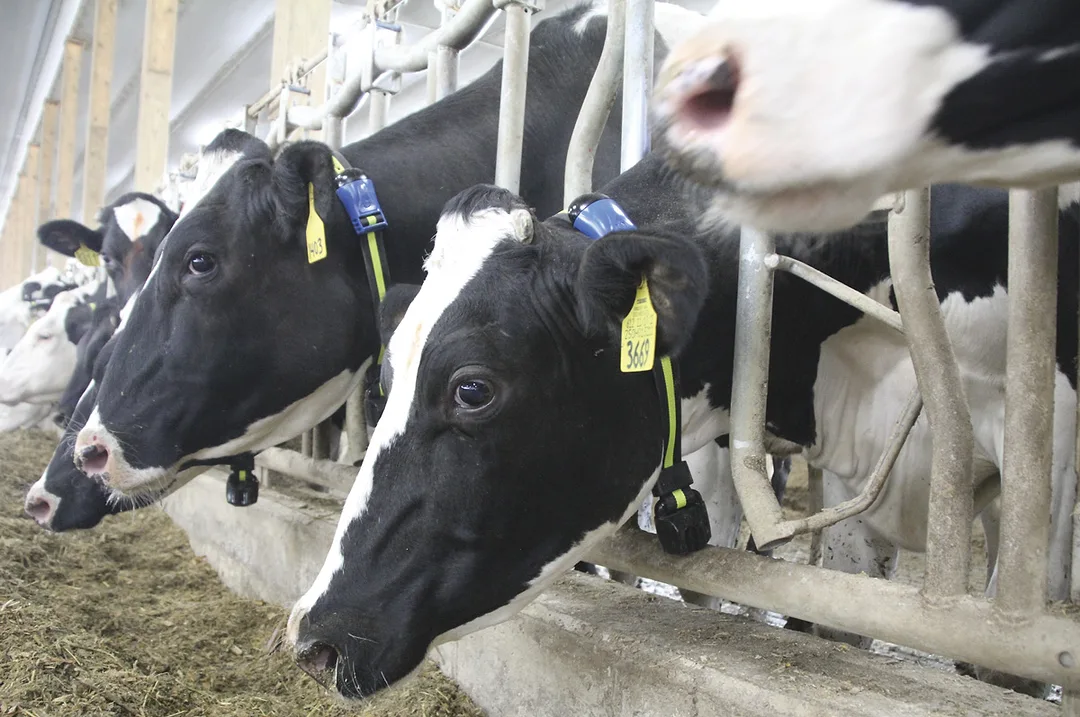
One of the most critical requirements of a successful TRM program is that monitoring technology remains on cows continuously until they are confirmed pregnant. The power of TRM for reinsemination depends entirely on the monitoring system’s ability to detect return-to-estrus events promptly. If collars or tags are removed after the first A.I., the herd loses its ability to identify open cows early, breed them at the next spontaneous estrus and compress the interbreeding interval. The economic advantages of TRM include: faster reinsemination, greater income over feed cost (IOFC) and lower reproductive cull rates. Removing monitors prematurely eliminates the very mechanism that makes TRM superior to blanket protocols for rebreeding efficiency.
Metrics reality
Targeted reproductive management is a strategy for herds that are already doing well and for producers who want to do fewer interventions. The trade-off is a modest decline in first-service P/A.I. and a need to rethink how we measure success. As previously stated, producers should expect their first-service P/A.I. to be approximately 4 percentage points lower than under blanket Double Ovsynch, and they should not be alarmed by this. The metrics that matter under TRM are the proportion of cows pregnant by 100 and 150 DIM, the speed of reinsemination and the 21-day pregnancy rate calculated with an appropriate VWP.
When these metrics are tracked correctly, TRM herds consistently demonstrate that fewer injections and less handling do not come at the expense of reproductive performance. They come alongside outstanding whole-herd outcomes. The key is to measure what TRM is designed to improve, and keep the monitoring technology working for every cow until she is confirmed pregnant.
References omitted but available upon request by sending an email to an editor.