Most dairies collect a lot of information. Treatments get written down or checked off. Breeding dates get recorded. Fresh cow checks get noted somewhere – on paper, on a whiteboard, maybe a calendar, perhaps in a mobile app. The data exists.

But ask yourself this: Is that information helping you answer the questions that matter? What needs to be done right now? What needs to happen next? And maybe the most important one of all: What should we be doing differently? If your records can’t help you answer those questions, then you’re not really using your data. You’re just storing it. And there’s a big difference between the two.
Recordkeeping is writing it down. Data-driven is understanding what’s happening, planning and adapting. Moving from a passive to active mindset is a major opportunity in dairy management, and the necessary tools are already available.
3 questions your data should be answering
When data is effectively utilized, it should enable you to address three key questions each day.
- What needs to be done right now? This is the most basic question, and it’s the one that falls apart first when recordkeeping is disconnected from work. If records are delayed, incomplete or scattered across different places, you don’t have a clear picture of where things stand. Which cows are due for treatment today? Which fresh cows need a follow-up check? Who’s been seen and who hasn’t? Without real-time information, managers end up chasing people down just to find out what’s already been done, let alone what still needs to happen.
- What needs to happen next? This question is about staying ahead instead of always reacting. If a cow got her first treatment today, when is the follow-up due? If a fresh cow’s temperature has been creeping up over the last two checks, what should you be doing about it before it becomes a full-blown problem? Good data doesn’t just show you what has already happened, it points you toward what’s coming. But that only works if the information is accurate, timely and connected. A note on a whiteboard from yesterday doesn’t help you plan for tomorrow.
- What can we do differently? This is the question that separates dairies that are just getting by from dairies that are improving. Is a treatment protocol working the way you expected? Are fresh cow outcomes better this month than last? Are breeding results improving, or are they flat? These are questions you can only answer if you have clean, consistent data over time. When your records are incomplete or unreliable, you can’t trust the patterns. You end up sticking with the same approach because you don’t have the evidence to justify a change, even when your gut tells you something isn’t right.
A filing cabinet can’t answer any of these questions. But your data can – if it’s collected the right way.
The right tool changes everything
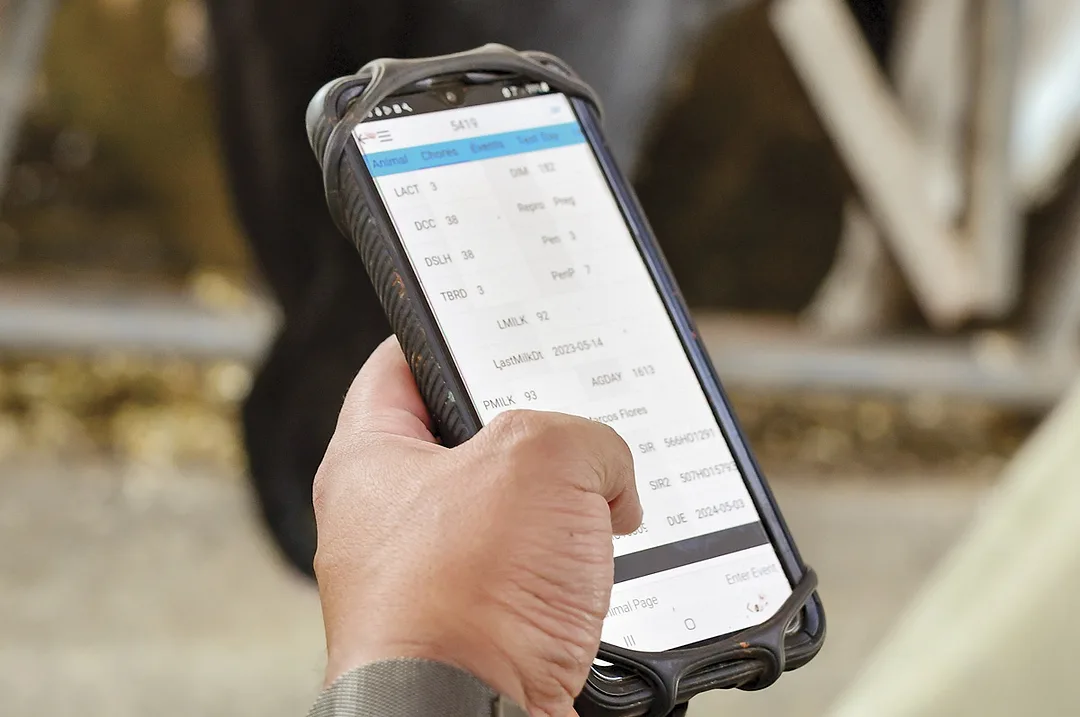
What does it take to move from recordkeeping to real decision-making? It starts with incorporating data into the work. With the right digital tools in hand – a phone or a tablet – that show which animals need attention, guides through tasks and captures the information alongside the cattle, you eliminate the gap between doing and recording. The work and the data entry happen in one step, in one pass. No extra follow-up work for later.
The idea isn’t to pile on more technology or more steps. It’s to take the recording step that was always separate and always getting in the way and fold it directly into the chore itself. The employee works the pen, enters the data as they go, and everything is handled in that single pass.
That might sound like a small process change, but the ripple effect is enormous. Because the data is entered in the moment, it’s accurate, each action is tied to a specific cow, a specific time and the person who did the work. Because it’s digital and connected, the information is immediately available to anyone who needs it. And because it builds up over days and weeks, it creates a reliable history that you can learn from.
From reacting to deciding
Data-driven work changes the decision-making process. Take repro treatments for example. An employee takes a paper list in the barn and checks off animals on a list. Is there a real process for chores that are not completed? Is there something to review? When blips occur in reproductive performance, what is there to check? If a cow was missed or the timing of treatment was off, it might not surface until the problem has already gotten worse. When data is entered at the point of work, it’s possible to have the right tools to capture situational context.
When every treatment is recorded the moment it’s given, you build a complete, trustworthy history for each animal. That history tells you whether a protocol delivers results not based on someone’s impression but based on actual outcomes across the herd. If something needs to change, you have the numbers to support the decision.
Breeding is another area where the gap between recordkeeping and decision-making shows up clearly. Success depends on timing, and timing depends on accurate data. When breeding events are captured in real time with all the relevant details, you can evaluate what’s working and adjust your approach. When the records are delayed or incomplete, you’re just hoping for the best.
In every one of these situations, the information was always there. The difference is whether it was sitting in a filing cabinet or actively helping someone make a better call.
Accountability and simplified training
When data gets entered in real time, accountability improves and daily work runs more smoothly. Every task is tracked as it happens and tied to the person doing the work, so managers can see progress right away, spot issues before they become problems and recognize what’s going well. This level of transparency builds trust and lets employees know their efforts are seen and valued.
Bringing mobile tools into the workflow makes training and chores easier. By guiding employees through each step and rolling recordkeeping into the everyday routine, mistakes are minimized and new hires learn faster. Experienced staff spend less time on paperwork and more time on the work that matters – taking care of animals and keeping the operation moving forward.
The bigger picture: Information is the key to success
Every dairy already collects information. Is data helping you run a better operation? Use that information to find what’s working, what’s not and what to do about it.
Integrate management tools to capture data at the point of work, in real time, with the full context attached. Provide the right information at the point of work to make the correct decisions. Guide the work with better tools. And when it’s time to ask that hard question: "What should we be doing differently?", you have the information to answer it with confidence.
That’s the difference between a dairy that keeps records and a dairy that makes decisions. The work is the same. The results aren’t.