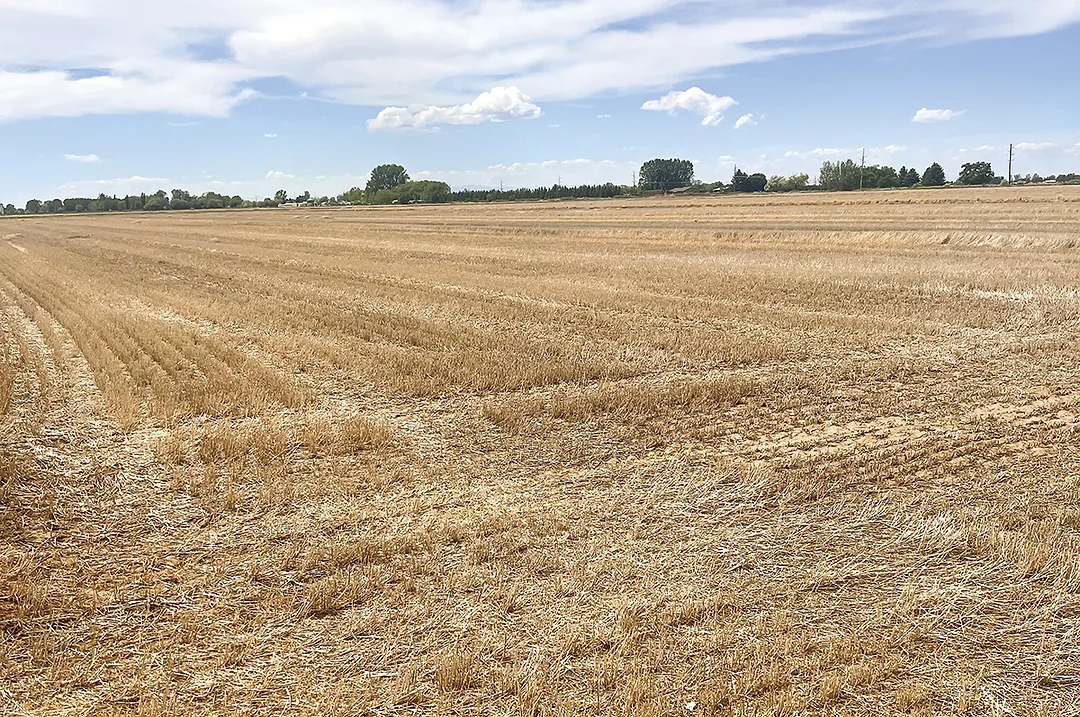
On March 18, 2026, in Ucon, Idaho, Jake Burtenshaw stood in the annual meeting of the Harrison Canal Company to warn his fellow water patrons. “If you flood irrigate, you need to only plant one-third of your acres. If you are a pivot farmer, you should only be planting about half,” he told them. Very few people listened. Burtenshaw had already done the math for his malt barley and rye operation – estimating he would sit out 62% of the acres he might have planted in previous years on that water system.

Just over 250 miles southwest in Bruneau, Idaho, Chris Black could also see the writing on the wall from the winter that wasn’t. As a multigenerational cattle rancher in some of the wildest country found in the lower 48, Black has been through droughts before. He remembers “it was 1977, when I was in high school, that was one of the worst years … there was no winter like this year. And again in 1992.” He will feel the strain differently, though. Not in forage, but in drinking water for livestock and wildlife.
For producers of all commodities across Idaho, water has been a topic of conversation for months and for good reason. As the mild winter turned to an early, semi-wet spring and now to a forecast extra-dry summer, the conversations continue.
Drought impacts the system, not just water levels
Burtenshaw and Black are thinking about the bigger picture when it comes to how drought will shape their yields this year.
For Burtenshaw, that meant deciding what to plant and what to leave out. His main focus is malt barley. He was the first farmer in Idaho since Prohibition to malt his own barley, and in recent years, he added rye. Deep down he also feels “we need more crops to grow in Idaho.” He’s experimented with hemp but, in eastern Idaho, it just didn’t make water sense to grow it this year. “Hemp is a late water crop. You plant in June and harvest in September in this part of the state. I wanted to plant, but I didn’t.”
On the range, Black's decisions come from decades of knowing the landscape. “We rely on reservoirs for the most part that had been built in the ’40s and ’50s and then there’s a few springs and holes that always have water,” he says. “You just have to go at it from a different frame of mind and not panic.” Knowing which of his allotments will still have water and when they will run dry comes from years of watching the land.
Monitoring provides for flexibility
Black also leans on decades of monitoring practices to inform his decisions. In 1992, he began practicing Allan Savory’s holistic management system on his Bureau of Land Management (BLM) allotments. The approach uses livestock grazing with proper timing, intensity and rest to maintain and improve landscapes for livestock, wildlife and people. Protecting riparian areas, sage grouse habitat and wildlife water sources is always top of mind.
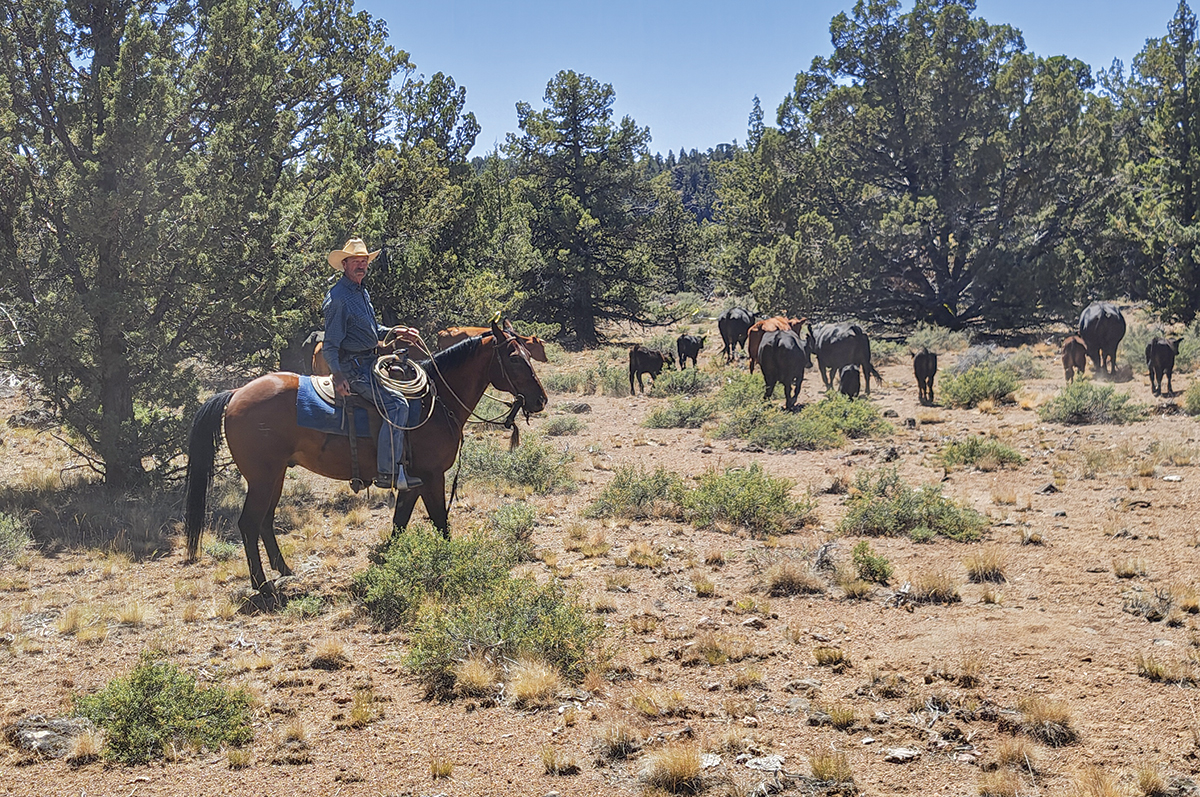
Chris Black trails cattle in the Pole Creek Wilderness. Image provided by Chris Black.
Early on, BLM challenged him to prove that flexible grazing could work outside rigid timelines typical in public land contracts. So he did. Black developed more than 24 transects using the Savory 100-point monitoring method. On-the-ground data paired with photos gathered at the same time every year has helped him navigate agency pushback while grazing where and when the land was ready. “In order to survive a drought,” he says, “you have to maintain flexibility, but you have to have the track record that what you do is going to work.”
Burtenshaw is also immersed in data, but of a different kind. His March forecast wasn’t a gut feeling – it came from understanding natural flow rates, water right priority dates and how his canal systems operate.
“Most of my systems were dug in the late 1880s and early 1890s,” he explains. The Bureau of Reclamation monitors reservoir levels and sets daily priority dates determining who can still access natural flow water before switching to storage water. “Once we're out of storage water, basically the canal has to shut off because there's nothing to run it off.”
The forecast of early shutoffs shapes his water management and crop insurance decisions. Barley typically needs water until July 10-15. This year, they will be lucky to have water through July 15. That is, if it rains. The end of May brought that very relief – 1.5 inches of season-extending rain. “Weather changes everything,” he says. But, just in case, he also chose to put acres in “prevent plant.”
Prevented planting is part of a multiperil crop insurance plan – something that Burtenshaw wishes more farms carried. It applies when a farmer cannot plant an insured crop by the final planting date because of an insured cause such as drought, flooding or lack of irrigation water. By not planting some fields, Burtenshaw can use the water for others. He knows that drought-stressed barley won’t make malt specifications and is doing what he can to protect the yields he can get.
The long view
Burtenshaw and Black echo what many in Idaho agriculture demonstrate: a drive deeper than one year’s risk from drought or whatever else may come.
Burtenshaw’s personal motto – “dare to disrupt” – guides his out-of-the-box thinking. What gives him hope? “Beer and whiskey are not a fad.” His company’s motto: “Dignity to Farming,” reflects his desire to help future generations be excited about agriculture, be profitable and be proud to feed the nation.
Black's motivation is rooted in legacy and a love of the natural resources that surround him. “That’s why I still do what I do, because I love it – going out and seeing the cows and taking care of the things that need to be taken care of.” His desire to pass on a way of life to his children and grandchildren, and the beautiful country he gets to ride in, will keep him saddling up day by day.


.webp?height=auto&t=1783636475&width=285 "63802-Thomas-GPS-equipment--Automated-Magnum-Tractor--Matt-Skinner-photo(1).jpg")