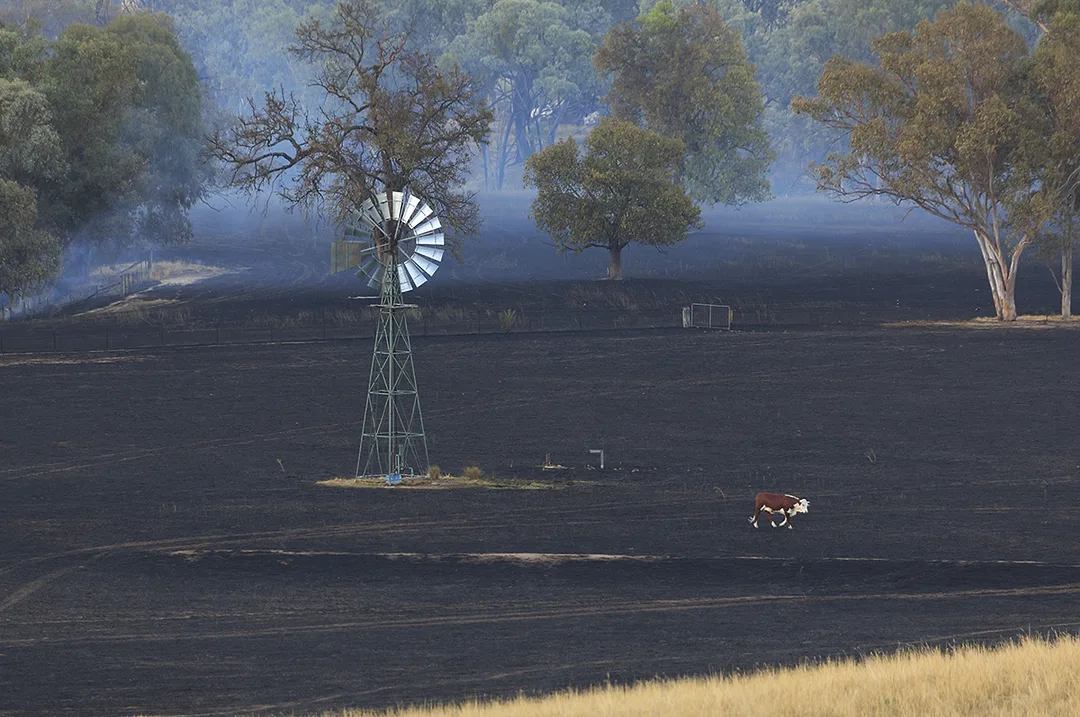
Wildfire is a fact of life across much of the American West, Southern Plains and beyond. For ranchers, a fire moving through pasture can feel like total loss – fences down, damaged infrastructure, forage gone and livestock stressed or injured. However, rangeland is resilient, and with a sound recovery plan, most operations can rebuild. The key lies in acting deliberately, giving the land time to heal and making smart decisions about your herd in the critical weeks and months that follow.

The first 72 hours postfire
Once the fire has passed and it is safe to enter the burned area, the number one priority is livestock welfare. Inspect your herd for burns, smoke inhalation and eye injuries. Cattle with singed nasal passages or labored breathing need veterinary attention quickly; respiratory damage from smoke can worsen over several days. Move injured animals to unburned pasture or pens where they can be monitored and treated.
Check water sources as soon as it is safe to do so. Arrange for temporary water stations initially to get clean, uncontaminated water to your herd – cattle cannot go without water, especially when under heat and stress. Tanks, troughs and ponds may be contaminated with ash and sediment, which can raise water pH and introduce toxins. Flush and clean any accessible water infrastructure.
Destocking: The hardest but most important decision
The most difficult and most critical decision a rancher faces after wildfire is how many animals the land can support during recovery. The temptation is to hold onto cattle and wait for regrowth. But overgrazing a burned pasture, even with the best intentions, can set back recovery by years and cause lasting soil damage.
Work with your county extension agent or a range specialist to assess how much forage was lost and how long recovery will take. As a general rule, burned rangeland needs at least one full growing season – and often two – before it can support normal stocking rates. This means selling down your herd, leasing temporary grazing elsewhere or purchasing feed to bridge the gap. Though painful, destocking protects both the land and your long-term operation.
Monitoring rangeland recovery
While catastrophic, fire can actually benefit rangelands over time by removing invasive species, recycling nutrients and stimulating the growth of native grasses. However, grazing pressure needs to be managed carefully during recovery. After the first rains, watch for the return of native perennial grasses. These are the foundation of a healthy range. If you see mostly annual weeds or bare ground after a growing season, consult a range professional about reseeding or additional management steps.
Set up simple photo monitoring points – fixed locations where you photograph vegetation at regular intervals. This low-cost tool gives you objective data on how recovery is progressing and helps justify grazing decisions to yourself and to lenders.
Infrastructure repairs and financial resources
Fencing, water lines, corrals and loading facilities all need assessment, and likely repair, before grazing can resume safely. Prioritize fencing that keeps cattle out of burned areas during recovery and any water infrastructure critical to your operational layout. Document all losses with photographs for insurance claims and potential assistance programs.
Looking forward
Wildfire recovery is a marathon, not a sprint. Ranchers who fare best are those who resist the urge to restock too quickly and instead use the recovery period to reassess their grazing management practices. Many producers find that the forced reset of a fire allows them to implement rotational grazing systems, improve water distribution or diversify their forage base in ways that make the operation more resilient going forward.
If faced with wildfire recovery, work closely with your local extension service, USDA Natural Resources Conservation Service office and neighbors who have navigated fire recovery before. The knowledge and support within the ranching community is one of the most valuable resources available – and the land, given time and respect, will recover.