We use cookies to provide you with a better experience. By continuing to browse the site you are agreeing to our use of cookies in accordance with our Cookie Policy.
  • Sign In
  • Create Account
  • Sign Out
  • My Account
subscribe / renew
  • Livestock
    • Beef
    • Dairy
      • Canada
      • U.S.
    • Sheep & Goats
    • Other Livestock
  • Crops
    • Grains
      • Barley
      • Wheat
    • Hay
    • Pasture
    • Ensiled Forages
  • Equipment
  • Magazines
    • Progressive Dairy US
    • Progressive Dairy — Canada
    • Progressive Dairy – en francais
    • Progressive Forage
    • Progressive Cattle
    • Progressive Cattle - Canada
    • Idaho Ag Proud
  • Blogs
  • Buyers Guide
  • Advertise
  • Ask AgProud

Progressive Dairy

Progressive Dairy Canada

PD Canada en Francais

Progressive Cattle

Progressive Cattle Canada

Progressive Forage

Agproud Idaho

Home

Home » transition period

Articles Tagged with ''transition period''

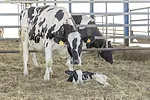
62252-bringhenti-cow-calf.jpg

Shedding placental membranes and uterine restoration

Proper postpartum care is essential for dairy cows to ensure they return to full reproductive health quickly.
October 29, 2025
Leonardo Bringhenti

Proper postpartum care is essential for dairy cows to ensure they return to full reproductive health quickly.


Read More

Rethinking chromium: From transition tool to full-lactation asset for dairy cows

Chromium supplementation improves intake, energy efficiency and resilience, with research and on-farm results showing benefits extend beyond fresh cows to support performance throughout lactation.
October 8, 2025
Rick Brown

Chromium has become a useful addition to transition diets. Supplementing with 6 to 8 milligrams per cow daily has been shown to significantly boost dry matter intake, energy efficiency and cow resilience. New data shows that these benefits go beyond fresh cows, supporting chromium supplementation throughout the entire lactation.


Read More

From the Journal of Dairy Science: Producer awareness of lameness and underlying factors of immune dysfunction

August 21, 2025
Pedro Nogueira

This article from researchers from the University of Guelph and Prince Edward Island describes a study which objectives were to understand awareness, perceptions and barriers to implementation of established best management practices (BMPs) for early detection and treatment of lameness of participant dairy farms.


Read More
61635-devine-V3A3896---Dixon.jpg

The benefits of urine pH testing go beyond monitoring DCAD

Monitoring urine pH of prepartum cows can catch unexpected changes in feeding management that could negatively impact production and health of not only your transition cows, but your entire herd.
July 2, 2025
Kristen Devine

Urine pH testing is an easy way to take advantage of a proven technology to make sure the cows are consuming the diet specifically formulated to meet their requirements. In addition, urine pH testing can be used to help dial in the diet. 


Read More
61543-pavelski-BY7A8431.jpg

Tapping into data to improve transition cow health and farm ROI

Achieve faster return on investment (ROI) from monitoring technologies by leveraging data-driven insights to improve transition cow health.
June 18, 2025
Steve Pavelski

From pre-fresh to post-fresh, data from automated monitoring technology empowers dairies to act earlier, manage smarter and achieve stronger returns – one transition cow at a time.


Read More
61216-wu-6495-Schmitz.jpg

Negative DCAD diet still holds key to health and performance

Feeding a negative dietary cation-anion difference (DCAD) diet during the transition period is a proven method to protect cows from metabolic disorders.
April 7, 2025
Ruby Wu

Even though millions of cows and hundreds of research trials have demonstrated the positive benefits of feeding a negative DCAD diet, there are always those who look for new and better ways to accomplish the goal of reducing incidence of clinical and subclinical milk fever. While those interventions do exist, it is hard to beat the proven efficacy of feeding a negative DCAD diet. 


Read More

Proving the payoff

As dairy farmers explore ways to improve profitability, a University of Illinois study investigating the benefits of increased dietary calcium inclusion in a fully acidogenic prepartum diet identified several opportunities which can lead to an improved return on investment.
March 4, 2025
Phil Cardoso

Transition cows are prone to inflammation, hypocalcemia and metabolic disorders that can lead to lower chances of getting pregnant and long-term consequences on the health and productivity of the cow – all of which can take away from a dairy producer’s bottom line.


Read More
60960-martin-edgar.jpg

Through the decades: The evolution of hypocalcemia mitigation strategies

The last several decades of macromineral research and recommendations have helped shape efforts to control hypocalcemia.
February 19, 2025
Rod Martin

Managing and achieving a successful fresh-cow transition is a critical component of a profitable and sustainable dairy business. Despite significant achievements through research and improved management strategies, there are still numerous on-farm and individual cow risk factors that come into play, resulting in a fine line between achieving a successful transition and one that always seems to be a work in progress.


Read More
60904-groen-calf.jpg

How the transition period influences the longevity of dairy cows

Effective management during the transition period, with a focus on preventing ketosis and hypocalcemia through strategic nutrition and environmental practices, is key to improving dairy cow health, productivity and longevity.
February 18, 2025
Matt Groen

Managing cows correctly during the transition period is one of the most important factors for overall farm success. During the transition period, nutrient requirements change to support fetal growth, colostrogenesis and the onset of lactation following parturition.


Read More
60739-leblanc-edgar.jpg

Managing metritis in dairy cows

Metritis in dairy cows, caused by bacterial infections, impacts milk yield and fertility. It requires timely antibiotic treatment and ongoing research to refine protocols for better outcomes and reduced economic losses.
January 17, 2025
Stephen LeBlanc

Most dairy cows have potentially disease-causing bacteria in their reproductive tract in low abundance. Cows develop uterine infection and disease when the pathogens overgrow and become dominant. Cows need to have a rapid, robust and well-regulated inflammatory response in the uterus during and immediately after calving to detach the placenta, keep bacterial pathogens in check and start uterine repair.

Read More
Previous 1 2 3 4 5 6 7 Next
  • RECENT ARTICLES
  • 63555-pearce-dry-pasture-getty.jpg

    Is managing for drought the new norm?

    June 12, 2026
  • 1026pd-digital-edition-feature-spot.jpg

    June 12, 2026 Progressive Dairy digital magazine

    June 12, 2026
    • Land rental rates for Idaho agricultural operations

      June 12, 2026

FREE NEWSLETTERS

Award-winning coverage of in-depth news and analysis to make your business more profitable.

SIGNUP TODAY
Advertisement
THE GUIDE

How do I get my company listed in your Buyers Guide? 
Submit a request to be listed for FREE in the Buyers Guide here.

Why can I only see so many articles before I have to register for the site?
Find out why here.

SUBSCRIBE to Leading Industry Magazines

Award-winning coverage of in-depth news and analysis to make your business more profitable.

Subscribe/Renew
Advertisement

I'm looking for ________

Find the right products and services for your farm, ranch or operation.

CHECK OUT OUR BUYERS GUIDE
Advertisement
  • FEATURED PODCASTS
  • [Podcast] Changing the Rules of Pre-Fresh Dairy Cows

    Progressive Dairy
    Podcasts
    SPONSORED BY Applied Biotechnologies Inc.
  • [Podcast] Selling Calves in a Record Market: What Ranchers Need to Know Right Now

    Progressive Cattle
    Podcasts
    SPONSORED BY Superior Livestock Auction
PERSONALIZED CONTENT
Create an account and see website content tailored to your operation.  It only takes a few seconds!
SEE RECOMMENDATIONS NOW!
Copyright © 2026 Progressive Publishing

MORE INFORMATION
  • About Us
  • Terms & Conditions
  • Privacy Policy
  • FAQs
  • Advertise
  • Shop
  • Stats Posters

OUR MAGAZINES
  • Progressive Dairy
    • Facebook
    • Twitter
    • Linkedin
  • Progressive Dairy — Canada
    • Facebook
    • Twitter
    • Linkedin
  • Progressive Dairy — en français
    • Facebook
  • Progressive Cattle
    • Facebook
    • Twitter
    • Linkedin
  • Progressive Cattle — Canada
    • Facebook
    • Linkedin
  • Progressive Forage
    • Facebook
    • Twitter
  • AgProud — Idaho
    • Facebook
    • Linkedin

CONTACT INFORMATION

Progressive Publishing
238 West Nez Perce (physical)
PO Box 585 (mailing)
Jerome, ID 83338


info@progressivepublish.com
(800) 320-1424
(208) 324-7513 (Main)
(208) 324-1133 (Fax)