
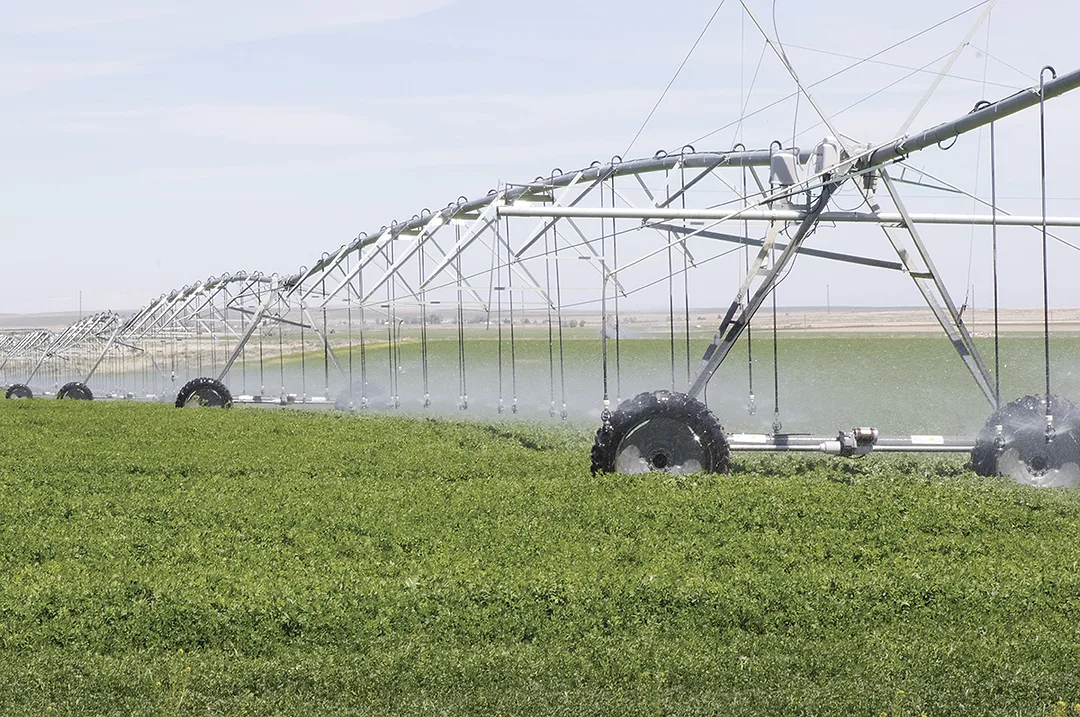
Farmers, ranchers, landowners, renters, real estate agents, bankers and interested neighbors all have one question in common: What is a fair market rate for renting agricultural land?




The easy answer is: It varies heavily by crop, region and irrigation availability. The USDA’s National Agricultural Statistics Service (NASS) does publish statewide and county-level average rental rates for three major categories. Figure 1 shows the Idaho average rental rates as reported by NASS for dryland cropland, irrigated cropland and pastureland since 2010.
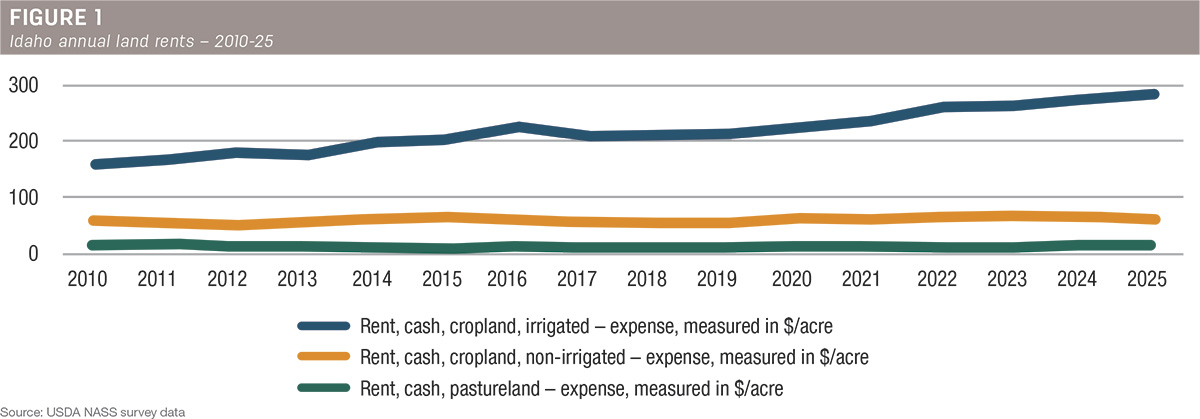
In general, the NASS data is very useful for assessing general trends, but it also leaves us with several questions:
- Which crops rent for above- or below-average rates?
- How much do rental rates vary by region?
- How does irrigation infrastructure play a role in setting a rate?
- What about crop shares?
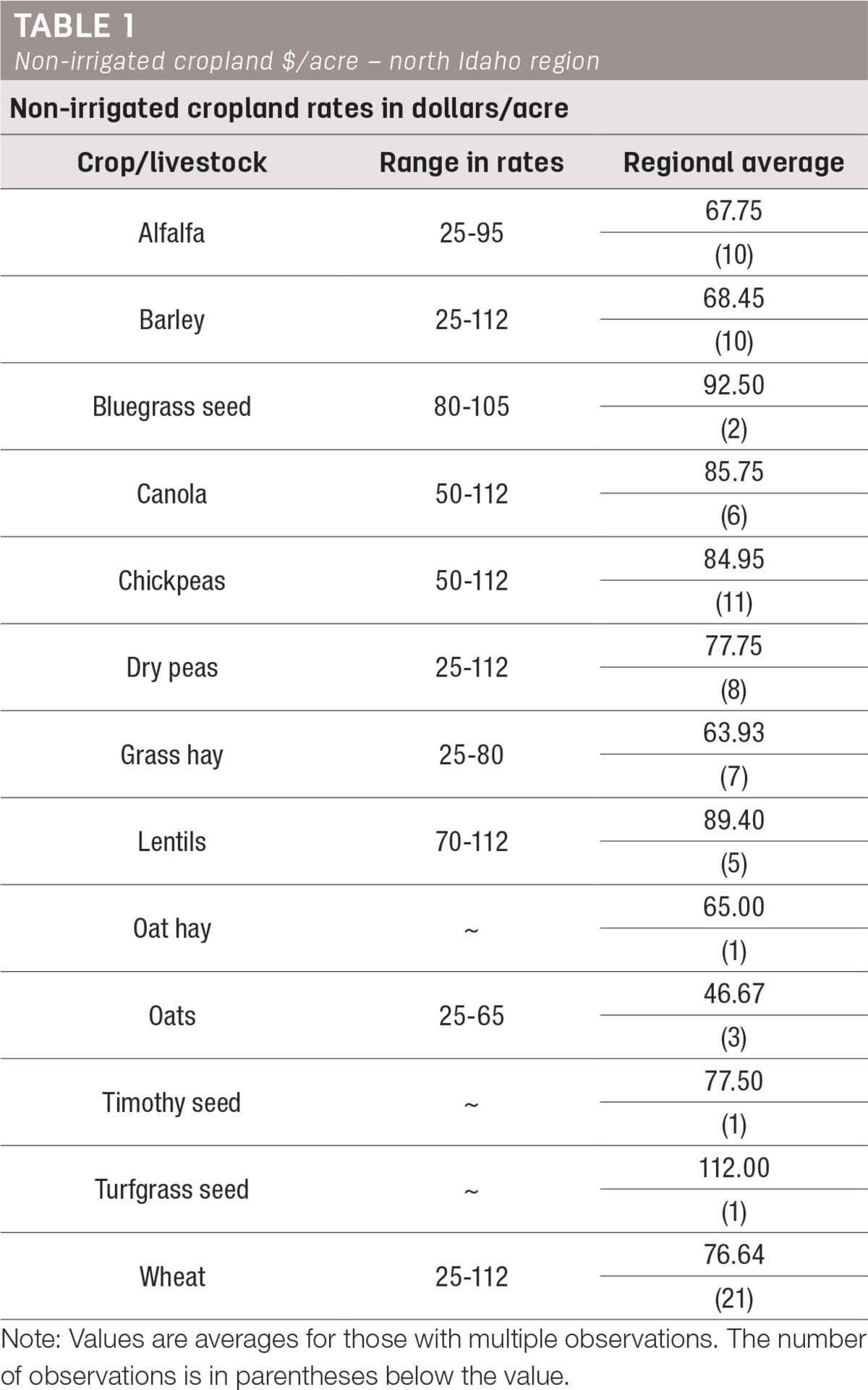
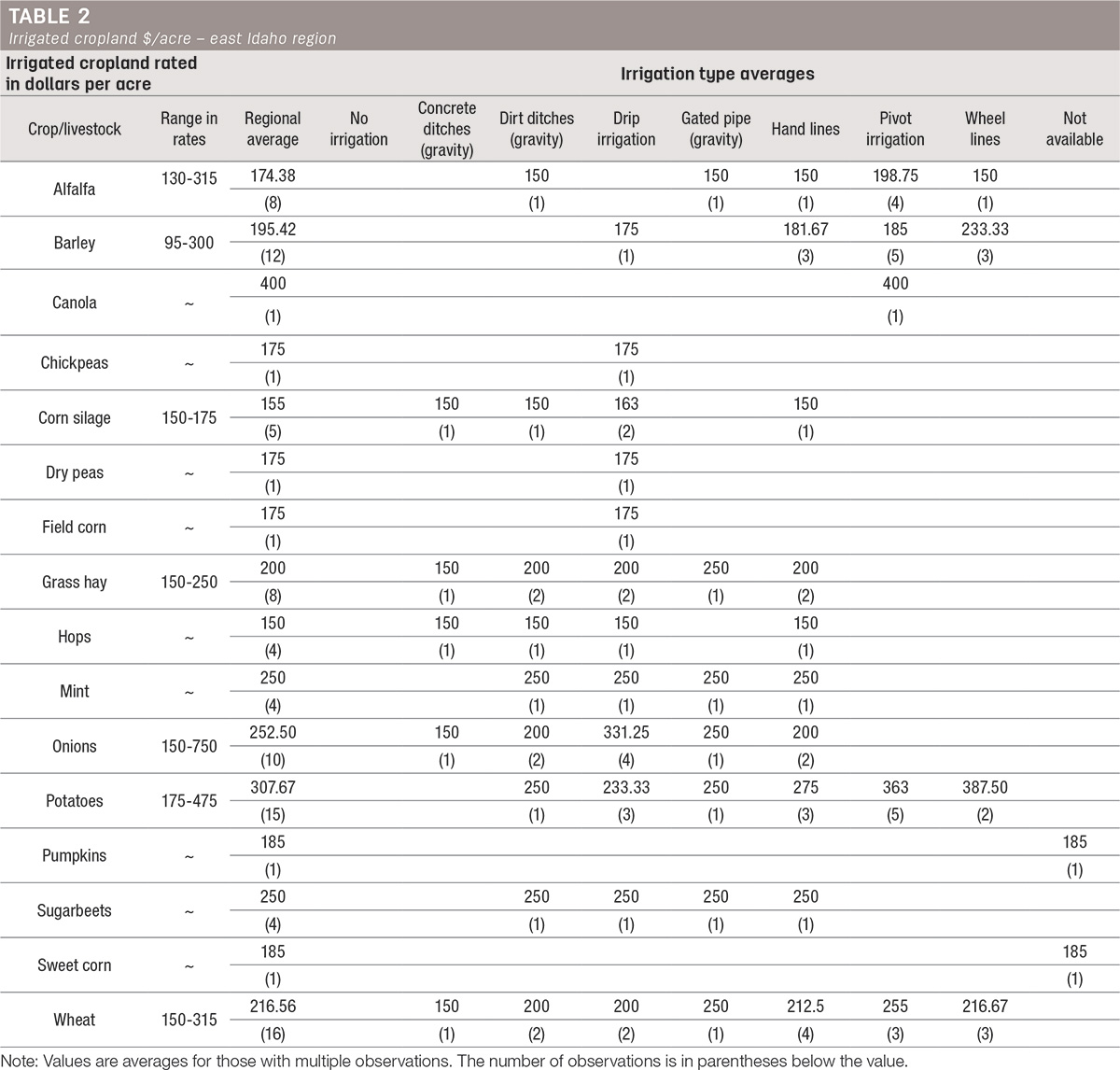
To help answer those questions, University of Idaho Extension conducted a survey of farmers, ranchers and landowners about the prices they paid or charged for land rental during fall 2025 through spring 2026. A small subset of those results can be found in this article, and the full release will be available soon on the Idaho AgBiz website under “Management Tools." We completed this survey in March 2026. Of 146 responses, 89 gave complete information and provided us with results for 289 individual land rental rates and are representative of all Idaho regions. While we did not receive responses for every type of crop grown on every possible irrigation system for each region, we believe the results can provide general guidance and assist in rental rate negotiations.
For this article, we have broken down rental rates by crop, region, land type and irrigation type. We also asked survey participants to report prices as dollars per acre, dollars per AUM, dollars per head or to provide details about their crop share agreement.
We’ve included our survey results for non-irrigated cropland in north Idaho (Table 1), irrigated cropland in east Idaho (Table 2) and beef cattle grazing land rates in east Idaho (Table 3). Full results will be posted to our Idaho AgBiz website in the coming months.
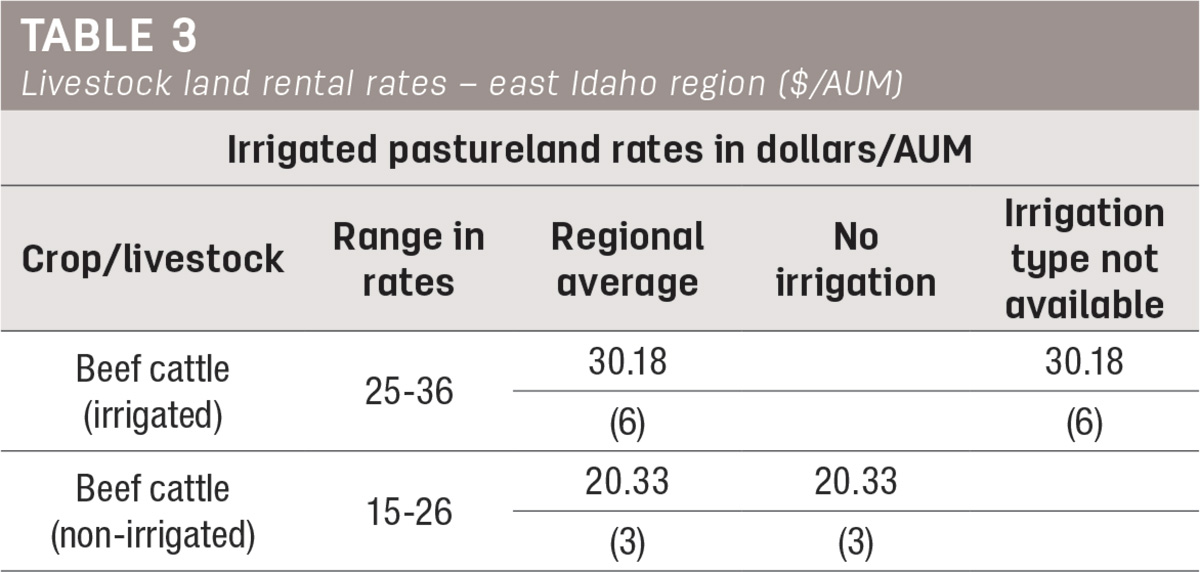
Livestock land rental rates – east Idaho region
Livestock rental rates can vary significantly by both land type and rate type. We’ve broken land types into non-irrigated pastureland, irrigated pastureland and rangeland. The most common rate types are dollars per acre, dollars per head or dollars per animal unit month (AUM). In some very specific cases, dollars per pound of gain is also used.
Crop shares
We also asked survey respondents to describe any crop shares they utilize. Based on the responses received, producers and landlords can be very creative in finding an ideal solution – no two agreements described were the same. Read our full report for more details on crop share types.
Conclusions
It is clear that differences in crops grown and irrigation infrastructure can lead to large differences in land rental rates. It is also clear that large price ranges exist in rental agreements even within regions. These survey results should be used as a guideline but not a hard rule. Results should be used in combination with trends in the overall NASS survey data and individual knowledge about the land in question to determine a fair price.
Survey details
This survey was conducted over the course of six months. Surveys were collected both online and in paper form. The survey was promoted online, on social media, in radio, agricultural press publications and at events attended by the authors from September 2025 to March 2026. This was the first survey of its kind conducted by the University of Idaho, but we plan to have an updated land rental rates survey every other year.





.webp?height=auto&t=1783636475&width=285 "63802-Thomas-GPS-equipment--Automated-Magnum-Tractor--Matt-Skinner-photo(1).jpg")
