For years, progressive producers, consultants and veterinarians have been acutely aware of the challenges cows face during the transition period – the critical three weeks before and after calving – when nutritional and metabolic demands are at their peak. Today, they recognize that this is a critical period for herd health and performance. Strategic dietary support during this phase is not only vital but also a proven method to improve fresh cow performance, strengthen herd health and increase profitability.

Chromium, especially in its FDA-approved form of chromium propionate, has become a useful addition to transition diets. Supplementing with 6-8 milligrams per cow daily (or 0.5 milligram per kilogram of dry matter) has been shown to significantly boost dry matter intake, energy efficiency and cow resilience. This encouraging data, from both recent research and widespread on-farm experience, now shows that these benefits go beyond fresh cows, supporting chromium supplementation throughout the entire lactation.
Furthermore, the National Academies of Sciences, Engineering and Medicine (NASEM) officially recognize chromium as an essential nutrient for dairy cattle in their 2021 guidelines. This represents a major shift in the industry’s view on trace mineral nutrition and provides a strong foundation for chromium use, even though formal requirements are still pending.
From transition to full lactation
Historically, supplementing chromium propionate during the transition phase aimed to help cows start strong. A meta-analysis from 2023 consistently shows that cows receiving chromium propionate produce more milk – on average, 2.6 pounds daily – and increase dry matter intake by 1.6 pounds during the transition period compared to controls.
Importantly, research continues beyond day 30 in milk production. While controlled trials and meta-analyses support an average daily milk response of around 2.6 pounds, additional field studies – including a recent large-scale trial in 2025 – have documented even higher milk yield increases of 4.6-8.4 pounds per day when chromium supplementation is maintained throughout lactation. These larger effects, although not universal, highlight the greater potential in well-managed, high-producing herds.
The science: Enhancing glucose uptake
Recent research confirms that chromium is essential for supporting glucose uptake. Glucose remains the primary energy source for lactating cows, and using it effectively is key to maximizing milk production and maintaining their overall health. Supplemental chromium propionate helps cows' tissues – especially those in the udder and muscle – absorb and utilize glucose more efficiently. Improvements in glucose metabolism are particularly beneficial not only during the metabolic stress of the fresh period but also as cows reach peak production and maintain high output through mid- and late lactation. Chromium supplementation not only increases milk yield but also enhances overall feed efficiency and financial returns.
Why feed throughout the entire lactation
A recent large-scale field study highlights the overall benefits of feeding chromium propionate throughout the entire lactation period.
- In a yearlong U.S. field trial, more than 160 multiparous cows received chromium propionate via robot pellets from 21 days before calving through 269 days in milk.
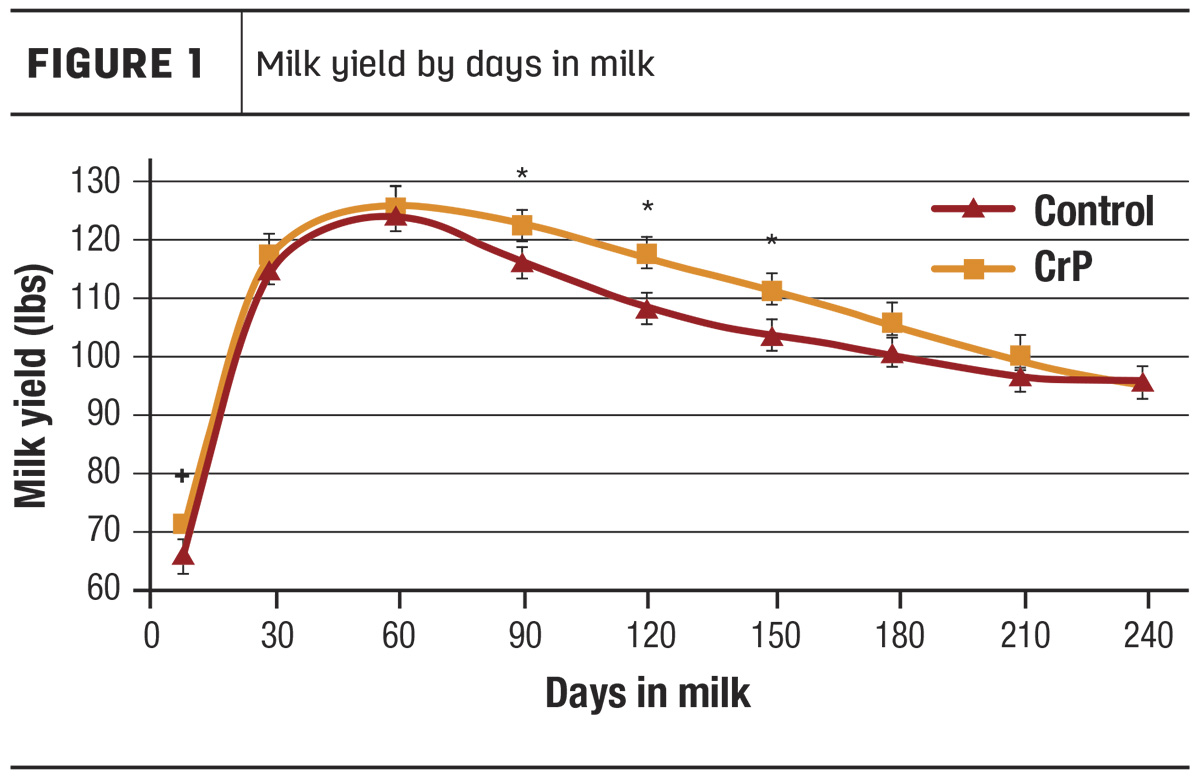
- Milk yield increased, on average, by 4.6 pounds daily during the first two weeks of lactation in cows supplemented with chromium and remained 6 to 8.4 pounds higher per day through mid- and late-lactation compared to controls.
These field findings represent the upper range of response, while meta-analyses show a more typical daily benefit of approximately 2.6 pounds (Figure 1).
Herd health and efficiency gains
- Research connects full-lactation chromium propionate feeding to health and metabolic benefits.
- Cows fed chromium propionate throughout lactation often exhibit lower inflammation markers and increased resilience to transition-related challenges, as shown in scientific studies.
- Consultants and producers often report improved persistency, more consistent lactation curves and fewer fresh-cow health problems; however, the extent of these benefits can differ depending on herd management and environmental conditions.
Leveraging essential chromium
The economics are simple. Adding chromium propionate at recommended doses usually costs around 2 cents per cow per day, although ingredient prices can fluctuate. Even with an average milk yield increase of approximately 2.6 pounds per day from research, the benefits cover the costs, and larger gains in some herds make the economics even more attractive. In well-managed, high-producing herds, current data indicate the return on investment may be 5-to-1 or higher, with the actual value depending on local milk prices and supplementation costs.
How can you maximize the benefits of this research?
- Provide full lactation support: Start chromium propionate in the close-up transition diet and keep it in the ration throughout lactation.
- Stick to the facts: Only use FDA-approved chromium propionate.
- Integrate it seamlessly: Chromium propionate works in total mixed rations, robotic pellets or top-dresses – no special handling required.
Take-home message
The evidence for chromium propionate is strong. Whether your goal is more milk, better cow health or stronger economics, here are the key points to remember:
- Transition boost: Feeding chromium propionate during the three weeks before and after calving increases dry matter intake and milk yield.
- Full-lactation advantage: Continuing supplementation through the entire lactation sustains – and can even amplify – these gains, supporting both production and herd health.
- Proven economics: Research from 2025 shows full-lactation feeding can cost as little as 2 cents per head per day and deliver a return on investment of 5-to-1 or higher in well-managed herds.
- Easy implementation: Works in total mixed rations, robotic pellets or top-dresses – no special handling required.
- Bottom line: For progressive dairy farms, full-lactation chromium propionate is a reliable, science-backed way to drive productivity and profitability.
When introducing any new ingredient or feed additive, the most successful results come from a collaborative, goal-driven approach. Work closely with trusted advisers including nutritionists, veterinarians and financial consultants to evaluate the cost-effectiveness, expected benefits and potential risks. The best decisions are grounded in solid science and deliver a clear return on investment, supporting both herd health and the long-term success of the dairy business.
References omitted but available upon request by sending an email to an editor.