We use cookies to provide you with a better experience. By continuing to browse the site you are agreeing to our use of cookies in accordance with our Cookie Policy.
  • Sign In
  • Create Account
  • Sign Out
  • My Account
subscribe / renew
  • Topics
    • All recent articles
    • Forage Analysis
      • Testing Forages
    • Forage Equipment
      • Baling Equipment
      • Forage Technology
      • Groundwork Equipment
      • Silage Equipment
      • Storage Equipment
    • Forage Harvest
      • Harvest Considerations
      • Harvest Issues
    • Forage Marketing
      • Pricing Forages
      • Selling Forages
    • Forage Planting
      • Crop Rotation
      • Seeds
    • Forage Production
      • Common Issues
      • Growing Issues
      • Irrigation
      • Pests & Weeds
      • Plant Health
      • Soil Health
      • Soil Sampling
      • Weather
    • Forage Selection
      • Alternative Forages
      • Commodity Crops
      • Ensiled Forages
      • Grasses & Legumes
      • Hay
      • Small Grains
    • Forage Storage
      • Baling
      • Ensiling
      • Transportation
      • Wrapping
    • Forage Business Management
    • Forage Farm Features
  • News
    • Forage Industry Issues
  • Blogs
    • From the Editor
    • Guest Blogs
    • Irons in the Fire
    • Outside Eden
    • Tales of a Hay Hauler
  • Buyers Guide
  • Current Issue
  • Past Issues
  • Advertise
  • Ask AgProud

Progressive Dairy

Progressive Dairy Canada

PD Canada en Francais

Progressive Cattle

Progressive Cattle Canada

Progressive Forage

Agproud Idaho

Home

Home » Topics » Progressive Forage

Progressive Forage
Progressive Forage RSS Feed RSS

Tales of a Hay Hauler: Looks like you are creating metal’

January 31, 2012
Brad Nelson
“Now, any of you who don’t already know how to weld or do simple electrical wiring or carpentry, it will save you lots of grief if you get over to the vocational shop and take a class or two.”
Read More

USDA unveils new Plant Hardiness Zone Map

January 31, 2012
013112_plant_hardinessThe U.S. Department of Agriculture (USDA) today released the new version of its Plant Hardiness Zone Map (PHZM), updating a useful tool for gardeners and researchers for the first time since 1990 with greater accuracy and detail. The new map – jointly developed by USDA's Agricultural Research Service (ARS) and Oregon State University's (OSU) PRISM Climate Group – is available online at www.planthardiness.ars.usda.gov. ARS is the chief intramural scientific research agency of USDA. For the first time, the new map offers a Geographic Information System (GIS)-based interactive format and is specifically designed to be Internet-friendly. The map website also incorporates a "find your zone by ZIP code" function. Static images of national, regional and state maps also have been included to ensure the map is readily accessible to those who lack broadband Internet access.
Read More

Finding new forages for rangeland cattle

January 31, 2012
013112_rangelandsCattle that graze on rangelands in the western United States may soon have a new forage option, thanks to work by a U.S. Department of Agriculture (USDA) scientist. Research by geneticist Blair Waldron with USDA's Agricultural Research Service (ARS) in Logan, Utah, suggests that forage kochia (Kochia prostrata) can provide more nutritious winter forage than traditional rangeland vegetation. ARS is USDA's chief intramural scientific research agency, and this work supports the USDA priorities of responding to climate change and promoting international food security. Waldron and his cooperators in Utah partnered to learn more about forage kochia, a shrubby Asian native plant that sometimes survives wildfires and other environmental challenges more successfully than North American native plants. Waldron works at the ARS Forage and Range Research Laboratory in Logan.
Read More

Crop residue removal studies from Pioneer, DuPont provide management options

January 31, 2012
In many high-yielding areas of the Corn Belt, residue buildup has become a challenge. DuPont businesses Pioneer Hi-Bred and DuPont Industrial Biosciences are collaborating with Iowa State University, performing studies on residue to establish best practices in harvesting, storage and transportation, as well as to assure the agronomic and environmental integrity of cornfields. "We know the near-term benefits of residue removal," says Andy Heggenstaller, Pioneer agronomy research manager from Iowa. "We're now trying to learn how to take advantage of these benefits with an eye toward achieving similar long-term agronomic advantages."
Read More
Don Quincey

Ranch uses manure as valuable resource

January 31, 2012
Dave Wilkins

At many cattle backgrounding operations, manure is an unwanted byproduct – something to dispose of. But at the Quincey Cattle Co. in Chiefland, Florida, it’s a valuable resource used in forage production.

Calves that enter this preconditioning program spend their time on pasture, not dirt lots.

Read More

Calibrate corn planter unit to maximize profits

January 30, 2012
Peter Callan

Corn growers are constantly looking for ways to maximize profit. Planter condition is one of the most controllable variables that influence profitability.

Read More

Don’t overlook refuge requirements in silage corn

January 30, 2012
Mark Riehl

Protecting fields from insect damage is a critical component of silage corn production. Leaves, stalks and ears all contribute to silage tonnage, so keeping them intact and free from insect damage helps improve overall yield and quality.

Read More
Alfalfa

What’s in your alfalfa seed bag?

January 30, 2012
Robin Newell
Reading labels isn’t just important when you’re watching your diet.

Knowing how to read your alfalfa seed tag also can reap big dividends, not only in managing seed costs but also to ensure you have a strong stand.

Read More
Jones and family & friends

Small steps lead to success for beginning custom harvester

January 30, 2012

At 16 years old, Rick Jones of East Berlin, Pennsylvania, discovered his career path.

What began as an FFA project eight years ago has turned into a growing, thriving business.

Read More
40-foot-wide tape injector

The need for feed addressed in Idaho with drip irrigation

January 30, 2012
Patti Bennett Brown

In 2003, Terry and Linda Ketterling started TLK Farms, Inc. and TLK Dairy, Inc. along with their son Tony Ketterling and daughter Launa Fowler. As Terry put it, “I bought a dairy to learn about dairy.”

Read More
Previous 1 2 … 448 449 450 451 452 453 454 455 456 … 525 526 Next
  • RECENT ARTICLES
  • Porosity: The true measure of silage density

    June 11, 2026
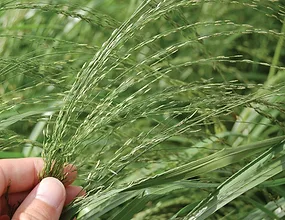
  • 63553-thomas-teff-seed-head.jpg

    Teff grass: Where it fits and where it doesn’t

    June 8, 2026
    • June 1, 2026 Progressive Forage digital magazine

      June 1, 2026

FREE NEWSLETTERS

Award-winning coverage of in-depth news and analysis to make your business more profitable.

SIGNUP TODAY
Advertisement
THE GUIDE

How do I get my company listed in your Buyers Guide? 
Submit a request to be listed for FREE in the Buyers Guide here.

Why can I only see so many articles before I have to register for the site?
Find out why here.

SUBSCRIBE to Leading Industry Magazines

Award-winning coverage of in-depth news and analysis to make your business more profitable.

Subscribe/Renew
Advertisement

I'm looking for ________

Find the right products and services for your farm, ranch or operation.

CHECK OUT OUR BUYERS GUIDE
Advertisement
  • FEATURED PODCASTS
  • [Podcast] Changing the Rules of Pre-Fresh Dairy Cows

    Progressive Dairy
    Podcasts
    SPONSORED BY Applied Biotechnologies Inc.
  • [Podcast] Selling Calves in a Record Market: What Ranchers Need to Know Right Now

    Progressive Cattle
    Podcasts
    SPONSORED BY Superior Livestock Auction
PERSONALIZED CONTENT
Create an account and see website content tailored to your operation.  It only takes a few seconds!
SEE RECOMMENDATIONS NOW!
Copyright © 2026 Progressive Publishing

MORE INFORMATION
  • About Us
  • Terms & Conditions
  • Privacy Policy
  • FAQs
  • Advertise
  • Shop
  • Stats Posters

OUR MAGAZINES
  • Progressive Dairy
    • Facebook
    • Twitter
    • Linkedin
  • Progressive Dairy — Canada
    • Facebook
    • Twitter
    • Linkedin
  • Progressive Dairy — en français
    • Facebook
  • Progressive Cattle
    • Facebook
    • Twitter
    • Linkedin
  • Progressive Cattle — Canada
    • Facebook
    • Linkedin
  • Progressive Forage
    • Facebook
    • Twitter
  • AgProud — Idaho
    • Facebook
    • Linkedin

CONTACT INFORMATION

Progressive Publishing
238 West Nez Perce (physical)
PO Box 585 (mailing)
Jerome, ID 83338


info@progressivepublish.com
(800) 320-1424
(208) 324-7513 (Main)
(208) 324-1133 (Fax)