We use cookies to provide you with a better experience. By continuing to browse the site you are agreeing to our use of cookies in accordance with our Cookie Policy.
  • Sign In
  • Create Account
  • Sign Out
  • My Account
subscribe / renew
  • Topics
    • All recent articles
    • Forage Analysis
      • Testing Forages
    • Forage Equipment
      • Baling Equipment
      • Forage Technology
      • Groundwork Equipment
      • Silage Equipment
      • Storage Equipment
    • Forage Harvest
      • Harvest Considerations
      • Harvest Issues
    • Forage Marketing
      • Pricing Forages
      • Selling Forages
    • Forage Planting
      • Crop Rotation
      • Seeds
    • Forage Production
      • Common Issues
      • Growing Issues
      • Irrigation
      • Pests & Weeds
      • Plant Health
      • Soil Health
      • Soil Sampling
      • Weather
    • Forage Selection
      • Alternative Forages
      • Commodity Crops
      • Ensiled Forages
      • Grasses & Legumes
      • Hay
      • Small Grains
    • Forage Storage
      • Baling
      • Ensiling
      • Transportation
      • Wrapping
    • Forage Business Management
    • Forage Farm Features
  • News
    • Forage Industry Issues
  • Blogs
    • From the Editor
    • Guest Blogs
    • Irons in the Fire
    • Outside Eden
    • Tales of a Hay Hauler
  • Buyers Guide
  • Current Issue
  • Past Issues
  • Advertise
  • Ask AgProud

Progressive Dairy

Progressive Dairy Canada

PD Canada en Francais

Progressive Cattle

Progressive Cattle Canada

Progressive Forage

Agproud Idaho

Home

Home » Topics » Progressive Forage » Forage Selection

Forage Selection
Forage Selection RSS Feed RSS

59793-peterson-kratz-green-mix.jpg

Trend toward alternative forages means adjusting crop nutrition protocols

As the trend toward alternative forages grows, ongoing research and on-farm trials will be essential for refining crop nutrition strategies.
June 6, 2024
Dan Peterson

The emerging trend toward alternative forages means it may be time to adjust crop nutrition protocols. Alfalfa has long been considered the “queen” of forages thanks to its high protein solubility and digestibility balanced with amino acids.


Read More
59723-wyffels-0030.jpg

Factors impacting forage quality for grazing beef cattle

As the seasons progress, the nutrient content of grazing forages evolves. Understanding what is going on in those plants can help you provide your cattle with the highest plane of nutrition possible throughout the year.
June 5, 2024
Sam Wyffels

As the summer months progress, the forage quality for grazing cattle begins to change rapidly for much of the western U.S. Cattle performance is dependent on the consumption of digestible nutrients; thus, forage quality and availability are essential for grazing-based systems.


Read More
59699-burson-img_4734-marchant.jpg

Don’t let drought keep cattle performance down

Here are five considerations to help you efficiently deal with drought and optimize cattle performance on your operation.
June 3, 2024

Drought conditions around the country can be a mixed bag any given year. This year, portions of the Central Plains, West, Southwest and Midwest have dealt with various drought conditions.


Read More
59577-lane-sorghum-sudangrass.coreylewis.jpg

10 feet tall with BMR: A new era of grass

Grazing, BMR genes, improved varieties, low-moisture situations – combined with the potential for high summer yields and good nutrition – these plants can be impressive.
May 13, 2024
Woody Lane

Sorghum-sudangrass is a C4 (warm-season) annual. It can easily grow 10 feet tall and yield more than 5 tons of dry matter per acre during the hot summer.


Read More

The silver lining of drought

If nature has hit the reset button for you, then this is an opportunity to put your perennial pastures on a new and better trajectory.
April 24, 2024
Keith Berns and Kate Smith

Drought has plagued many parts of the country over the past couple years. Dust storms, sweltering heat, raging wildfires, failed crops – all effects of an ecosystem lacking adequate precipitation.


Read More
59251-schank-grassland2-29.jpg

Creating a win-win: Grazing heifers for economic and ecological returns

Grazing heifers in a rotational grazing system not only offers ecological benefits but may also offer cost savings and improve animal health.
March 26, 2024
Nick Jordan, Sarah Lloyd, and Lexi Schank

Dairy heifer grazing increases the amount of well-managed grassland in an area – improving dairy’s climate performance and supporting the regeneration of soil, water and biodiversity resources.


Read More
59353-thomas-image1.jpg

The new variety advantage

When establishing a pasture, it’s also helpful to use mixes with a blend of at least a couple of species.
March 20, 2024
Heather Smith Thomas

Many grasses and legumes can be utilized in pastures or hayfields today to improve production, and new varieties are better than some of the traditional forages. When selecting something to plant, look at what might work best in your situation.


Read More
59229-thomas-4.jpg

Sainfoin in pastures for cattle – less risk for bloat

Many producers have had bad experiences with alfalfa and bloat, but with sainfoin added to a pasture, this risk is greatly reduced.
March 7, 2024
Heather Smith Thomas

Legumes are always beneficial in a pasture because they generally contain more protein and minerals than grasses and add nitrogen to the soil, but some commonly used legumes – alfalfa and some clovers – carry risk for bloat.


Read More
59142-hawkins-silage.jpg

2023 U.S. harvest analysis identifies variable mycotoxin risk

Regional trends in mycotoxin levels for corn silage and corn grain in 2023.
March 4, 2024
Max Hawkins

The 2023 corn crop was challenged by a wide variation of environmental challenges. Drought in the Southwest and western Corn Belt to late-season rainfall in the Ohio Valley and eastern Corn Belt, the weather challenged the crop.


Read More

Silvopastures in the southeast U.S.

Ecosystem services provided by silvopastoral systems are mediated by specific management practices, environmental conditions and overall design of the system.

February 13, 2024
Miguel Castillo

Silvopastures are characterized by the intentional integration and management of trees, forages and livestock.


Read More
Previous 1 2 3 4 5 6 7 8 9 10 11 Next
  • Progressive Forage
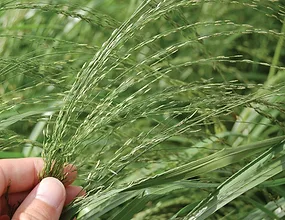
  • 63553-thomas-teff-seed-head.jpg

    Teff grass: Where it fits and where it doesn’t

    June 8, 2026
  • 0626pf-digital-edition-feature-spot.jpg

    June 1, 2026 Progressive Forage digital magazine

    June 1, 2026
    • Does forage quality have an equation?

      May 31, 2026

FREE NEWSLETTERS

Award-winning coverage of in-depth news and analysis to make your business more profitable.

SIGNUP TODAY
Advertisement
THE GUIDE

How do I get my company listed in your Buyers Guide? 
Submit a request to be listed for FREE in the Buyers Guide here. 

Why can I only see so many articles before I have to register for the site?
Find out why here.

How do I submit an idea for an article? 
Click here.

  • INDUSTRY NEWS
  • Forage Industry News

    Rock River Laboratory introduces family of brands

    May 15, 2026
  • Forage Industry News

    Breeding the future of alfalfa: Driving innovation amid industry consolidation

    November 28, 2025
  • Forage Industry News

    Producer-led Watershed Program causes ripple effect

    October 9, 2025
Advertisement

I'm looking for ________

Find the right products and services for your farm, ranch or operation.

CHECK OUT OUR BUYERS GUIDE
Advertisement
  • FEATURED PODCASTS
  • [Podcast] Being proactive about mental health with Jason Medows

    Progressive Forage
    Progressive Cattle
PERSONALIZED CONTENT
Create an account and see website content tailored to your operation.  It only takes a few seconds!
SEE RECOMMENDATIONS NOW!
Copyright © 2026 Progressive Publishing

MORE INFORMATION
  • About Us
  • Terms & Conditions
  • Privacy Policy
  • FAQs
  • Advertise
  • Shop
  • Stats Posters

OUR MAGAZINES
  • Progressive Dairy
    • Facebook
    • Twitter
    • Linkedin
  • Progressive Dairy — Canada
    • Facebook
    • Twitter
    • Linkedin
  • Progressive Dairy — en français
    • Facebook
  • Progressive Cattle
    • Facebook
    • Twitter
    • Linkedin
  • Progressive Cattle — Canada
    • Facebook
    • Linkedin
  • Progressive Forage
    • Facebook
    • Twitter
  • AgProud — Idaho
    • Facebook
    • Linkedin

CONTACT INFORMATION

Progressive Publishing
238 West Nez Perce (physical)
PO Box 585 (mailing)
Jerome, ID 83338


info@progressivepublish.com
(800) 320-1424
(208) 324-7513 (Main)
(208) 324-1133 (Fax)