We use cookies to provide you with a better experience. By continuing to browse the site you are agreeing to our use of cookies in accordance with our Cookie Policy.
  • Sign In
  • Create Account
  • Sign Out
  • My Account
subscribe / renew
  • Topics
    • All recent articles
    • Forage Analysis
      • Testing Forages
    • Forage Equipment
      • Baling Equipment
      • Forage Technology
      • Groundwork Equipment
      • Silage Equipment
      • Storage Equipment
    • Forage Harvest
      • Harvest Considerations
      • Harvest Issues
    • Forage Marketing
      • Pricing Forages
      • Selling Forages
    • Forage Planting
      • Crop Rotation
      • Seeds
    • Forage Production
      • Common Issues
      • Growing Issues
      • Irrigation
      • Pests & Weeds
      • Plant Health
      • Soil Health
      • Soil Sampling
      • Weather
    • Forage Selection
      • Alternative Forages
      • Commodity Crops
      • Ensiled Forages
      • Grasses & Legumes
      • Hay
      • Small Grains
    • Forage Storage
      • Baling
      • Ensiling
      • Transportation
      • Wrapping
    • Forage Business Management
    • Forage Farm Features
  • News
    • Forage Industry Issues
  • Blogs
    • From the Editor
    • Guest Blogs
    • Irons in the Fire
    • Outside Eden
    • Tales of a Hay Hauler
  • Buyers Guide
  • Current Issue
  • Past Issues
  • Advertise
  • Ask AgProud

Progressive Dairy

Progressive Dairy Canada

PD Canada en Francais

Progressive Cattle

Progressive Cattle Canada

Progressive Forage

Agproud Idaho

Home

Home » Topics » Forage Selection » Grasses & Legumes

Grasses & Legumes
Grasses & Legumes RSS Feed RSS

59097-decandio-bee-getty.jpg

The essential bond between honeybees and forage crops

There is a crucial yet often underestimated role of pollinators, particularly honeybees, in forage crop production. While domestic and native colonies face growing challenges, farmers can implement practical strategies to preserve and enhance pollinator populations.
February 12, 2024
Jaclyn De Candio

There is a crucial yet often underestimated role of pollinators, particularly honeybees, in forage crop production. While domestic and native colonies face growing challenges, farmers can implement practical strategies to preserve and enhance pollinator populations.


Read More
58962-lane.coreylewis.jpg

Filling the holes in your forage calendar

Stretching out grazing season with careful forage management strategies, thus shortening the time you have to feed stored forages, is the most direct way to reduce feed costs.
January 22, 2024
Woody Lane

Feed costs comprise 60% to 80% of the typical farm budget. If we can reduce those costs by 20% or even 10%, it will happily lower our break-even price. Read more about some grazing strategies to lessen the need for stored feed.


Read More
58912-kern-lunbery-graze-alfalfa-dixon.jpg

The physiology of pasture bloat

There is no number on a forage report that can tell you a stand is “safe” from bloat risk, but smart management can help reduce that risk.
January 15, 2024
Rebecca Kern-Lunbery

Alfalfa is a high-quality forage providing a high concentration of protein as well as energy. However, this is also what makes grazing alfalfa a bloat risk.


Read More
58764-lane-grass.jpg

It may not seem like much

By delaying grazing slightly in early spring so the grass grows taller and increases its DM percentage by a modest 20%, we boost the amount of energy available for lactation by 34%.
December 8, 2023
Woody Lane

Recently, I attended a meeting where the presenter spoke glowingly about a new miracle product his company was marketing. His PowerPoint slides dutifully showed fancy tables and graphs, but as I looked around the room, I noticed that some folks were beginning to nod off.


Read More
57846-twidwell-berseem-new.jpg

Annual clovers for poorly drained soils in the southeast U.S.

Livestock producers need to evaluate such factors as the seed cost and availability, forage production, reseeding ability, level of winter hardiness and bloat potential of these clover species before making their decision on which species to plant.
June 27, 2023
Ed Twidwell

Annual clovers that can be planted in the fall and grazed during the winter and spring months are popular additions to many livestock programs in the Southeast region of the U.S.


Read More
57815-scully-dairy-grazing.jpg

Grazing and greening the dairy industry

Grazing dairy farms simply have different ecological footprints than conventional dairies when used properly and if attainable.
June 19, 2023
Tamara Scully

Instead of the dairy farmer focusing on growing, harvesting and feeding rations, the focus changes to growing and managing pastures and controlling the cows’ utilization of those pastures with the goal to optimize cow nutrition, pasture quality, pasture yield and overall soil health.


Read More
57553-boylen-1.jpg

Virtual fencing: When to make the switch

Virtual fencing is not intended to replace all physical fencing, and in high-liability areas such as along busy roads, a physical perimeter fence is recommended.
May 9, 2023
Kelli Boylen

Virtual fencing allows graziers to control livestock placement and movement without physical fences.


Read More
57533-lane-illustration.jpg

Useful traits of sorghum

Summer pastures can offer a cornucopia of traits due to the three useful traits of sorghum that are present in the summer.
May 5, 2023
Woody Lane

Three traits have revolutionized the game of sorghum breeding.


Read More
57459-scully-grazing-holsteins.jpg

Grazing: Economies of scale to lower overhead costs

A three-pronged strategy puts cows out to rotationally graze well-managed pasture forages, focuses on labor efficiency and takes advantage of economies of scale to minimize the overhead costs per hundredweight of milk.
May 4, 2023
Tamara Scully

Milk production per cow will be somewhat decreased on pasture when compared to feeding in confinement. Per cow costs of milk production also decrease when dairy farms turn to managed rotational grazing and maximize cow numbers per acre.


Read More
57401-boylen-gosses.jpg

Managing every cent to get the most out of grazing

Experienced graziers share their methods of cash flow planning and cost-effective materials to manage their programs.
April 12, 2023
Kelli Boylen

Good pasture management requires a whole lot more than just putting animals out on a paddock.


Read More
Previous 1 2 3 4 5 6 7 8 9 … 32 33 Next
  • Progressive Forage
  • Porosity: The true measure of silage density

    June 11, 2026
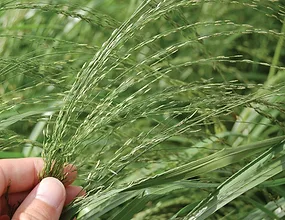
  • 63553-thomas-teff-seed-head.jpg

    Teff grass: Where it fits and where it doesn’t

    June 8, 2026
    • June 1, 2026 Progressive Forage digital magazine

      June 1, 2026

FREE NEWSLETTERS

Award-winning coverage of in-depth news and analysis to make your business more profitable.

SIGNUP TODAY
Advertisement
THE GUIDE

How do I get my company listed in your Buyers Guide? 
Submit a request to be listed for FREE in the Buyers Guide here. 

Why can I only see so many articles before I have to register for the site?
Find out why here.

How do I submit an idea for an article? 
Click here.

  • INDUSTRY NEWS
  • Forage Industry News

    Rock River Laboratory introduces family of brands

    May 15, 2026
  • Forage Industry News

    Breeding the future of alfalfa: Driving innovation amid industry consolidation

    November 28, 2025
  • Forage Industry News

    Producer-led Watershed Program causes ripple effect

    October 9, 2025
Advertisement

I'm looking for ________

Find the right products and services for your farm, ranch or operation.

CHECK OUT OUR BUYERS GUIDE
Advertisement
  • FEATURED PODCASTS
  • [Podcast] Being proactive about mental health with Jason Medows

    Progressive Forage
    Progressive Cattle
PERSONALIZED CONTENT
Create an account and see website content tailored to your operation.  It only takes a few seconds!
SEE RECOMMENDATIONS NOW!
Copyright © 2026 Progressive Publishing

MORE INFORMATION
  • About Us
  • Terms & Conditions
  • Privacy Policy
  • FAQs
  • Advertise
  • Shop
  • Stats Posters

OUR MAGAZINES
  • Progressive Dairy
    • Facebook
    • Twitter
    • Linkedin
  • Progressive Dairy — Canada
    • Facebook
    • Twitter
    • Linkedin
  • Progressive Dairy — en français
    • Facebook
  • Progressive Cattle
    • Facebook
    • Twitter
    • Linkedin
  • Progressive Cattle — Canada
    • Facebook
    • Linkedin
  • Progressive Forage
    • Facebook
    • Twitter
  • AgProud — Idaho
    • Facebook
    • Linkedin

CONTACT INFORMATION

Progressive Publishing
238 West Nez Perce (physical)
PO Box 585 (mailing)
Jerome, ID 83338


info@progressivepublish.com
(800) 320-1424
(208) 324-7513 (Main)
(208) 324-1133 (Fax)