We use cookies to provide you with a better experience. By continuing to browse the site you are agreeing to our use of cookies in accordance with our Cookie Policy.
  • Sign In
  • Create Account
  • Sign Out
  • My Account
subscribe / renew
  • Topics
    • All recent articles
    • Animal Welfare
      • Animal Handling
      • Cow Behavior
      • Welfare Standards
    • Barns
      • Barn Design
      • Bedding
      • Bird Control
      • Cow Comfort
      • Cow Cooling
      • Cow Flow
      • Expansion
      • Flooring
      • Fly Control
      • Lighting
      • Pen Design
      • Stalls
      • Ventilation
    • Calves & Heifers
      • Calf & Heifer Health
      • Calf & Heifer Nutrition
      • Calf Housing
      • Colostrum
      • Heifers
    • Feed Ingredients
      • Additives
      • Byproduct Feeds
      • Carbohydrates
      • Fiber
      • Minerals
      • Protein
      • Supplemental Fats
      • Trace Minerals
      • Vitamins
    • Feed Management
      • Bunk Management
      • Feed Evaluation
      • Feed Storage
    • Forage Types
      • Alfalfa
      • Alternative Forages
      • Grasses & Grazing
      • Silage
    • Genetics
      • Breeding Protocols
      • Breeding Strategy
      • Crossbreds
      • Indexes
      • Purebreds
      • Traits
    • Herd Health
      • Animal Monitoring
      • Antibiotics
      • Diagnostic Tests
      • Digestive Issues
      • Dry Cows
      • Fresh Cows
      • Infectious Disease
      • Mastitis
      • Metabolic Disease
      • Vaccination
    • Hoof Health
      • Digital Dermatitis
      • Hoof Care
      • Lameness
      • Lesions
    • Manure
      • Carcass Disposal
      • Greenhouse Gases
      • Manure Analysis
      • Manure Application
      • Manure Handling
      • Manure Solids
      • Manure Storage
      • Nutrient Management
      • Renewable Energy
      • Solid-Liquid Separation
    • Milking Equipment
      • Milk Storage
      • Milking Robots
      • Milking Sanitation
      • Milking Systems
      • Parlor Types
      • Teat Prep Equipment
    • Milk Quality
      • Udder Hygiene
      • Parlor Hygiene
      • Milk Production
      • Milk Components
    • Ration Formulation
      • Digestion
      • Dry & Transition Cow Diets
      • Lactating Cow Diets
    • Reproduction
      • Breeding Equipment
      • Repro Management
      • Repro Technology
    • Technology
      • Management Software
    • Business Management
      • Consultants
      • Employees
      • Finances
      • Profitability
      • Risk Management
      • Succession Planning
      • Training Tools
      • Working with Family
    • Dairy Farm Features
    • Special Topics
      • Christmas
      • Dairy Activities
      • June Dairy Month
      • Niche Marketing
      • State of the Dairy Industry
      • Women in Dairy
  • News
    • Dairy Demand
    • Dairy Foods
    • Dairy Industry Issues
    • Dairy Trade
    • Events
    • Milk Marketing
    • Milk Processing
  • Blogs
    • From the Editor
    • Guest Blogs
    • Faber’s Food for Thought
    • HERd Management
    • Just Dropping By
    • Life on the Family Farm
    • The Milk House
    • Tim the Dairy Farmer
  • Podcasts
  • Buyers Guide
  • Magazine
    • Current Issue
    • Past Issues
  • Ask AgProud
UsCa

Progressive Dairy

Progressive Dairy Canada

PD Canada en Francais

Progressive Cattle

Progressive Cattle Canada

Progressive Forage

Agproud Idaho

Home

Home » Topics » Progressive Dairy

Progressive Dairy
Progressive Dairy RSS Feed RSS

0707 PD: How to feed cows during heat stress

July 6, 2007
Now is the time to think where changes can be made on the dairy to lessen the impacts of hot weather on dairy cows. Besides changing the cow’s environment to lessen the effects of heat stress, dairymen may also modify their feeding program in order to give their animals additional relief during hot weather. The main objective of feeding cows during heat stress should be to maximize feed intake.
Read More

0707 PD: Quality forages make the most milk

July 6, 2007
Profitable dairies will pay attention to forage production and management this year, says nutritionist Aaron Naber. It’s one of three keys to profitability in 2007, he says, all dairy producers should remember. “The dairy producers that manage forages and have the ability to feed high-forage diets are generally at the top of the heap,” Naber says.
Read More

0707 PD: Do your cattle have sub-clinical vitamin deficiencies?

July 6, 2007
Clinical vitamin deficiency as characterized by classic deficiency symptoms is rare in well-managed dairy herds. Occasionally deficiency symptoms are noted in calves or growing heifers fed poor-quality diets. Of greater concern is the occurrence of sub-clinical vitamin deficiency where classic deficiency symptoms are not observed but where the normal functioning of body systems (i.e., immunity, reproduction, intermediary metabolism) is compromised by marginal vitamin status at the tissue level.
Read More

0707 PD: Know when to consider using feed additives

July 6, 2007
What do we feed a cow? Cows can make milk from grass. A cow can produce more milk when they are fed ingredients with more energy. Do cows produce more milk with feed additives? The basic ingredients of a ration fed to a cow are alfalfa, silage and corn grain. These ingredients together contribute fiber, protein, energy and calcium for the cow. Other feedstuffs can be added to better balance the ration, lower the feed cost and may produce more milk. Many of the feedstuffs are byproducts.
Read More

0707 PD: The history of protein nutrition: It’s whispering, 'Balance for amino acids'

July 6, 2007
The understanding of protein nutrition in dairy cows has been something of a challenge for dairy scientists and researchers over the years. This is largely due to the fact that a cow is a ruminant which causes her to have two sets of protein requirements: one for the microbes in the rumen and the second for her general metabolism. Protein metabolism in a ruminant goes through a different process than that of mono-gastric species such as swine and poultry. A better understanding of protein nutrition in our dairy cows has become necessary in recent years to:
Read More

0707 PD: My pioneer trek

July 6, 2007
The brown water from my body has swirled down the drain along with the grime and oil from my matted hair. The stench from the sweat under my armpits has given way to the sweet smell of deodorant. My teeth sparkle with fresh toothpaste, and the scarlet sunburn on my face has turned golden tan.
Read More

0707 PD: Update on antibiotic residue avoidance in milk and dairy beef

July 6, 2007
Antibiotic residues in milk and dairy beef are an important food safety issue. Dairy owners, managers and employees play a major role in food safety and in shaping consumers’ perceptions about food. Antibiotics in milk and beef may cause severe allergic reactions in persons with antibiotic sensitivity. In the dairy processing plant, antibiotics in milk can interfere with cheese and yogurt production.
Read More

0707 PD: Improve feed efficiency in dairy replacement heifer feeding programs

July 6, 2007
The goals of a dairy replacement management program are to rear heifers at a low economic and environmental cost without compromising future lactation performance. To meet these objectives, bred heifers are commonly fed diets containing low-cost, high-fiber forages which meet the low energy requirement of bred replacement heifers. Feeding bred heifers low-energy, high-fiber forages also helps minimize overconditioning at calving, which can be detrimental to lactation performance.
Read More

0707 PD: Achieve maximum growth potential of replacement heifers through management and nutrition

July 6, 2007
Raising replacement heifers is often looked upon as a major cost on the farm without a return on the investment until the animal begins its first lactation. As a result, heifers are often fed the cheapest feed available with minimum inputs on facilities and labor until they approach the time of calving. Efforts to improve management and nutrition of the dairy replacement heifer, in order to decrease the age at first calving, have been labeled as an “accelerated heifer growth program.”
Read More

0707 PD: Make your case for a quality dairy replacement program

July 6, 2007
Replacements are an investment in the future of a dairy, and they are significant, often representing 15 to 20 percent of the total cost of milk production, which is second only to dairy feed costs. The likelihood of a positive payoff on those investments is dramatically improved when the management team has a system in place that generates quality heifers.

Read More
Previous 1 2 … 1901 1902 1903 1904 1905 1906 1907 1908 1909 … 1931 1932 Next
  • RECENT ARTICLES
  • 1026pd-digital-edition-feature-spot.jpg

    June 12, 2026 Progressive Dairy digital magazine

    June 12, 2026
  • 63471-coyne-63471E.jpg

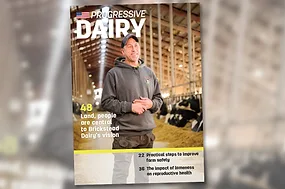
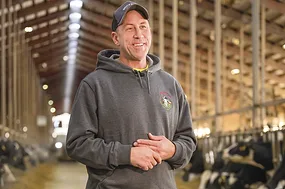
    Brickstead Dairy at forefront of industry progress

    June 12, 2026
    • The Courage to Evolve: Mothers

      June 12, 2026

FREE NEWSLETTERS

Award-winning coverage of in-depth news and analysis to make your business more profitable.

SIGNUP TODAY
Advertisement
THE GUIDE

How do I get my company listed in your Buyers Guide? 
Submit a request to be listed for FREE in the Buyers Guide here.

Why can I only see so many articles before I have to register for the site?
Find out why here.

SUBSCRIBE to Leading Industry Magazines

Award-winning coverage of in-depth news and analysis to make your business more profitable.

Subscribe/Renew
Advertisement

I'm looking for ________

Find the right products and services for your farm, ranch or operation.

CHECK OUT OUR BUYERS GUIDE
Advertisement
  • FEATURED PODCASTS
  • [Podcast] Changing the Rules of Pre-Fresh Dairy Cows

    Progressive Dairy
    Podcasts
    SPONSORED BY Applied Biotechnologies Inc.
  • [Podcast] Selling Calves in a Record Market: What Ranchers Need to Know Right Now

    Progressive Cattle
    Podcasts
    SPONSORED BY Superior Livestock Auction
PERSONALIZED CONTENT
Create an account and see website content tailored to your operation.  It only takes a few seconds!
SEE RECOMMENDATIONS NOW!
Copyright © 2026 Progressive Publishing

MORE INFORMATION
  • About Us
  • Terms & Conditions
  • Privacy Policy
  • FAQs
  • Advertise
  • Shop
  • Stats Posters

OUR MAGAZINES
  • Progressive Dairy
    • Facebook
    • Twitter
    • Linkedin
  • Progressive Dairy — Canada
    • Facebook
    • Twitter
    • Linkedin
  • Progressive Dairy — en français
    • Facebook
  • Progressive Cattle
    • Facebook
    • Twitter
    • Linkedin
  • Progressive Cattle — Canada
    • Facebook
    • Linkedin
  • Progressive Forage
    • Facebook
    • Twitter
  • AgProud — Idaho
    • Facebook
    • Linkedin

CONTACT INFORMATION

Progressive Publishing
238 West Nez Perce (physical)
PO Box 585 (mailing)
Jerome, ID 83338


info@progressivepublish.com
(800) 320-1424
(208) 324-7513 (Main)
(208) 324-1133 (Fax)