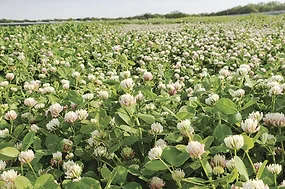
The USDA estimates indicate that forage and grassland resources cover more than half of U.S. land area – roughly 55% – and support a livestock sector generating tens of billions of dollars in annual farmgate sales.

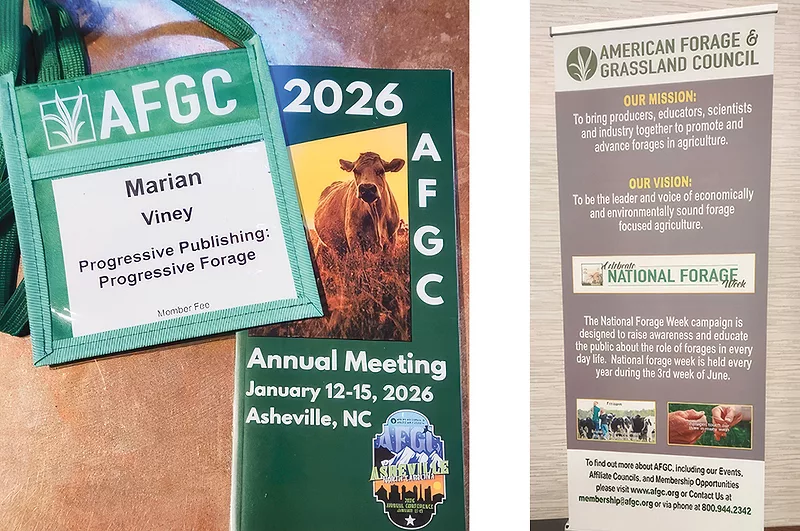
That level of national impact is why the American Forage and Grassland Council (AFGC) Conference plays such a critical role. This year, the event was held on Jan. 12-15 in Asheville, North Carolina. The event brought together 325 attendees from 31 states and four countries who steward these landscapes, advance the science and keep the industry resilient.
Now in its 82nd year, AFGC remains committed to a clear mission: bringing producers, educators, scientists and industry leaders together in a united effort to promote, enhance and advance the role of forages in agriculture. That mission was on display throughout the week – from competitions that spotlight excellence to workshops that drive the industry forward and to producer stories that resonate.
AFGC hosted six competitions, each supported by long-standing partners: the Forage Spokesperson Competition sponsored by Tucker Family Farms; the Emerging Scientist Competition sponsored by Corteva Agriscience; the Photo Contest sponsored by Hay & Forage Grower; the Forage Bowl sponsored by the Forage and Grassland Foundation and Henrietta Baylor; the Hay Evaluation Contest sponsored by the Southeast Hay Contest; and the Plant ID Contest sponsored by Mississippi State University.
Winners of the Forage Spokesperson Competition include:
- First: Jonathan R. Fordham, Georgia Forage and Grassland Council
- Second: Dustin Johnson, Indiana Forage Council
- Third: Camren Maierle, Ohio Forage and Grassland Council
Winners of the Emerging Scientist Competition include:
- First: Reagan Bustabad, University of Tennessee
- Second: Kevin Roger Trumpp, University of Florida
- Third: Jonathan Stephens, University of Kentucky
(A complete list of competition winners and AFGC award winners will be featured in the March issue.)
The conference also featured a keynote address from Jamie Ager of Hickory Nut Gap Farms, who reflected on 25 years of pasture‑based meats – a story rooted in family, landscape and the evolution of consumer expectations. His message balanced history with a look toward the future, underscoring how diversified, grass‑based systems can remain economically viable and ecologically grounded.
A panel discussion with Roger Gates, Kyle Mayberry and Matt Poore pushed that conversation further, asking a question many in the industry are wrestling with: What is the destination for regenerative agriculture? Their discussion acknowledged the momentum behind regenerative practices while emphasizing the need for shared definitions, measurable outcomes and regionally relevant pathways that work for producers.
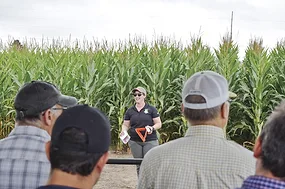
On Thursday, 55 attendees went on a tour that was sponsored by the North Carolina Forage and Grassland County, North Carolina’s Association of Pasture Management Systems. They toured Biltmore Farms, a pioneering agriculture enterprise established by George W. Vanderbilt to promote innovative sustainable farming practice in western North Carolina; and Hickory Nut Gap Farms, a family-run farm in western North Carolina known for its commitment to sustainable, regenerative agriculture.
The week underscored a simple truth: When more than half of the nation’s landscape depends on healthy forage systems, the work of this community matters. AFGC’s 82‑year legacy continues to strengthen the people and practices that keep those acres productive, resilient and ready for the future.
Save the date: The AFGC 2027 Annual Conference will be held Jan. 11-14, 2027, in Knoxville, Tennessee.