Whether referred to as wild, feral, pigs, boars, swine or hogs, these adaptable animals are an invasive species steadily encroaching into over 35 U.S. states and several Canadian provinces. Brought to North America in the 1500s by settlers as a food source, these invaders used their high growth rate, early sexual maturity, strong fertility and adaptiveness to variable climates and habitat conditions to build their numbers to over 6 million in the U.S.

“This feral species reproduces quickly, but they also move and travel quickly, so accurately numbering them is a challenge,” says Rosslyn Biggs, assistant clinical professor and beef cattle extension specialist at Oklahoma State University.
Oklahoma is home to approximately 1.5 million feral swine, second only to Texas’s 3 million.
“Having bled many feral hogs for surveillance in my veterinary career, it’s become obvious these are not domesticated animals,” Biggs says. “They’re aggressive and dangerous to farmers, ranchers and working dogs. We have them on our farm and don’t go without a firearm because of potential interactions. They’re highly destructive and feral in every sense of the word.”
Direct impact on livestock production
Cattle production isn’t immune from feral swine influences, as they pose a multiphase concern to all commodity and livestock groups. Most obviously, they cause direct physical damage to pastures, forage fields, fences and crops. They dig large holes, often making driving difficult and even dangerous.
“Pasture damage is a huge issue with wild pigs,” says Aaron Sumrall, director of outreach, education and research at Pig Brig, the makers of a multicatch feral hog trapping system. “They root to forage, overturn and alter soil composition, and damage not only natural habitats but tame pastures and forages. They kill plant species, encourage weed competition and spread invasive plant species.”
As omnivores, at least 80% of feral hogs’ diets are vegetation, plant matter and forbs. When above-ground resources are scarce, they attack roots and tubers, reducing grass productivity levels, driving a prolonged loss of grazing availability and even forcing pastures out of production.
Regarding grazing, Sumrall explains that every 1,200 pounds of wild pork equals one cattle stocking unit. If removed, extra animal units could be added; a denser, taller forage height maintained; and better management options identified.
“Most cattle producers don’t consider wildlife populations when setting stocking rates,” says Sumrall. “Wild pigs are a direct competitor and impact all pasture-based livestock management.”
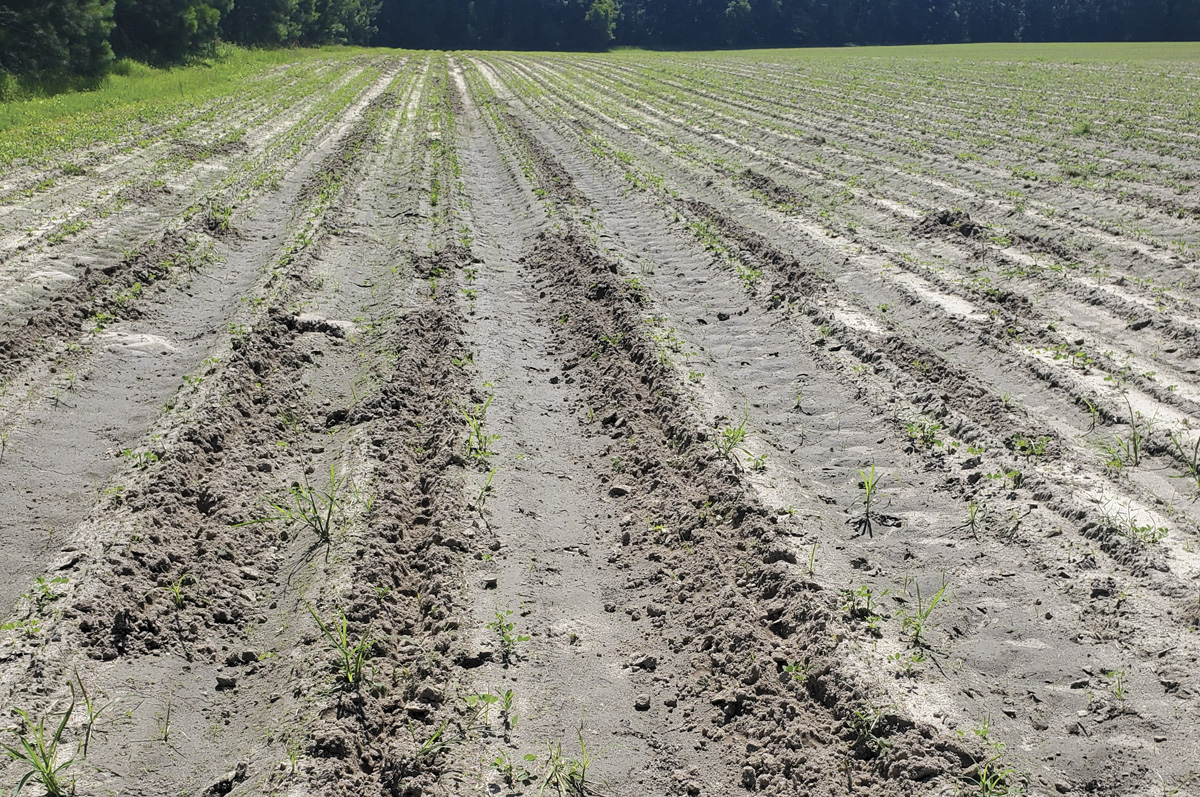
Wild hogs can quickly decimate crops, pastures and fences as they root for forage. Image provided by James Beasley, University of Georgia.
The indirect influence of disease
Transmissible diseases such as brucellosis, tuberculosis, leptospirosis, trichinosis and African swine fever (ASF) surpass all other concerns. As feral swine wander through grazing areas, there’s potential for direct interaction, but indirect interactions through shared water sources and troughs, mineral blocks, creep feeders, and vitamin and molasses stations cause greater alarm. While ASF isn’t a direct threat to the cattle industry, the possibility of livestock moving the virus from infected to domestic clean pigs is a major fear. Transporting domestic hogs to processing locations often involves the same semitrailers cattle operations use to move animals from feedlots to packing plants.
“We need to emphasize the existing zoonotic disease threats,” Sumrall stresses. “Especially with ASF being such a large concern, there’s a huge worry of stop orders being placed on all transportation capable of moving the disease. If this happens, it could last for months and mean millions of dollars in losses daily for any of the livestock sectors.”
Biggs fears what might happen should feral swine introduce a case of foot-and-mouth disease into the U.S., as Germany has already experienced.
“It’s the worst-case scenario for all our cloven-hoofed populations, as it would move like wildfire, spreading more rapidly than planned,” she says. “We don’t have a good way to control this.”
Environmental concerns
James Beasley, a professor of wildlife management at the University of Georgia, has extensively researched wild pigs. He says beyond direct and indirect threats, feral swine are highly associated with water as they are poor thermoregulators.
“They love to be in the water, concentrating their movements in wetlands, drainage areas and riparian zones,” Beasley says. “They consume amphibians and degrade riparian areas by rooting them up, which facilitates erosion. They shed E. coli from their feces and decrease water quality for wildlife and livestock.”
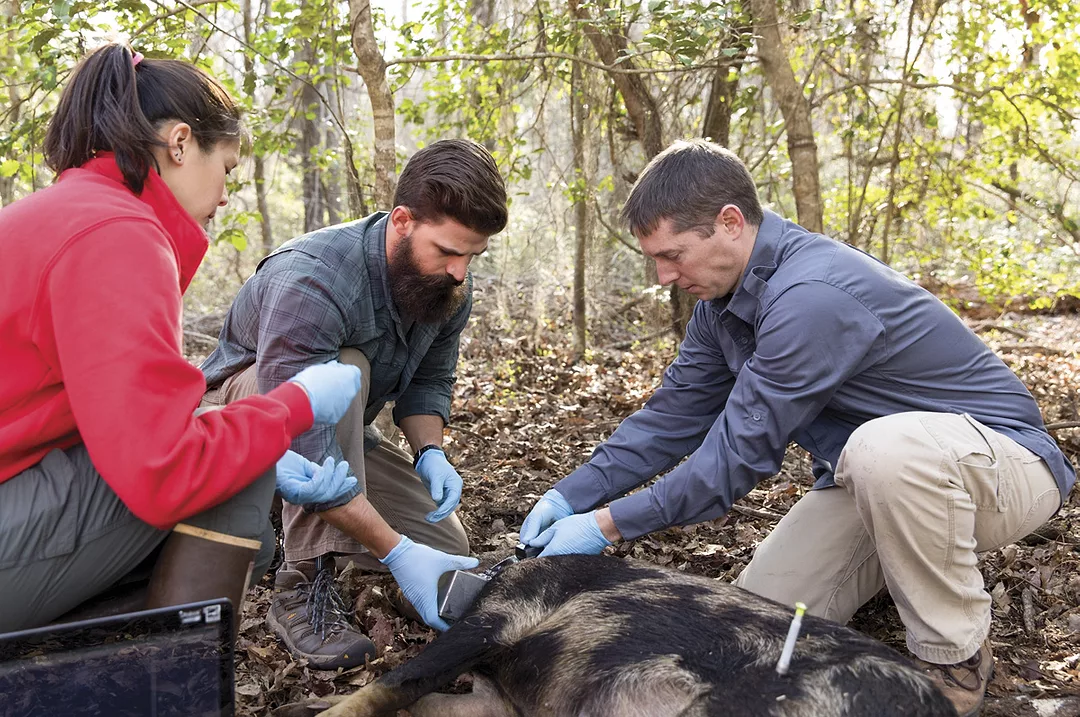
Beasley’s numerous research projects have placed hundreds of GPS-enabled radio collars on wild hogs with a central focus on understanding how they utilize the landscape.
“We’re discovering the factors shaping their movements when they face management pressures, analyzing how bait influences their behavior and attempting to use this information to our advantage by optimizing our control methods,” he explains.
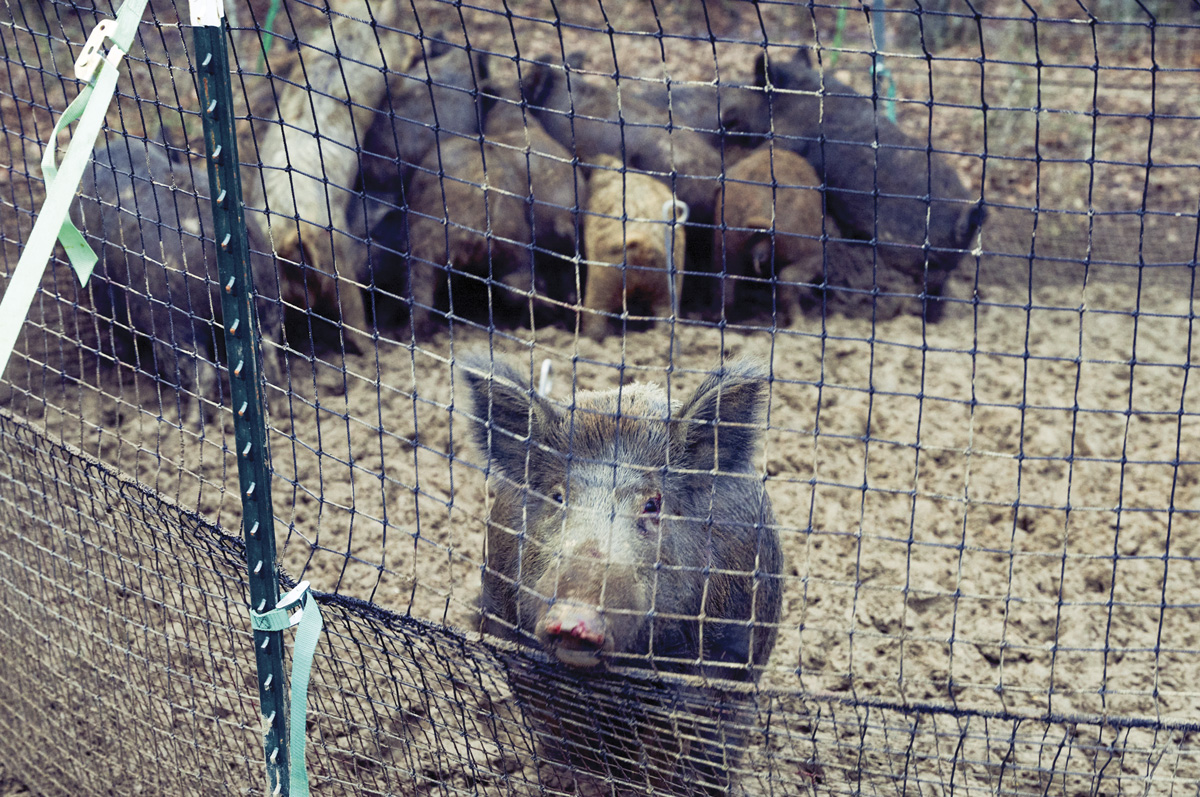
Trapping and removing feral swine from farm and pasture land has historically proven difficult, but we are gaining a better understanding of how they move, reproduce and behave. Image courtesy of Pig Brig.
Potential solutions
Beasley believes the potential solution to controlling and eradicating these pests is complicated due to many views on their negative impacts.
“Since they’ve been promoted as a huntable animal for generations, there’s an entrenched interest and culture involved with pig hunting,” he says. “People hold mixed views on what the ideal population should look like. As trapping and hunting regulations vary from state to state, and numerous federal programs connected to biologists and wildlife managers institute differing strategies and regulations, control methods are disjointed.”
Biggs emphasizes that it’s important hunters and trappers understand the regulations.
“The challenge is they’re an invasive, not a native, species,” she says. “We don’t want to manage them. Eradication using programs such as the USDA, APHIS and Wildlife Services is how we deal with these pests.”
Sumrall points to Germany as an example of a country moving from a catastrophic situation to virtually an observational status in only a few years by using good management and a coordinated effort between agencies, associations and private landowners. He believes U.S.-based approaches and control strategies don’t need to be excessively time-consuming, expensive, input-demanding or effort-sapping.
“Our agricultural industry needs to be aware this is not a wildlife situation but a societal situation with the potential of a direct impact on our food supply,” Sumrall says. “Control plans and strategies must stay at the forefront as good managers make good advocates in this challenge. This disease threat will drive up prices, affecting everyone who eats, lives in a house or wears clothes. It’s not selective.”