Dairy farming, like any other industry, operates with clear goals and strategic plans. In automated dairy systems, a vast array of data is collected from a variety of performance indicators. With data available at every turn, the sheer amount of information collected at every step of the milking process can be overwhelming. To fully capitalize on automated milking technology, producers must focus on strategic, data-driven management.

Setting goals
After investing in an automated dairy facility and navigating the startup, training and transition periods for both cows and management, the next step is optimizing performance. Key performance indicators (KPIs) provide a structured way to track and improve outcomes. Utilizing KPIs allows us to focus on targeted strategies, improve workflow efficiency and make data-driven decisions that drive farm profitability.
A well-designed KPI should:
- Support better decision-making and enable monitoring of efficiency, behavior, economic factors and overall performance
- Provide benchmarks to evaluate progress over time
- Be measurable and directly aligned with farm-specific goals and strategies
Now that the importance of KPIs is understood, let's explore how they apply to different aspects of robotic dairy farming.
Cows: Optimizing lactation and production
Some of the most common automated dairy KPIs include:
- Average days in milk
- Percentage of first-lactation cows and two-plus-lactation cows
- Somatic cell count (SCC)
- Days open and pregnancy rate
- Butterfat content
- Number of cows per robot (capacity)
Defining the KPIs that best fit your herd can help increase your profitability. One often-overlooked metric is yield per milking rather than milkings per cow per day, also known as yield per robot versus cows per robot. With a cow's natural lactation curve divided into early lactation, peak lactation, mid-lactation and late lactation, focusing solely on the number of milkings per day does not provide a full picture, especially for mid- and late-lactation cows. Instead, optimizing the amount of milk harvested per milking ensures that cows in later lactation do not take up unnecessary robot time, improving efficiency.
Milking permissions: Milking at the right time
To optimize milking, it is important to understand the different stages of lactation, peak production days and individual cow yield data.
- Early lactation: Frequent visits to the robot encourage peak production and successful training.
- Post-peak lactation: Prioritize high-yielding cows while reducing milking frequency for post-peak cows, allowing better resource allocation.
- Late lactation: Gradually reduce milking frequency to prepare cows for dry-off.
Tracking peak yield days and expected yield per hour allows producers to tailor milking permissions to their herd's specific needs, optimizing efficiency and maximizing profitability.
Comparing milkings per day versus yield per milking
The two scenarios in Table 1 and Table 2 break down two different KPIs: one prioritizing milkings per day versus the other focusing on yield per milking. In both situations, the average herd production and number of cows per robot remain the same.
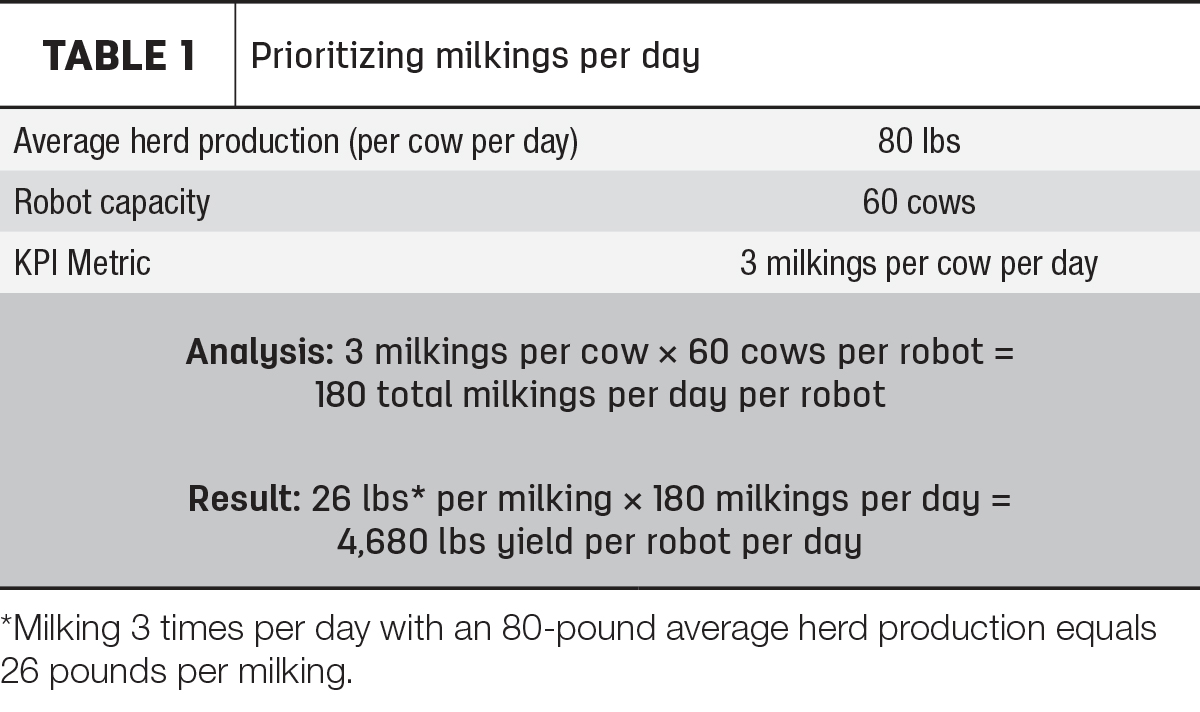
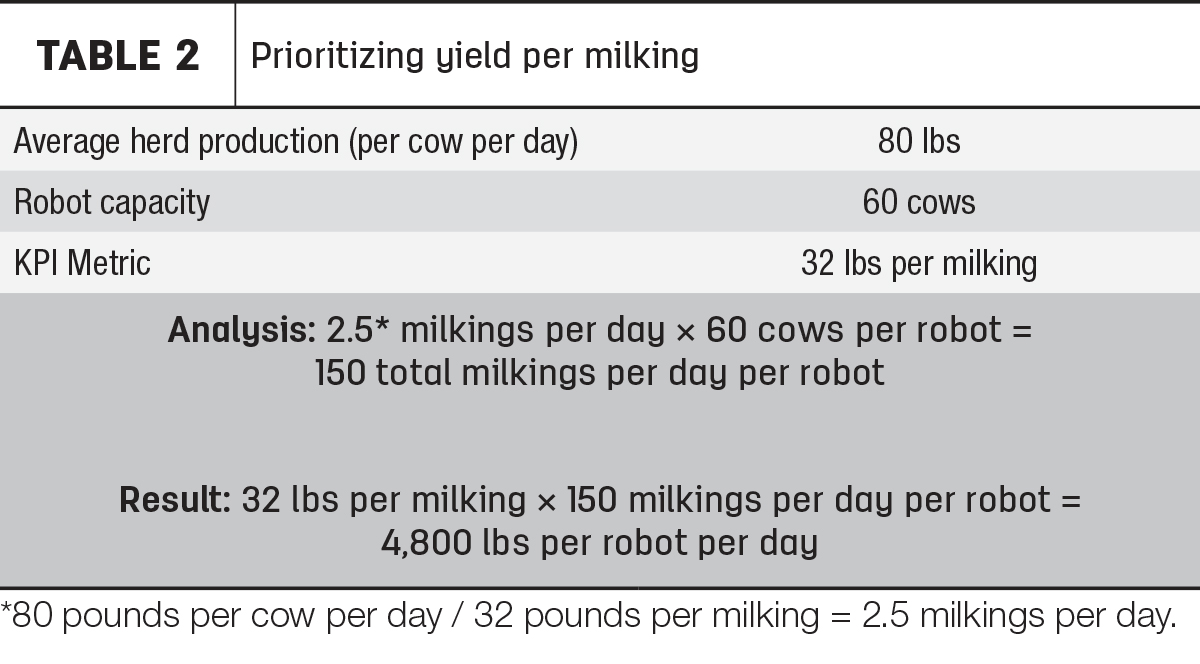
Even though many factors between the scenarios remain the same, the KPI differentiation leads to different outcomes. Focusing only on milkings per day can result in missed opportunities to milk the right cows at the optimal time, leading to inefficiencies in the process.
By adjusting the milking strategy, the second scenario results in an additional 120 pounds of milk per robot per day, simply by modifying milking permissions to prioritize yield per milking instead of milkings per day.
Robotic equipment: Ensuring performance efficiency
Just as all farming equipment requires regular maintenance, automated milking systems need routine servicing as well. Optimal results are achieved when equipment has been maintained and evaluated for efficiency and reliability regularly.
Key equipment KPIs include:
- Incomplete milkings per robot
- Kickoff occurrences
- Milking time per cow
- Attachment time
Our service technician Jose Origel emphasizes that these KPIs – collectively known as “milking incidents” – directly affect efficiency. By prioritizing equipment functionality and accountability, farms can enhance both cow management and overall profitability.
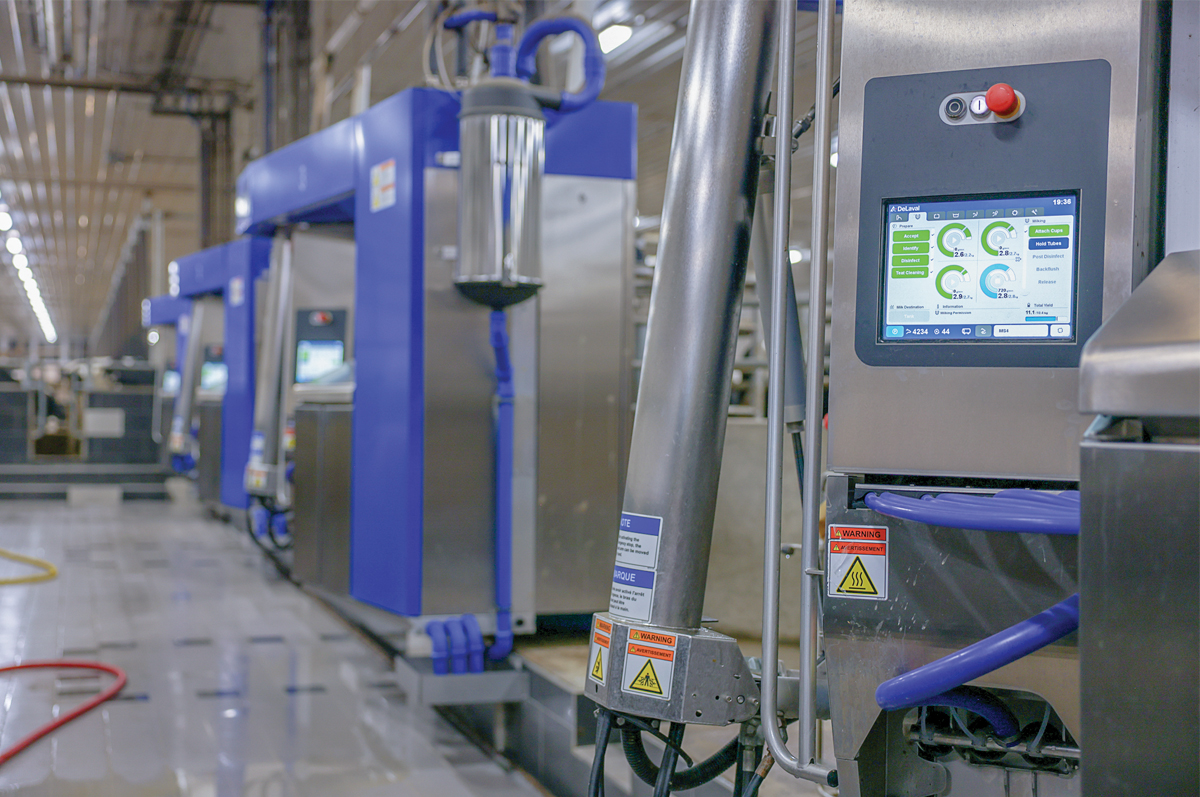
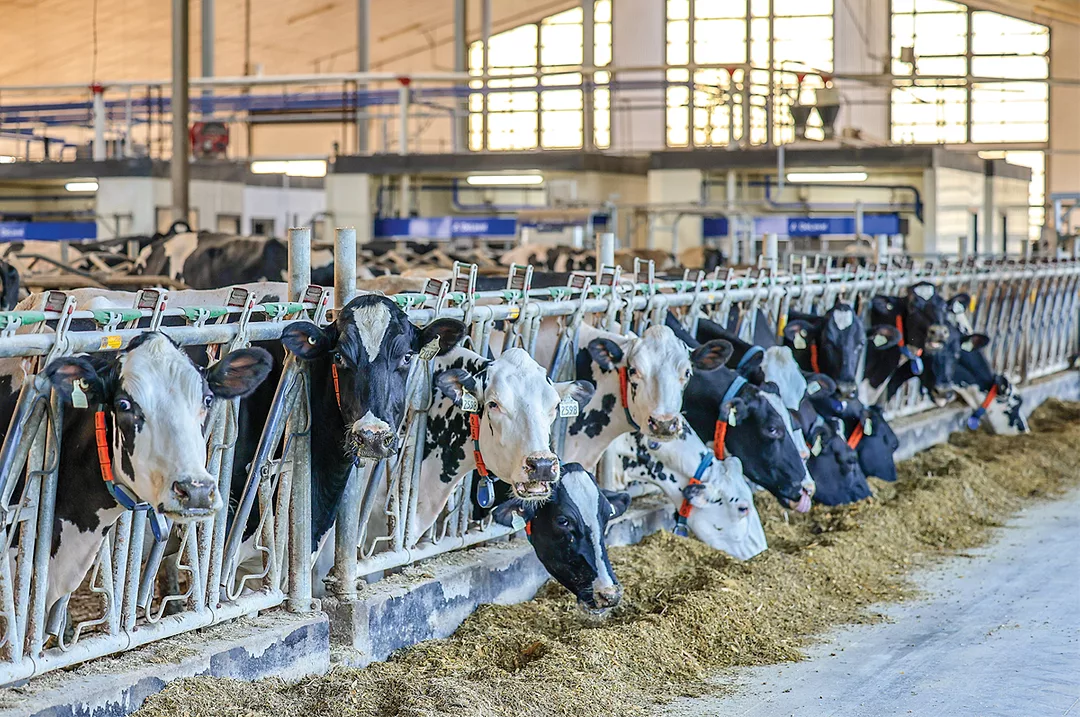
By optimizing every aspect of automated dairy farming, from milking permissions to equipment maintenance, producers can transform raw data into tangible results. Image courtesy of DeLaval.
Management: Defining workflows and daily routines
Automated milking provides detailed data to establish clear workflows across different shifts or management levels. It’s beneficial to:
- Track chores per hour per robot
- Monitor fresh-cow training success
- Measure commitment pen wait times (for guided-flow systems)
- Assess milking intervals across lactation stages (for free-flow systems)
Transitioning to automated milking requires daily, weekly and monthly task schedules. While robots reduce traditional labor needs, routine cow checks remain essential.
To maintain cow flow and minimize disruptions, limit major chores to one per day. Tasks such as vet checks, hoof trimming, footbaths and new-cow training can impact barn movement. Scheduling them strategically ensures efficient herd management.
The bigger picture: Aligning all aspects for success
The future of dairy farming isn’t just about automation – it’s about strategy. Automated milking technology offers an unprecedented level of data and control, but success isn’t guaranteed by simply installing the equipment. It comes down to how well producers interpret the numbers, adjust their management practices and fine-tune their approach.
KPIs serve as more than just benchmarks; they tell a story of efficiency, cow health and overall farm performance. Producers who embrace a data-driven mindset – one that values precision over routine – stand to gain the most from their investment. By optimizing every aspect of automated dairy farming, from milking permissions to equipment maintenance, producers can transform raw data into tangible results: healthier cows, improved efficiency and a more profitable, sustainable future.