Good fencing is an integral part of any farming operation. Even if most of your forages are harvested and sold and not grazed, there may come a time when grazing and therefore fencing is needed in your farming operation.

As forage growers, fencing input costs are not typically considered or frequently built into the operational budget. Fencing can be a rather costly endeavor, particularly if you want to put up a permanent fence around your fields. However, depending on your forage production goals, a temporary fence can be used in many leased grazing situations.
When determining what type of fence to put into place, an operation should first consider the goal of the field or land that will be potentially fenced. To keep things simple, fences can be classified as either permanent or temporary structures. Permanent fences are typically installed using higher-quality materials that will ideally last 20 years. These fences will also usually include corner braces, permanent gates, H-braces and typically follow property or field lines. This type of fencing requires regular maintenance on an annual or seasonal basis.
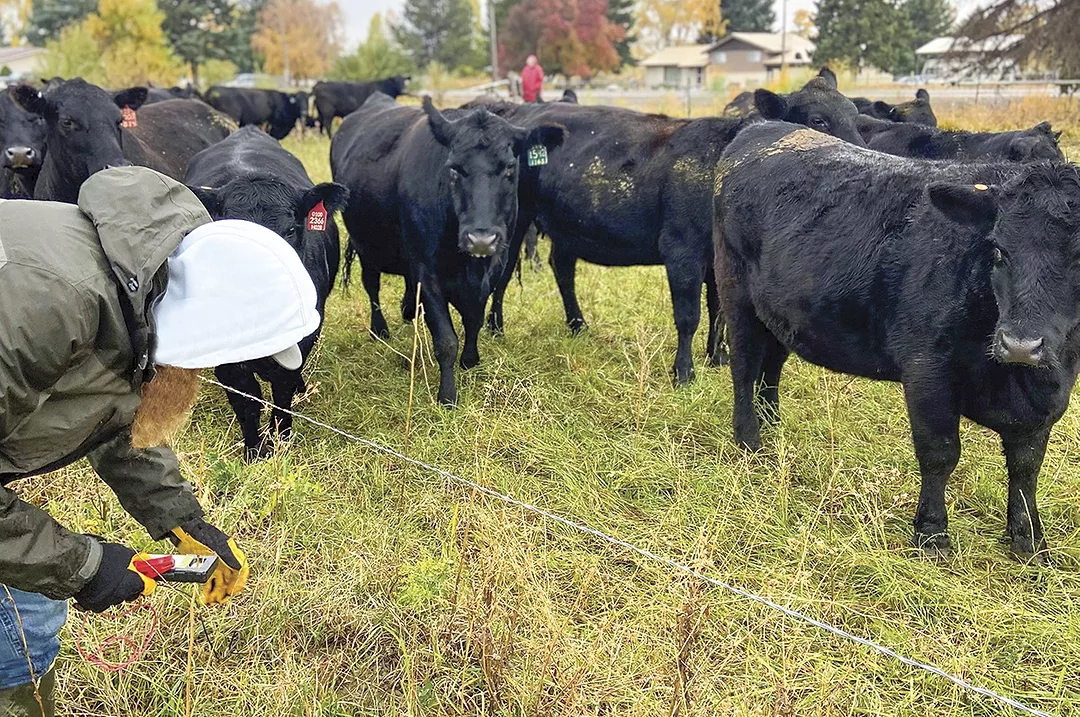
Temporary fences, on the other hand, are typically installed using lower-cost materials. These fences are only meant to be utilized for short-term grazing, such as part of the grazing season. This type of fence structure doesn’t require intensive building materials but does require being energized by solar or battery-powered chargers to keep the fence “hot,” which deters livestock from leaving their designated area.
Inevitably, this question always arises: "Do I really need to fence this field?" Typically, this comes up when you are either purchasing or leasing a new pasture or field or revitalizing or repurposing old hayground, whether by reseeding the field or implementing cover crops.
If you are purchasing or leasing a new piece of ground, you need to ask yourself a few questions, starting with: What is the long-term goal of this ground? If you only plan to use it for hay, then you most likely won’t need to consider fencing in most cases, although a perimeter fence may be beneficial to exclude wandering livestock. However, if you would like the option to graze it, then you need to consider how often that might occur and if it is worth the cost to put up a permanent fence.
If you live in a climate where your last cutting of hay is not always guaranteed, whether that be due to rainfall, snow or freezing temperatures, it may be in your best interest to have permanent fencing available. This will enable you to utilize that final cutting of hay as late-season grazing.
If you are raising alfalfa, be sure not to graze until after the first frost, which will drastically minimize the risk of bloat. Another reason why permanent fencing may be needed is if you plan to revitalize your pasture using cover crops with oats or other added fillers into a new seeding. Being able to exclude livestock from specific locations is essential, especially when using a multispecies cover crop mix.
Not all crop species included in cover crop mixes will dry down well for baled hay; for this reason, having fences available and utilizing cattle grazing would be a better option to still get the most use out of the cover crop. As an added benefit of grazing, cattle will typically return much of the grazed nutrients back to the soil through manure and urine. This not only cuts down on your need for fertilizer and compost but also helps cut down on your need to run equipment in the reestablishment of your field.
There are also a lot of uses for temporary fencing. You can use temporary fencing in almost every case where you would use a permanent fence, especially if you are new to a field or pasture and are unsure of how you want to lay out the fencing. As you become familiar with new ground, you may start to think to yourself: "I really wish I had put that gate in the northeast corner, not the northwest corner." For this reason, it is sometimes easier to start out with a temporary fence and then build a permanent fence in the following years once you are acquainted with the layout and best utilization of the land.
Temporary fencing can also be efficiently used in rotationally grazed systems. Rotational grazing is the practice of routinely moving livestock between different sections of a pasture, rotating from one section to the next. This allows for more uniform grazing and allows the previously grazed sections to rest and recuperate. By implementing this practice in a pasture setting, you can achieve higher-quality grazing for your livestock as well as higher forage yields.
The number one deterrent of fencing is typically cost. Developing a budget, as well as planning out effective use of ground, is instrumental in determining the cost-effectiveness of building permanent or temporary fences. Permanent fences are typically constructed from barbed wire with metal or wooden posts. The installation of a four-strand barbed wire fence typically costs from $1.25 to $3.50 per linear foot. This cost can be altered by the quality of the materials, terrain of the pasture and size of the field.
While temporary fences are overall less expensive, costing from 25 cents to $1.50 per linear foot, they do have some hefty upfront costs. Temporary fences, which are typically energized and use an electric shock to contain or exclude livestock, must have a power source, routinely from a solar-powered or battery-powered fence charger. They also require daily care and maintenance to ensure their effectiveness. Livestock can sense when an electric fence is not charged and can easily get out of the fenced area. If a wire is not connected properly, there is something touching the wire causing a short or the charger has turned off, livestock will not be contained or excluded from the area. Installing temporary fences, however, does take significantly less time; for a field approximately 100 acres in size, it can be done within a day if you have the materials needed on hand. However, installing a permanent fence takes significantly more time, taking a few days to a couple of weeks, depending on the field size and terrain.
Clearly, there is a lot to consider when deciding if fencing is necessary for your fields. If fencing is deemed beneficial, the type of fence best suited to the use of the field will need to be decided. For fields that will be grazed annually, including late-season grazing, a permanent fence may be in your best interest.
For most farmers and ranchers, fall is the time of year that can be extremely time-consuming. Being able to turn livestock out and not having to spend time building a fence prior would be beneficial. However, temporary fencing can also be great to utilize in newly acquired or planted pastures where you may want the added benefit of utilizing cover crops or benefit from rotational grazing.