In nature, water drives everything. To generate even small amounts of biomass, plants need to take up large amounts of water, as most of the water that moves through a plant is used for evaporative cooling, besides the necessary CO2 absorption. Grassland agriculture in the U.S. is mostly rain-fed, which means producers must rely on whatever rainfall they can get, whenever and wherever it falls.

In addition, rainfall variability increased from the coastlines towards the central part of the continent. There, much of the rainfall arrives during the spring storm season, with intensities high enough to delay planting or haying by days, if not weeks. Rainfall during summer can be sparse or entirely absent for weeks.
On the upside, plants evolved water-use efficiency traits and adapted morphologically to overcome drought periods. We have several options in our toolboxl; these include annual and perennial forages, cool-season (C3) and warm-season (C4) variants, native and non-native plants, and, of course, our own experience and intuition to make the most of the rainfall we get. Let’s have a closer look at the tools at hand, which can, along with a hefty dose of preparation, help lessen the impact of droughts.
Arrange pastures and forage species according to soil hydrological characteristics
There are large differences across even single pastures in terms of soil texture, current and past vegetation cover, and historic land use. Landowners are encouraged to develop a good understanding of those areas, identify soil with high and low water-holding capacities, and understand how those differences can help develop a forage and grazing plan to maximize dry matter accumulation throughout the grazing season.
Normally, pastures are laid out in a regular pattern for ease of fence construction, water access and moving animals. However, while some forages, such as fescue, are adapted to a wide range of hydrological conditions, other forages, such as legumes and native grasses, are not. Those should be ideally planted according to the landscape position where they might thrive best. For example, one of our native grass research areas is dissected by a drainage channel that stays intermittently wet. Big bluestem does not grow well there, but switchgrass may be an option to surround the channel to slow runoff and provide grazing at specific times.
Cool- and warm-season forages
The success of introduced cool-season perennial forages is based on favorable growing conditions that prevail during the cooler months of the year. However, during the hot, continental summers typical for the central U.S., cool-season forages can easily reach their limits. During drought periods, soil water concentrations can drop to just a few percentage points in the upper soil layer, which will essentially shut plant growth down.
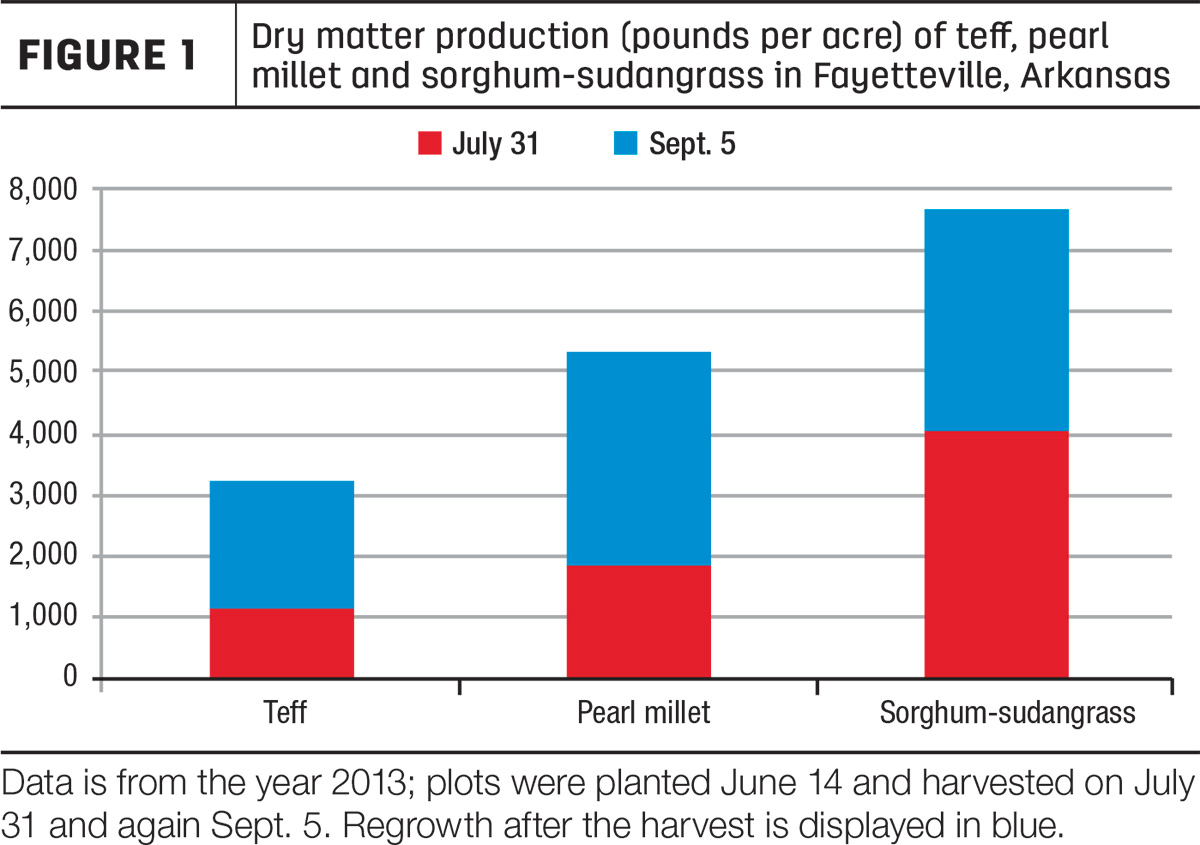
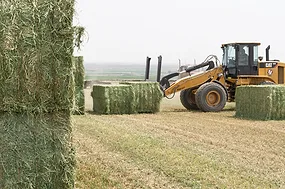
Summer annual forages are an excellent way of generating biomass for haying and grazing during times when perennial cool-season forages do not grow well. Several years ago, we conducted a small study to evaluate how Moxie teff, Tifleaf 3 pearl millet and Green Graze Supreme sorghum-sudangrass would stack up with each other at our Fayetteville, Arkansas, location (about 45 inches average annual rainfall; see Figure 1). These forages are physiologically warm-season grasses, i.e., they use the more water-use efficient C4 photosynthetic pathway. Clean-till plots were drilled on June 14 (perhaps a little late) and harvested on July 31 and Sept. 5 to determine regrowth and total dry matter (DM) yield. As you can see in Figure 1, DM yields ranked sorghum-sudangrass first, pearl millet second and teff last.
What is your best bang for the buck? From a DM perspective, sorghum-sudangrass generated a weed-free, large amount of biomass in just six weeks and doubled that in just another five weeks after the hay cut. Teff did not produce much leaf mass, and I do not recommend it as an emergency crop during drought periods either. The low teff canopy structure is prone to the intrusion of all kinds of weeds that will become very competitive. Teff does regrow quickly after a harvest, provided soil moisture levels are sufficient. Teff has its place as a summer annual forage, but in more specific ways, such as in the lucrative horse hay market, for example.
Grazing strategies and drought recovery
To make sure your pastures will recover after drought periods, be proactive and flexible in your approach to stocking rates, the length of rotational stocking cycles, recovery periods and pasture fertilization. Abide by the rule of take half/leave half for perennial forages, as this is easy to visualize. Wait until regrowth has sufficiently occurred before restocking animals on the same grazing cell. Why does this matter? Leaves are essentially solar panels, and excessive removal of energy-producing areas will slow plant regrowth and hamper replenishment of root reserves. An expansive root system will help grass plants stay alive during drought and their recovery thereafter. Grazing management is an intensive affair, especially on smaller farms where stocking rates may be on the higher side. Technology, such as a virtual fence, can help manage cattle more efficiently and quickly.
Other backup plans
Historically, grazing lands in the eastern U.S. are naturalized and were converted from woodlands, savannas and prairies, which were inherently more drought resilient. Bringing back those plant communities may not be entirely economically feasible, but utilizing certain aspects of those long-gone ecosystems can help make your operation more drought resilient as well.
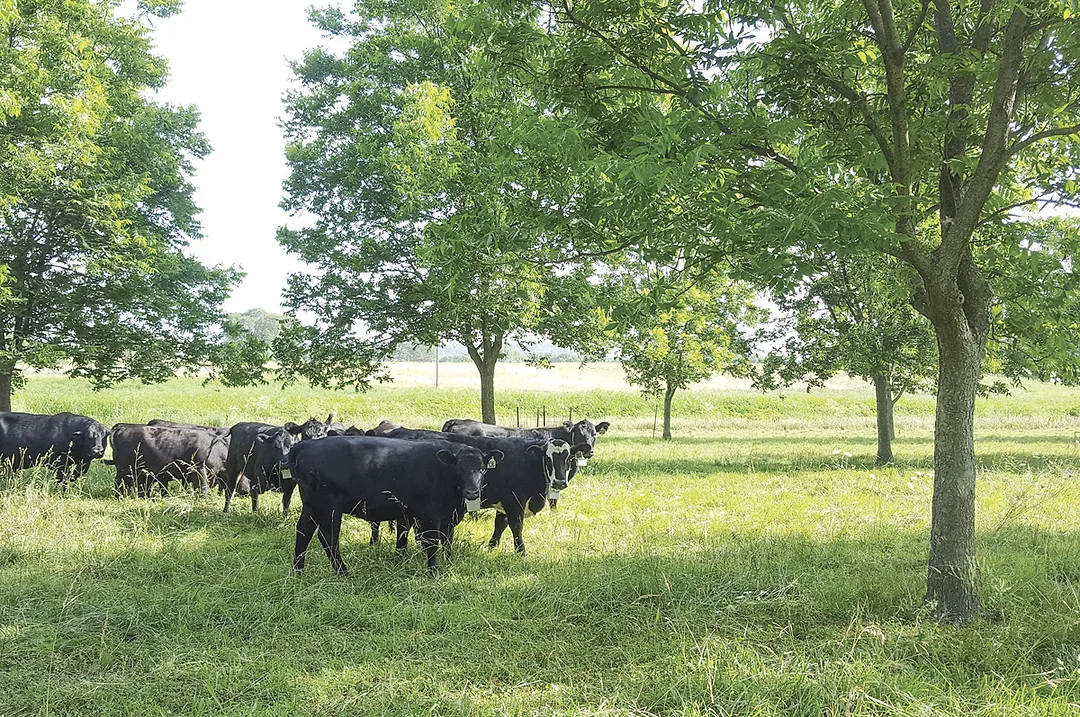
Pastures can be converted to native grass and forb mixes with the help of the USDA Natural Resources Conservation Service (NRCS) or state game and fish agencies and their associated organizations. Currently dense, overgrown forests can be thinned to resemble a woodland (40-60 square feet of basal area per acre) in which forages can be established. Cool-season perennial forages do well under those conditions and can provide backup grazing that comes with a variety of other benefits, such as providing natural shade structures and thereby alleviating heat stress in cattle.
To enhance the water-holding capacity in soils, strive for an increase in organic matter, either through deep-rooted grass species and forbs. Utilize diligent grazing management or other focused methods that your extension service or other agencies can help you with.